























Jesse Jackson: How he paved way for Barack Obama — and helped change US

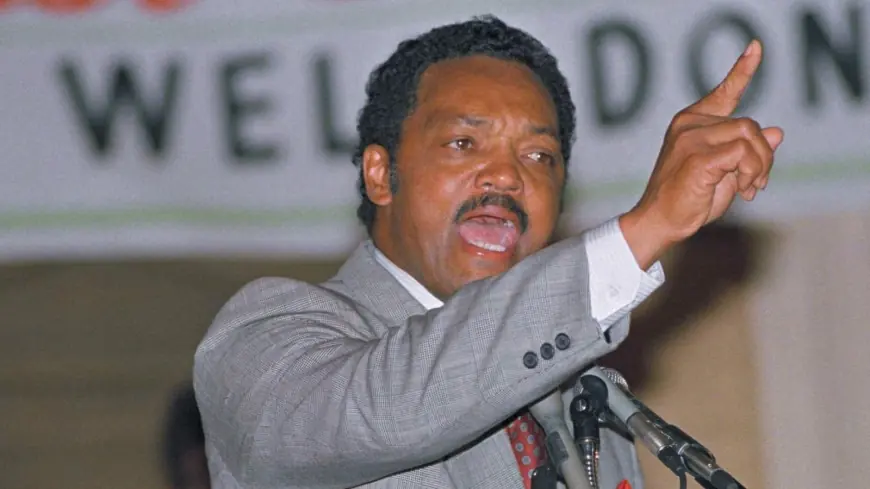
Jesse Jackson, a towering figure of the US civil rights movement who pushed the Democratic Party to embrace a multiracial, working-class coalition and twice mounted serious bids for the presidency, has died at the age of 84. Jackson’s career bridged the street protests of the 1960s and the electoral breakthroughs that followed, helping clear a path for leaders who came after him.
A bridge from King to the White House
Born Oct. 8, 1941, in Greenville, South Carolina, Jackson rose from a childhood shaped by segregation and hardship to become a close lieutenant of Martin Luther King Jr. He translated the moral urgency of the civil rights movement into a new model of political organising, one that aimed to weld Black voters, working-class whites and other groups into a durable electoral force. That effort transformed party politics and changed the vocabulary of national campaigns.
Jackson’s two presidential campaigns in the 1980s were historic. He was the first African American to win broad, sustained support in a major-party primary, and his speeches and slogans — most famously the refrain "keep hope alive" — echoed for decades. Elements of his populist, optimistic messaging would resurface in later national campaigns that successfully appealed to diverse coalitions.
Many contemporary leaders credit Jackson with enlarging the political imagination of the Democratic Party. His focus on poor and working-class Americans, along with his insistence on a multi-ethnic democracy, nudged the party away from narrow coalition politics and toward broader, more inclusive appeals. He remained an influential voice and an elder statesman for decades after his White House bids.
Controversy, illness and the unfinished work
Jackson’s long public life was not without scandal. Marital infidelity and revelations about financial misconduct involving his son, who later served in Congress, clouded parts of his legacy. Those episodes complicated how some viewed his moral authority even as many continued to celebrate his achievements on civil rights and political inclusion.
In his later years Jackson’s health forced him from public life. Initially diagnosed with Parkinson’s disease in 2017, his condition was later determined to be progressive supranuclear palsy, a degenerative brain disorder with similar symptoms. He stepped back from the pulpit and from front-line organising, but his influence endured through the leaders he mentored and the institutions he helped build.
Tributes poured in as news of his death spread. The vice president celebrated Jackson as a formative presence in her political life, recalling youthful support for his presidential bids and crediting him with lifting the dignity of working people. The president praised Jackson’s decades of service and his commitment to the promise of equal treatment under the law. Other prominent figures in public life described him as a titan of the civil rights movement whose ministry brought moral force to the public square and who helped bend history closer to justice.
Jackson’s style combined oratory and moral urgency. He gave voice to Americans who felt they were treated as second-class citizens and insisted that equal justice required persistent effort, not passive expectation. One national leader noted that no one in the party before Jackson had framed an affirmative, multiracial democratic agenda in quite the same way, and that his movement was bound up with a progressive program for working people.
As the country reflects on Jackson’s life, his legacy is both inspirational and complex: a leader who opened political space for Black candidates and who held the promise of American democracy up to its own standards, even while personal failings and family scandals complicated the record. The arc of his career — from the churches of the segregated South to the podiums of presidential politics — helps explain how the nation reached the moment when a Black candidate could presumptively aim for the highest office. For many, that remains one of his most consequential gifts.