
























Pam Bondi’s Combative Capitol Showing Fuels Oversight Tensions

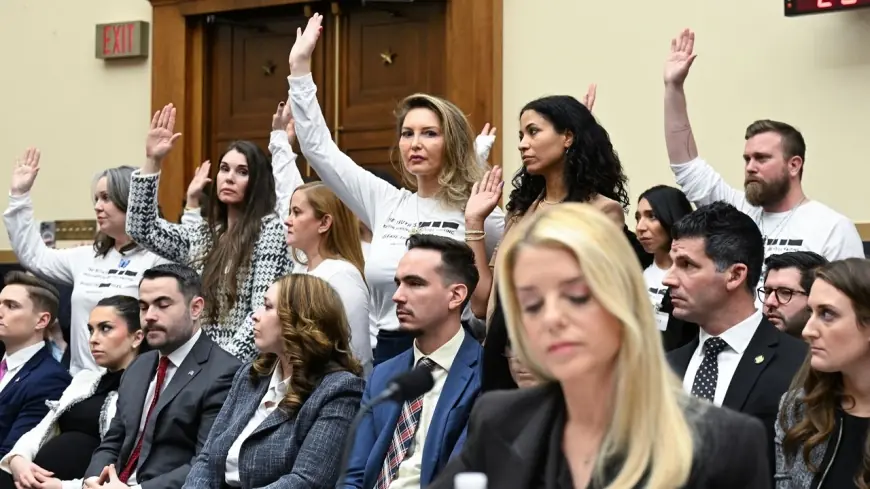
In a charged, four-and-a-half-hour session on Wednesday, the Attorney General repeatedly sparred with members of Congress, turning what was meant to be standard oversight into a spectacle that highlighted deep frustration over transparency and justice issues. Her combative style—marked by direct insults, theatrical what-aboutism and a tabbed binder used to retaliate against questioners—has amplified calls for clearer answers on high-profile investigations and sensitive files.
Anatomy of a bruising hearing
The hearing unfolded as a sustained confrontation. At one point the Attorney General leaned into a blistering attack: "You don’t tell me anything, you washed-up loser lawyer. Not even a lawyer. " That exchange, matched by rapid-fire barbs across the dais, set the tone for a session in which decorum gave way to raw partisan conflict. Lawmakers from both parties found themselves on the receiving end of pointed personal rebukes; one was told flatly, "Your time is up. " Another was told, "You’re about as good of a lawyer today as you were when you tried to impeach President Trump. "
Her tactics were familiar and methodical. She used what-aboutism early and often, challenging members to explain why they had not pressed her predecessor on the same subjects. She also produced a tabbed binder—dismissed by critics as a "burn book"—from which staffers flipped to the dossiers of individual committee members and highlighted criminal cases from their districts. That maneuver, combined with moments of indignance and disdain, left committee members struggling to get sustained answers on several substantive requests.
Oversight, Epstein files and the politics of disclosure
The hearing also intersected with renewed pressure to release sensitive investigative materials. One lawmaker pressed the Attorney General for the release of the Justice Department’s Jeffrey Epstein files; the response was a sharp personal rebuke that dismissed the questioner as a "failed politician" suffering from "Trump Derangement Syndrome, " then pivoted to criticize the lawmaker’s prior votes on unrelated technology legislation and labeled him a "hypocrite. "
Those exchanges came as survivors and advocates push for greater transparency. One survivor’s blunt assessment—"People are willing to protect pedophiles if the price is right"—has crystallized public anger and underscored why many members of Congress pushed for clearer disclosure of prosecutorial and investigatory decisions. The Attorney General’s focus on attacking the motives and records of questioners, rather than addressing procedural or substantive requests, risks further eroding confidence that oversight can produce meaningful information.
What this means for oversight going forward
The hearing demonstrated how oversight hearings can become venues for political theater when trust is low and stakes are high. The Attorney General has alternated between fierce praise for the President and combative exchanges with lawmakers, even as reports suggest her standing with the administration has been precarious. That mix—public loyalty to the executive paired with visible resistance to questioning—complicates Congress’s ability to extract commitments or timelines on document releases and investigatory steps.
For lawmakers determined to obtain material, the path forward appears likely to include renewed demands, procedural maneuvers and possibly more public confrontations. For advocates and survivors seeking accountability, the session will be remembered less for clarifying rules or actions and more for the tenor in which questions were deflected. If the goal of oversight is to produce facts and accountability, Wednesday’s session illustrated how easily that goal can be sidelined by rancor and rhetorical sparring.
As the fallout continues, attention will center on whether requests for sensitive materials are met with substantive responses or further denials framed by political counterattacks. The stakes—both legal and moral—remain high, and lawmakers face mounting pressure to show they can convert sharp exchanges into concrete outcomes.