

























Lunar New Year 2026 live: Year of the Fire Horse arrives

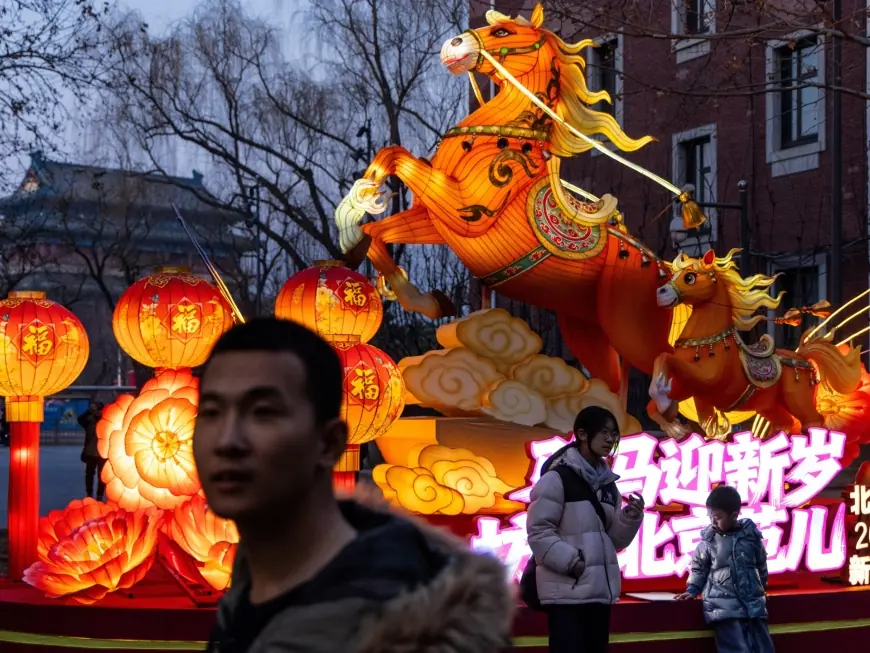
Millions across Asia have begun celebrating the Lunar New Year as communities move into the Year of the Fire Horse. The 15-day festival, timed to the first new moon of the lunar calendar, runs in its traditional window between January 21 and February 20 each year. This year, New Year's Day falls on Tuesday, February 17, 2026 (ET), and in China alone some 1. 4 billion people are taking part in festivities that range from family reunions to high-tech stage spectacles.
Food, family and evolving rituals
Food remains the beating heart of the festival. Regional specialties thread together the holiday across borders: in Southeast Asia families share sticky rice cakes and mandarin oranges, while in some cities a raw fish salad is tossed with joyful abandon by all at the table. In South Korea, tins of luncheon meat have become a common New Year gift, a modern twist on longstanding gift-giving traditions.
Vietnam’s Tet highlights how local customs give the same holiday distinct flavours. In the north, families prepare a square sticky rice cake wrapped in banana leaves and filled with glutinous rice, mung beans and pork; in the south a cylindrical counterpart is preferred. A striking offering often seen at Tet is a whole boiled chicken, presented upright with head and feet intact and a red rose tucked in its beak — a vivid symbol of completeness and good luck.
At the same time, several societies are rethinking rituals. An increasing number of households are simplifying observances: in one country more than 60% of people said they would not set up the traditional charye tables to formally honour ancestors this year, a move that reflects changing lifestyles and priorities among younger generations.
High-tech pageantry and economic hopes
Technology is playing a conspicuous role in this Year of the Fire Horse. In Shanghai, a start-up recently staged an hour-long variety show in which humanoid robots performed dances, comedy sketches and musical segments. Humanoid performers are also scheduled to appear on the state gala that marks the start of the festival, joining human performers for synchronized displays that mixed martial arts choreography and robotics.
The robot showcases are part entertainment and part signal: they underline major investments in artificial intelligence and robotics across the region, and they reflect ambitions to become global leaders in humanoid technology. The festival’s mass audiences — from local temple fairs to prime-time television — provide companies and governments with a high-profile platform for demonstrating technological progress.
Beyond spectacle, the holiday carries economic weight. The long travel season known as Chunyun generates one of the world’s largest annual migrations as people journey home for reunions. The extended holiday window this year, with official time off expanded in some places, has been framed as an opportunity to boost domestic consumption at a time when economies are seeking to rebalance growth toward household spending.
Politics, social media and public messaging
Celebration and contest coexist. In one country, authorities have stepped up efforts to curb what is described as antisocial content online; enforcement this year has extended to posts that celebrate the virtue of not having children. These measures highlight a broader tension between traditional expectations around family life and emerging social trends.
Across the region, the Lunar New Year remains a mirror of social change: from pared-back ancestral rites and new food rituals to robot dancers onstage, the festival blends ancient symbolism with 21st-century life. As communities welcome the Fire Horse, hopes for renewed prosperity, unity and good fortune are being expressed in both bowls of rice and bytes of code.