

























‘Ring of fire’ solar eclipse 2026: path, timing and who will see a partial event

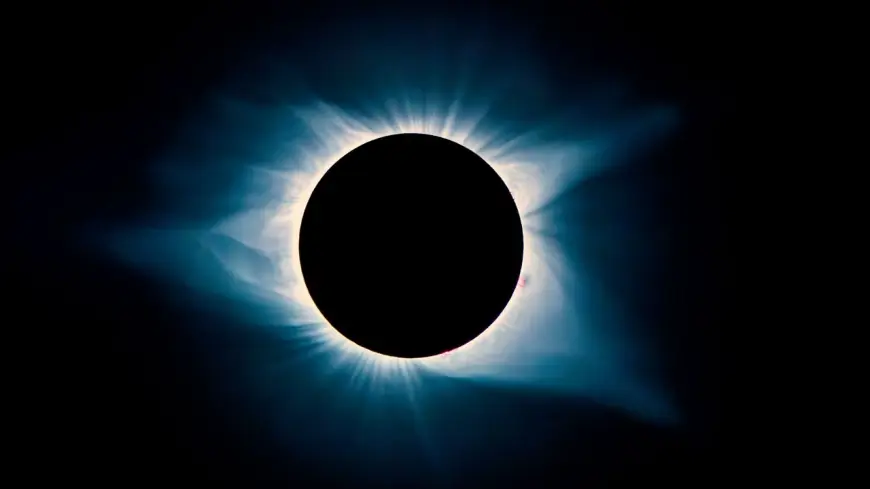
The next notable solar eclipse falls on Feb. 17, 2026. It will be an annular event — often called a "ring of fire" eclipse — with the maximum phase at about 7: 12 ET. The narrow track of full annularity will sweep across parts of Antarctica; observers in the southern tips of South America and in southern Africa, including portions of South Africa, should expect a partial eclipse.
When and where the eclipse will be visible
The eclipse begins as the new moon crosses between Earth and the sun, producing an annular alignment when the moon is at or near its farthest point from Earth and appears slightly smaller than the solar disk. That geometry leaves a bright ring of sunlight around the moon at maximum coverage — the signature "ring of fire. " The peak of the event is expected near 7: 12 ET on Feb. 17, 2026.
Complete annularity will be confined to a narrow corridor over Antarctica. Observers located in higher latitudes of the southern hemisphere should plan for very limited viewing opportunities: the southernmost reaches of South America and parts of southern Africa will see the moon clip across the solar disk, producing a partial eclipse rather than the full ring. Most populated regions of the globe will not experience any noticeable darkening.
Science, astrology and cultural timing
From a purely astronomical perspective, annular eclipses are a function of distance and angle: when the moon is too distant to cover the sun fully, the remaining visible rim creates the annulus. This event falls on a new moon in late Aquarius — a timing that also places it at the start of an eclipse season.
Astrologers have attached wider cultural meaning to the alignment. Astrologer Rachel Ruth Tate characterizes this annular eclipse as a potent new-moon moment in Aquarius and notes that eclipses often coincide with periods of transition. Tate describes the current configuration as likely to set in motion developments over the coming 18 months and highlights a cluster of planetary relationships that could amplify feelings of urgency, transformation and, in some cases, confusion. She warns that a close planetary meeting three days after the eclipse may make it harder to distinguish reality from illusion.
Practical observers should separate the scientific facts from interpretive readings. The eclipse is a predictable celestial event with precise timing and geography; whether and how it resonates in personal or cultural terms is a different conversation, one that blends belief, symbolism and individual perspective. The timing also coincides with a major cultural new-year observance in parts of Asia, adding an extra layer of public interest.
Viewing safety and tips
Safety is paramount. Even during a partial eclipse, looking directly at the sun without proper eye protection can cause permanent damage. Use certified solar filters, eclipse glasses that meet international safety standards, or indirect viewing methods such as pinhole projectors. Unfiltered cameras, binoculars and telescopes can concentrate sunlight and must be fitted with appropriate solar filters before use.
If you are planning travel to see annularity in Antarctica, note that access is logistically complex and typically limited to scientific expeditions and specially arranged cruises; weather and daylight conditions at polar latitudes can also affect visibility. For viewers in southern South America and southern Africa, check local sunrise and sunset times and arrive early to allow for equipment setup and changing conditions.
Even if you cannot see the eclipse in person, the event will be of interest to skywatchers and those tracking cultural and astrological interpretations. Mark Feb. 17, 2026 on your calendar and, if you plan to look up, be prepared and protected.