























Elana Meyers Taylor Wins Elusive Olympic Gold in Monobob at Milan Cortina Games

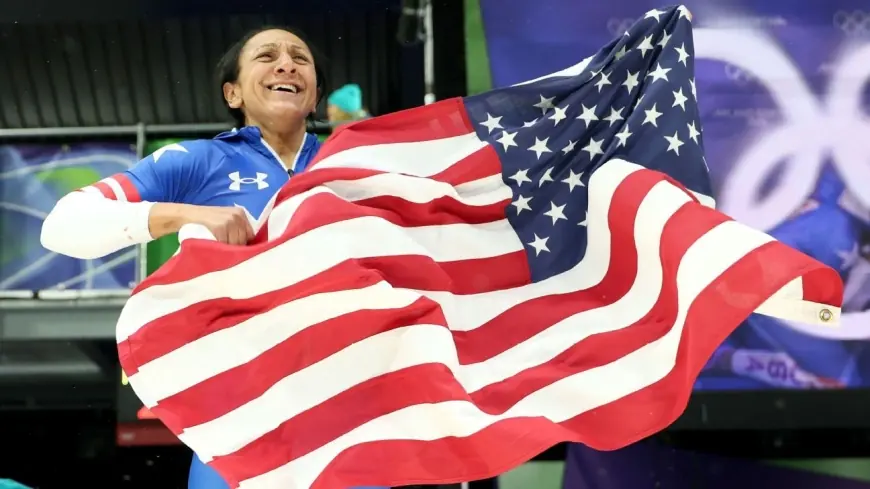
CORTINA D'AMPEZZO, Italy — Elana Meyers Taylor finally stood atop the Olympic podium, wrapping herself in the American flag and breaking into tears after clinching gold in the monobob at the Milan Cortina Games on Monday night (Eastern Time). The 41-year-old's victory — a four-run, two-day total of 3 minutes, 57. 93 seconds — crowns a comeback that has defined the later years of her career.
A career-defining moment
Meyers Taylor had come to this moment with a résumé already unmatched among American winter athletes: five prior Olympic medals. But the one that eluded her was gold. On the frosty Italian track, she put that right, becoming the oldest American woman to hear the national anthem played in her honor at the Winter Games and adding a sixth career Olympic medal, which ties the record for the most Winter Olympic medals by a U. S. woman.
“I thought it was impossible, ” Meyers Taylor said after the race, the emotion of the achievement visible in her reaction as her two young sons watched from the stands. Her road to the top was not linear: concussions, doubts about her future in the sport and the particular pressures of elite competition all factored into a narrative that now culminates in Olympic gold.
How the race unfolded
Germany’s Laura Nolte led after the first three runs, with Meyers Taylor sitting second and Kaillie Humphries Armbruster third. Nolte held a slim advantage of 0. 15 seconds entering the final heat, while Meyers Taylor trailed by 0. 24 seconds. In sliding sports where margins are measured in hundredths, the order of the last three starters set up a dramatic finish.
Humphries Armbruster, who is 40 and returned to the Olympic field after becoming a mother roughly 18 months ago, went first of the trio and secured bronze with a four-run total of 3: 58. 05. When Meyers Taylor pushed off next, she held firm under pressure and posted a run that would ultimately claim the top step. Nolte, going last, could not reclaim the lead and settled for silver.
“I’m a bit sad because now at the moment it feels like I lost gold — and not that I won silver, ” Nolte said. “In a few hours I think I can celebrate it, because it’s still a great result. ” Humphries Armbruster reflected on what the results mean to athletes who continue competing at a high level into their 40s: “You get a lot of people that like to write you off as soon as you reach 40... I think Elana and I are both proof that that's not true. ”
What this win means for the sport and her legacy
Meyers Taylor’s gold is significant on multiple fronts. It completes a set of Olympic achievements that had long seemed just out of reach and cements her status as one of the most decorated U. S. Winter Olympians. Her sixth medal ties an all-time mark for U. S. women at the Winter Games and deepens her influence as a leading figure in American sliding sports.
Beyond the record books, the image of Meyers Taylor falling to her knees, fist raised and sobbing while draped in the flag, will be replayed as one of the Games’ emotional highlights. For young athletes and parents watching, the performance serves as a powerful reminder that elite-level success and motherhood can coexist — and that perseverance through injury and doubt can still lead to the highest achievement in sport.
This gold also reshapes the narrative around experience in sliding sports, where precision, mental toughness and technical mastery can offset the conventional wisdom about age and athletic decline. Meyers Taylor’s triumph on the Cortina track is both a personal vindication and a statement about longevity at the top level.
Her teammates, competitors and coaches celebrated a finish that will be remembered as one of the standout moments of these Games: a veteran athlete finally claiming the pinnacle of Olympic success and doing so in front of family and a global audience.