

























‘Ring of fire’ annular solar eclipse to sweep across Antarctica on Feb. 17, 2026

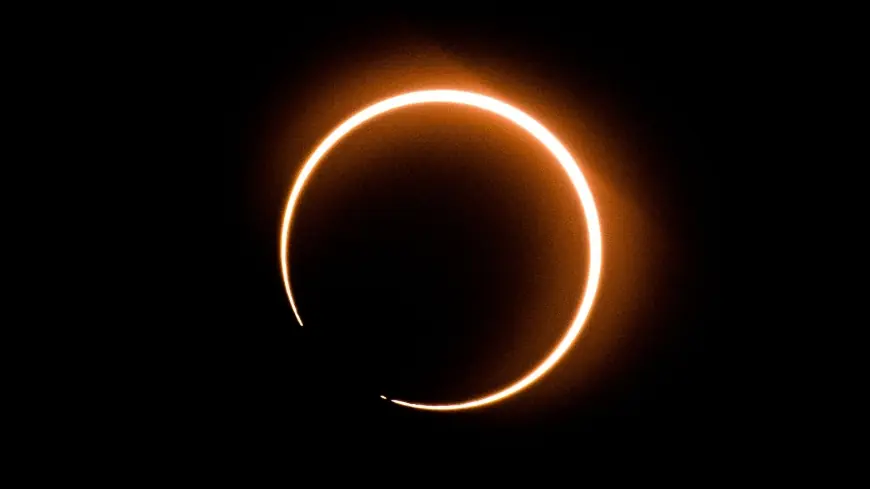
Skywatchers will get one of the year's most dramatic celestial shows when an annular solar eclipse crosses Antarctica on Tuesday, Feb. 17, 2026. The moon will cover most of the sun's disk, leaving a bright rim — the classic "ring of fire" — visible for observers in a narrow path over the frozen continent. Small portions of the Southern Hemisphere will see a partial eclipse.
Timing and where the ring will be visible
The event begins with the moon making first contact with the sun at 4: 56 a. m. ET on Feb. 17, when the lunar silhouette starts to encroach on the sun's disk. Annularity — the peak phase that produces the ring of fire — will begin along the path over Antarctica at 6: 42 a. m. ET. Observers at Concordia Station, one of the few research outposts directly in the path, should experience just over two minutes of annularity, with the moment of maximum eclipse occurring there at 6: 47 a. m. ET.
Because the moon will be a little farther from Earth in its elliptical orbit, its apparent size in the sky will be slightly smaller than the sun's, producing the hallmark thin ring during annularity. Outside the narrow track of full annularity, viewers across parts of the Southern Hemisphere will see the moon take a noticeable bite out of the sun, producing a partial eclipse rather than a full ring.
Who will see it and why most people will miss the full effect
This annular eclipse is geographically remote. The narrow path of annularity crosses icy, sparsely populated regions of Antarctica, so the only people likely to witness the ring of fire in person are those stationed at isolated research facilities — Concordia being one of the very few in position. Most of the world's population will be too far north to see annularity; many in southern latitudes will instead catch a partial eclipse or miss the event entirely.
For anyone planning to observe the partial phases from more accessible locations, local timing will vary. Exact start, peak and end times depend on where you are, so check a local astronomical calendar or observatory listing for the precise schedule for your site on Feb. 17.
Safety and how to watch the eclipse
Never look directly at the sun without proper protection. Even during annularity, when most of the sun is obscured, the remaining exposed ring emits intense visible and invisible radiation that can cause immediate and permanent eye damage. Safe viewing options include certified solar viewing glasses that meet international safety standards or indirect methods such as pinhole projectors and solar projection boxes. Regular sunglasses are not safe for eclipse viewing.
Photographers should use appropriate solar filters on camera lenses and telescopes to protect both their equipment and eyesight. For those who cannot travel to the path of annularity, many scientific and amateur astronomy groups plan to host viewing events and live feeds that provide safe, high-quality coverage of the eclipse.
While the full ring of fire will be accessible to only a handful of Antarctic researchers, the Feb. 17 annular eclipse will remain a noteworthy astronomical moment — a striking reminder of the dynamic geometry between Earth, moon and sun.