























How 'Love Story' Brought JFK Jr. Back Into the Cultural Crossfire

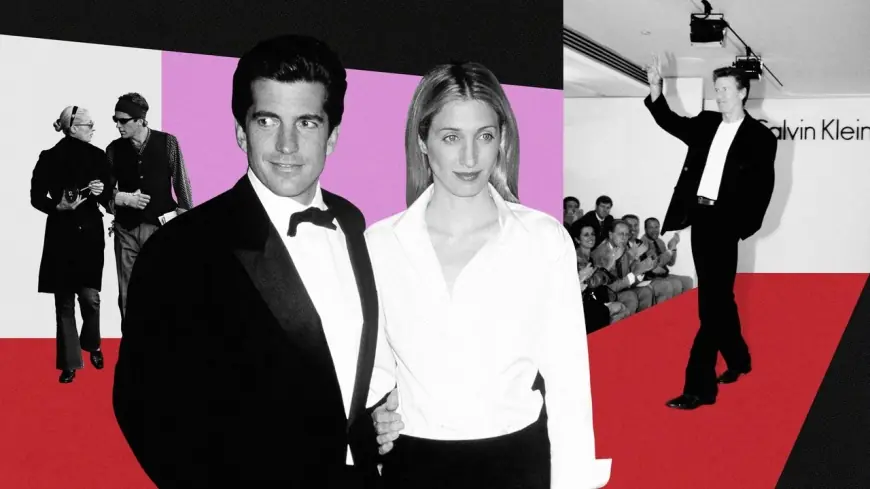
The new dramatization of John F. Kennedy Jr. and Carolyn Bessette Kennedy’s relationship has done more than revisit a famous romance. With the first three episodes premiering Feb. 12 (Eastern Time) and weekly installments airing Thursdays at 9 ET, the series has reopened questions about taste, ownership of a public family’s story and the fine line between homage and exploitation.
Style as cultural shorthand: Carolyn Bessette’s lingering influence
One immediate effect of the series has been renewed attention on Carolyn Bessette Kennedy’s aesthetic. The show’s costuming leans into the spare, reticent elegance widely associated with her—slip dresses, crisp white shirts and a kind of quiet minimalism that has haunted fashion cycles for decades. That renewed focus landed almost simultaneously with a major fashion house’s runway showing, prompting observers to ask whether designers would lean into the 1990s Calvin Klein archetype the series resurrects or take a different tack.
The creative direction chosen for the runway did not mirror the show’s nostalgia for the 1990s. Instead, the collection reached back to an earlier, less codified era for the brand—late 1970s and early 1980s influences—producing a mixed response from critics and the public. Where some pieces cleverly reworked tailoring and played with silhouette, other experiments felt uncertain, caught between tribute and reinvention. The collision of television costume design and contemporary runway choices underscores how a single cultural depiction can ripple across industries, inviting both emulation and reappraisal.
Who gets to tell the Kennedy story?
The series has intensified an old debate about who owns high-profile histories. Members of the extended family and their allies have pushed back strongly, arguing that dramatizing such personal losses risks commodifying trauma. One family member publicly condemned the creator’s choice to dramatize the couple’s life, calling the project a grotesque profiting from tragedy. The showrunner’s curt response to that criticism only deepened the sense of a clash: a creative team defending artistic license versus relatives who see private grief and legacy being repackaged for mass consumption.
This argument is hardly new for this family, whose public image has long been curated, contested and mythologized. The tension here is twofold: the moral question of dramatizing recent grief and the cultural question of who gets to shape collective memory. The series functions both as a piece of entertainment and as another actor in the centuries-old project of defining a storied American family.
Fact, fiction and viewers’ expectations
As with any dramatization, the program mixes verifiable moments with invented dialogue and condensed timelines. Episode three, part of the initial drop, dramatizes small personal details—an instance of adolescent theft experienced by John, and an intimate depiction of Jacqueline Kennedy Onassis burning private letters in a fireplace. Those scenes are drawn from documented anecdotes that have circulated in biographies and memoirs, and they serve the show’s aim of humanizing public figures by showing private rituals and grief.
Yet the series’ emotional immediacy and polished costumes can blur the line between meticulous reconstruction and narrative shorthand. Viewers seeking literal accuracy will find some scenes close to the historical record and others stylized for dramatic effect. That blend is fueling both fascination and ire: fans praise the production design and period detail, while critics and relatives question the ethics of dramatizing recent losses for entertainment.
The renewed spotlight on John F. Kennedy Jr. and Carolyn Bessette Kennedy is less a tidy reassessment than an open conversation. Fashion houses reinterpret an icon’s wardrobe; storytellers retread a family’s private life for public consumption; and the family’s heirs and friends respond with a mixture of outrage and resignation. In that churn, the late-20th-century couple—both myth and person—remains newly, insistently present in the national imagination.