
























Where the Feb. 17, 2026 annular solar eclipse will be visible

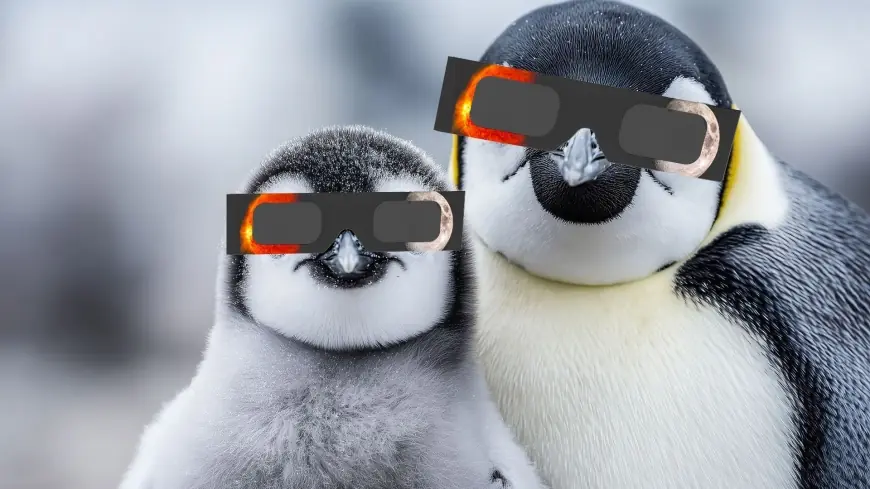
The first solar eclipse of 2026 is an annular event — the dramatic "ring of fire" — set for Tuesday, Feb. 17, 2026. This eclipse follows a remote track: the full annular phase will cross mostly icy ocean and uninhabited coastline, meaning far fewer people than wildlife will see the complete ring. Many more observers across the Southern Hemisphere, however, will catch the partial stages.
Path of annularity: a ribbon across western Antarctica
The corridor where the Moon will appear slightly smaller than the Sun, creating the bright ring, stretches roughly 2, 661 miles (4, 282 kilometers) long and about 383 miles (616 kilometers) wide. That swath moves across western Antarctica and skims the Davis Sea coast of the Southern Ocean. The eclipse will rise over the Antarctic mainland and set off that coastline, tracing a path that remains largely over ice and open water.
Because the path runs through such isolated latitudes, most human observers will not be within the narrow track of annularity. The stark reality: more penguins than people are likely to witness the full ring of fire on Feb. 17. Expedition cruises and scientific stations in the region may offer the best chances for those determined to see annularity in person.
Partial eclipse: who will see the bite taken from the Sun
The partial phase, when the Moon covers only part of the Sun and the disk looks as if a bite has been taken out of it, will be far more widely visible. Observers across Antarctica will see partial coverage, and parts of the Southern Hemisphere will also get a glimpse: southeastern Africa, the southern tip of South America, and broad stretches of the Pacific, Indian, Atlantic and Southern oceans will fall within the partial visibility zone.
For timing, the first glimpses of the eclipse will begin in the early morning hours in Eastern Time; initial sightings are expected to commence at about 6: 42 a. m. ET on Feb. 17. Exact local times will vary dramatically depending on latitude and longitude, and the degree of solar coverage will range from a thin notch to a deep crescent depending on your location.
Viewing safety and what comes next
Eyesafety is critical. During any partial phase of an annular eclipse the Sun remains intensely bright and must never be viewed with the naked eye. Use certified solar viewing glasses or indirect projection methods such as a pinhole projector or a simple cardboard box projector. Optical instruments like binoculars or telescopes must be fitted with proper solar filters designed for eclipse viewing; improvised filters are dangerous.
From a broader skywatching perspective, this annular eclipse is followed closely by another striking event: a total lunar eclipse on March 3-4, 2026. That total lunar eclipse will turn the Moon blood red for about 58 minutes in areas including western North America, Australia, New Zealand and East Asia, making it visible to a far larger share of the global population than the Feb. 17 annular event.
For eclipse chasers, the next annular solar eclipse after Feb. 17 arrives on Feb. 6, 2027, with visibility stretching across parts of South America and West Africa. For most casual skywatchers the best chance to witness dramatic solar or lunar shadow play will be planning around events that cross populated regions or are easily accessible by regular travel routes.
Whether you plan to travel south for a glimpse of annularity or simply want to watch a safely filtered partial phase from home, mark Feb. 17, 2026 on your calendar and make eye protection your top priority.