





















New Evidence Undermines Pam Bondi’s Denial Over Trump and Epstein Allegations

Newly disclosed internal Justice Department material contains references to FBI interviews with a woman who accused Donald Trump of sexually assaulting her as a teenager, calling into question Attorney General Pam Bondi’s recent public denials that the department had any evidence tying underage victims to parties attended by the president. The documents, part of a larger Epstein file release, list two distinct allegations that mention Trump and describe investigators treating at least one accuser as credible.
What the DOJ slide deck shows
The centerpiece of the new disclosures is a 21-page internal slideshow compiled by investigative teams cataloguing inquiries related to Jeffrey Epstein and Ghislaine Maxwell. A slide headlined "prominent names" lists Donald Trump and summarizes two separate allegations. One entry describes an incident in the mid-1980s in which a teen alleged Epstein introduced her to Trump, who then forced her head toward his exposed genitals; she bit him, she later said, and he responded by punching her and ejecting her. That alleged victim would have been between 13 and 15 years old at the time.
The second entry quotes another accuser who recalled Epstein introducing her to Trump and describing the girl as a "good one, " with Trump reportedly agreeing. That statement carries additional weight within the slide deck because the person who provided it was later used as a key government witness in the case that led to Maxwell's conviction. The broader cache of files mentions Trump tens of thousands of times and flags him in thousands of individual documents, underscoring the degree to which his name appears across the investigative material.
Bondi’s denials and the emerging contradictions
Last week, Pam Bondi forcefully denied that the Justice Department possessed evidence showing underage girls were present at gatherings attended by the future president. The newly surfaced slide material directly challenges that blanket statement. A separate FBI intake record from the bureau’s National Threat Operations Center shows a caller in 1995 reported a matter that aligns with claims of underage victims mixed into social circles tied to Epstein. That intake, like other initial reports, documents what a caller alleged at the time of contact and does not itself represent investigative findings or charges.
The release also notes a civil matter in which a woman with matching biological details pursued a claim against Epstein’s estate and received a settlement in 2021. Investigators treated at least one of the individuals featured in the slideshow as a "credible accuser, " though the slide deck does not detail what, if any, subsequent investigative steps were completed or why no public charges were pursued in relation to these specific allegations.
Political and legal fallout
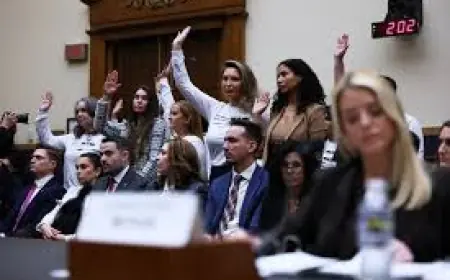
The new disclosures have intensified scrutiny of prior statements made under oath and prompted demands for clarification from officials who say the slide deck undermines sworn testimony. Observers are raising questions about how material about high-profile individuals was handled inside the Justice Department and what the presence of those references means for public understanding of the Epstein investigation. The White House has maintained denials of wrongdoing by the individual named in the slides, while critics say the documents highlight unresolved issues that merit independent review.
At this stage, the slide deck offers a partial view: it captures intake accounts and investigator shorthand but leaves open crucial questions about steps that followed, the provenance of specific allegations, and whether lines of inquiry were closed or pursued further. For now, the newly surfaced material narrows the gap between public denials and internal documentation, putting pam bondi's testimony under renewed scrutiny and increasing calls for transparency from the Justice Department about what investigators found and how those findings were handled.