




















Tyra Banks and Jay Manuel revisit their rift as “Top Model” legacy faces fresh scrutiny

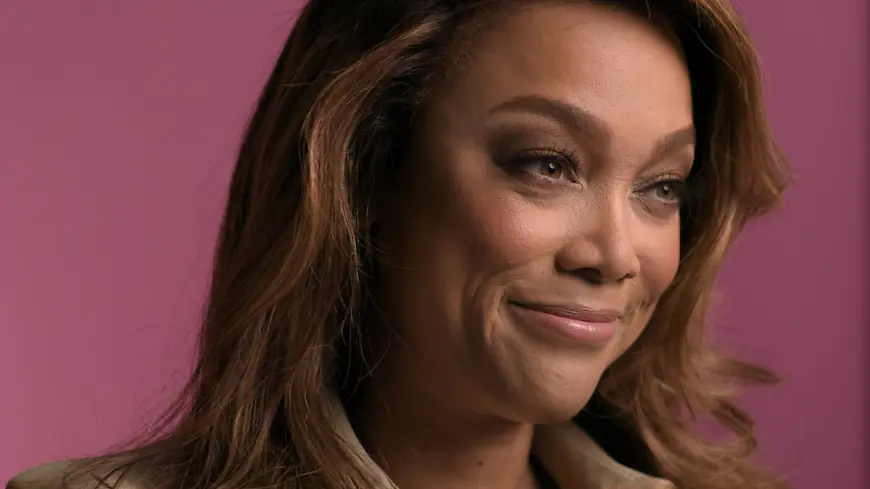
A new documentary series revisiting America’s Next Top Model has reopened a long-running question fans have debated for years: what happened between Tyra Banks and Jay Manuel after their close creative partnership ended. The series, released in mid-February 2026, features Manuel speaking in detail about the breakdown in communication, the strain of returning to set under tense circumstances, and the moments he now views as turning points in the show’s controversial legacy.
What the new series adds to the story
For the first time in a major on-camera forum, Manuel lays out a clear timeline of how his relationship with Banks cooled after he stepped away from his day-to-day role behind the scenes.
He describes a friendship that extended beyond the studio—shared time off-set and a sense of creative trust—before the show’s pace and priorities began changing. When he eventually moved to leave, he says he followed up with an email to Banks expressing gratitude, and received a short reply that effectively ended the conversation. In his telling, that response became the last meaningful exchange between them for years.
The series includes Banks on camera in the same project, but she does not engage in a detailed discussion of their fallout. That contrast—Manuel offering specifics while Banks stays more general—has become one of the main points viewers are pulling from the release.
Manuel’s account of how the friendship broke
Manuel frames the rift less as a single blowup and more as a slow collapse of access and trust. He says the environment grew more pressure-driven as the show became a larger franchise, and he felt increasingly boxed into choices he didn’t fully support. In that atmosphere, he describes becoming emotionally worn down—especially when he returned to the series later and found that off-camera communication with Banks had effectively disappeared.
He also connects his frustration to the way key on-air and behind-the-scenes figures were eventually removed, describing that period as painful and destabilizing. While he stops short of assigning one simple cause to the split, he emphasizes that the lack of private, direct conversation is what lingered most.
At the same time, Manuel says he’s not looking to reignite a feud. His tone is more reflective than accusatory, stressing that he feels “healed” and remains open to reconnecting, even if that hasn’t happened.
Banks’ posture: acknowledgment without a full explanation
Banks appears in the documentary as the creator and central face of the franchise, and her role is complicated: she is both the person who drove its success and the person many now expect to answer for its hardest moments.
In the portion focused on Manuel, she offers acknowledgment that she should reach out, but doesn’t unpack the relationship’s breakdown on camera. That limited engagement has fueled renewed debate online, with some viewers interpreting it as avoidance and others seeing it as caution in a conversation that’s still raw and personal.
What’s clear is that the series positions Banks as aware of the show’s reappraisal and willing to address parts of its legacy—just not every relationship thread in full.
The “Top Model” controversies back in focus
The Banks–Manuel storyline is only one slice of a broader reassessment. The documentary’s larger arc is about how reality competition TV aged, and how choices once framed as edgy entertainment are now judged through a different lens.
A few themes recur throughout the episodes:
-
Allegations from former contestants about mistreatment and inadequate support during emotionally intense situations
-
Accounts of body image pressure and appearance-based demands during filming
-
Reexamination of specific creative concepts from earlier seasons that are widely viewed as inappropriate today
Manuel’s interviews intersect with that wider critique because his job sat at the junction of creativity and execution—making him both a witness to decisions and, at times, part of their delivery.
Where they stand now, and why it matters
Manuel describes their last in-person interaction as cordial, but says there has been no real communication since. That leaves the present-day status simple: there is no public sign of an active friendship, but there also isn’t an active public fight. It’s a quiet distance—made loud again because the documentary places it alongside bigger questions about power, accountability, and the human cost of making a hit show.
For viewers, the relationship matters because it functions like a proxy for the franchise itself: a partnership that helped build something massively influential, then fractured as the machine grew larger than the people inside it.
What to watch next
The conversation is likely to continue beyond the documentary’s initial release window, especially if more former cast members speak up, or if Banks chooses to address Manuel’s account more directly in another setting. The other factor is momentum: when legacy reality franchises come back into the cultural center, they often prompt secondary waves—reunions, retrospectives, and renewed scrutiny of past episodes.
For now, the most concrete update is this: Jay Manuel has put his version of the story on record in detail, while Tyra Banks has acknowledged the relationship only in broad strokes—leaving viewers with clarity about what Manuel says happened, and lingering uncertainty about how Banks sees the same years.