

























2026 Winter Olympics Men Figure Skating: Mikhail Shaidorov’s Stunning Gold Upends the Expected Script in Milan

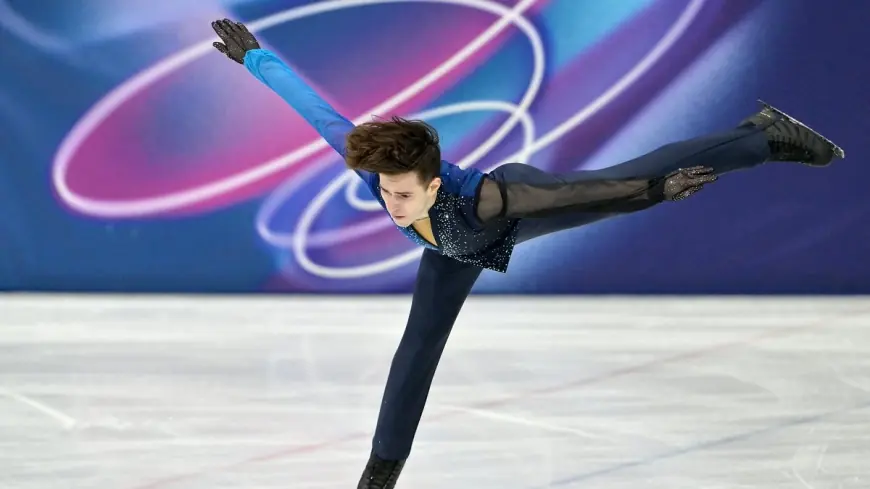
Men’s figure skating at the 2026 Winter Olympics delivered the kind of result that instantly reshapes reputations and resets the sport’s pecking order. In Milan, Kazakhstan’s Mikhail Shaidorov won the Olympic title after a dramatic turnaround from the short program to the free skate, while heavy favorite Ilia Malinin of the United States unraveled in the decisive segment and finished outside the podium.
The men’s singles event unfolded across two competition days, Tuesday, February 10, 2026, and Friday, February 13, 2026, Eastern Time, and it will be remembered less for predictable dominance than for how quickly Olympic pressure can flip a season’s assumptions.
What Happened in Men’s Singles: From Malinin’s Lead to Shaidorov’s Gold
The short program set up a familiar storyline: Malinin delivered a high-powered skate that put him on top early and positioned him as the skater to beat heading into the free. Chasing closely was Japan’s Yuma Kagiyama, already an Olympic medalist, with France’s Adam Siao Him Fa also in the mix near the top.
Then the free skate re-wrote everything. Shaidorov, who entered the final segment trailing the leaders, produced a performance that combined difficulty with control at exactly the moment the favorites needed to be perfect. Malinin, by contrast, made a series of errors that drained points quickly and visibly shifted the energy in the arena. When the final scores settled, Shaidorov stood on the top step, Kagiyama took silver, and Japan’s Shun Sato earned bronze.
The core fact of the final is simple: the best free skate won the Olympics, and Shaidorov’s was the one that held up under the brightest lights.
Behind the Headline: Why This Upset Happened Now
Context is everything. The modern men’s field is built around ultra-high difficulty, especially quadruple jumps, where the difference between gold and eighth can be a couple of missed landings and a cascade of lost grades of execution. That structure makes the event inherently volatile at the Olympics, where nerves change timing and small hesitations become big deductions.
The incentives also push toward risk. Favorites arrive knowing they must skate near their technical ceiling to separate from a deep field. Challengers arrive knowing the door is open if they can deliver one clean, ambitious free skate. Shaidorov’s incentive was clear: skate aggressively enough to win, but cleanly enough to make the risk pay off. He threaded that needle.
Stakeholders extend beyond the skaters. Coaches and federations are judged on whether they build programs that peak at the Games, not just at Grand Prix stops. Judges, in turn, are scrutinized for how they reward risk versus cleanliness. And sponsors and broadcasters are drawn to a new champion narrative, especially when it expands the sport’s geographic footprint.
Second-order effects can be immediate. A surprise Olympic champion changes funding conversations at home, influences which athletes get prioritized for international assignments, and pressures rivals to rethink how they structure their technical layouts. It also accelerates the shift toward a wider, more global men’s field, where medals are no longer assumed to belong to the same small set of countries.
What We Still Don’t Know After the Medal Ceremony
Even with medals awarded, several key questions remain open:
-
How Malinin and his team will diagnose what went wrong in the free skate and whether any technical adjustments are needed before the next season
-
Whether Shaidorov’s Olympic peak signals a new multi-year standard or a perfect-timing breakthrough
-
How Kagiyama and Sato will evolve their content in response, especially as Japan now holds two men’s medals from the same Games
-
Whether the sport’s scoring direction will further reward high-risk combinations, or subtly shift back toward cleaner, more conservative builds
These unknowns matter because Olympic outcomes often influence judging trends and coaching strategies for the entire quadrennial.
What Happens Next: Realistic Scenarios and Triggers to Watch
-
Shaidorov becomes the new target on the circuit
Trigger: he carries Olympic confidence into early-season events and shows similar technical consistency. -
Malinin returns with a recalibrated layout
Trigger: his camp prioritizes reliability under pressure, even if it means slightly lower difficulty early in the season. -
Japan doubles down on depth as a strategic advantage
Trigger: strong internal competition pushes Kagiyama, Sato, and the next wave to keep raising the floor of consistency. -
A judging conversation intensifies around risk management
Trigger: coaches and federations lobby for clearer reward structures so that “go big” does not automatically mean “go home.” -
Program construction shifts toward Olympic-style durability
Trigger: more teams prioritize layouts that survive nerves, travel fatigue, and Olympic spotlight rather than maximizing theoretical peak scores.
Why It Matters
Men’s figure skating at the 2026 Winter Olympics offered a blunt reminder: medals are not awarded for reputation, highlight reels, or season-long expectations. They are awarded for two performances delivered on two specific days, under conditions that amplify every flaw and every moment of poise.
Shaidorov’s gold is a breakthrough for Kazakhstan and a warning to every favorite heading into the next cycle. The sport’s technical arms race is still accelerating, but Milan proved that the ultimate separator is not only difficulty. It is the ability to land it when the stakes are highest.