




















Elana Meyers Taylor Wins Olympic Monobob Gold at 41 as Women’s Hockey Sets USA–Canada Final and Men’s Figure Skating Crowns a Surprise Champion

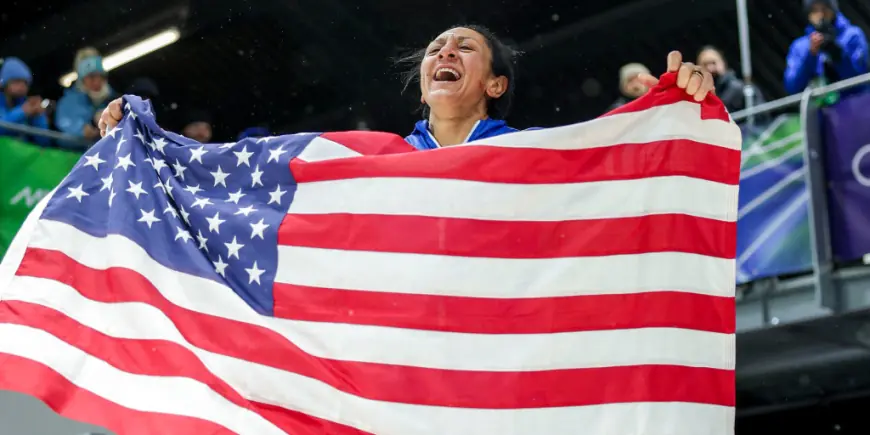
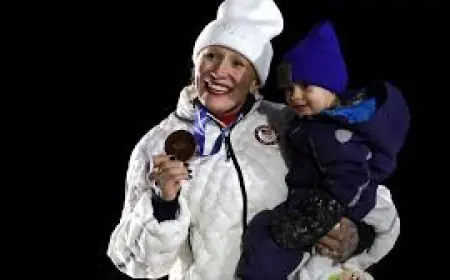
Elana Meyers Taylor delivered one of the signature moments of the 2026 Winter Olympics on Monday, February 16, 2026 ET, winning gold in women’s monobob and finally capturing the one Olympic prize that had eluded her across a career of relentless near-misses. The victory also sharpened the spotlight on two other storylines moving fast through the Games: a familiar USA–Canada showdown now locked in for the women’s hockey gold-medal game, and a men’s figure skating tournament that ended with an unexpected champion and a reshuffled hierarchy.
Monobob Olympics: Elana Meyers Taylor’s first gold, sixth medal, and a record-tying milestone
Meyers Taylor won the monobob with a four-run combined time of 3:57.93, edging Germany’s Laura Nolte by four-hundredths of a second. That margin tells you everything about modern sliding sports: the difference between Olympic champion and runner-up can be a single brush of a wall, one slightly late steering input, or a fractionally slower line through a corner.
Kaillie Humphries took bronze, giving the United States two podium spots in an event that rewards both raw speed and error-free precision. The result also created a rare statistical headline with real emotional weight: Meyers Taylor’s sixth career Olympic medal ties Bonnie Blair for the most medals by a U.S. woman in Winter Olympic history. It’s a number that reframes her entire arc, from perennial medal contender to historic standard-bearer.
There’s also a longevity message baked into the podium. Meyers Taylor is 41. Humphries is 40. In a sport that punishes the body and demands explosive power, their medals challenge the usual narrative that elite winter athletes peak early and fade fast.
Elana Meyers Taylor husband and ethnicity: what’s known and why it matters in the conversation now
With attention surging, so are basic searches: who is Elana Meyers Taylor’s husband, and what is her ethnicity.
She is married to Nic Taylor, a former U.S. bobsled Olympian who has long been part of her support system and day-to-day training life. Their partnership is often discussed in the sport because bobsled is unusually technical and collaborative even in “solo” events like monobob, where coaching, set-up, and run management can decide medals.
On ethnicity, Meyers Taylor is widely recognized as a Black athlete, and her medal count has made her a landmark figure in Winter Olympic history. That point is not trivia. It’s part of why her visibility matters in a space that still struggles with diversity pipelines, access to sliding tracks, and the cost barriers that shape who even gets to attempt these sports.
Women’s hockey Olympics: USA–Canada set for gold, Sweden–Switzerland for bronze
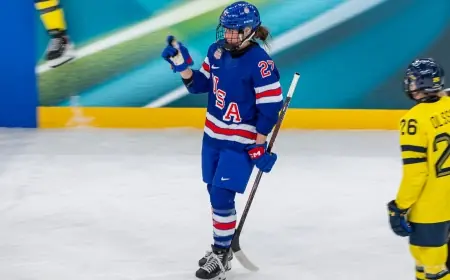
The women’s Olympic hockey bracket has delivered what it so often delivers: the sport’s marquee rivalry with everything on the line. The United States and Canada will play for gold on Thursday, February 19, 2026 at 1:10 p.m. ET. Sweden and Switzerland will meet in the bronze-medal game earlier that morning at 8:40 a.m. ET.
Behind the headline, the incentives are obvious. For USA and Canada, this isn’t only about winning a medal; it’s about defining an era, validating program identity, and controlling the narrative that follows the sport for the next four years. For Sweden and Switzerland, the bronze game is a referendum on whether the gap beneath the top two is truly narrowing, and whether a program can turn a strong tournament into a lasting step forward.
2026 Winter Olympics men figure skating: a new name on top after a chaotic week
Men’s figure skating at the 2026 Winter Olympics ended with a surprise champion: Mikhail Shaidorov won gold, with Yuma Kagiyama taking silver and Shun Sato earning bronze. The podium signals a sport in transition, where depth and volatility are rising, and where even the biggest favorites can be punished by one off night.
One of the tournament’s loudest subplots was the uneven ride of Ilia Malinin, who led the short program but fell out of medal contention after a difficult free skate. That swing is the modern men’s event in miniature: technical ambition is sky-high, and the scoring rewards risk, but the risk can bite hard when timing and nerves misalign.
Behind the headline: what these results reveal about the Games right now
Three stakeholder dynamics stand out:
-
Sliding sports are increasingly about “systems,” not just athletes. Sled set-up, start consistency, and coaching decisions are turning hundredths into gold.
-
Women’s hockey remains the clearest example of concentrated excellence: two superpowers, a growing middle tier, and a bronze game that now carries real prestige.
-
Men’s figure skating is experiencing a rebalancing. The talent pool is wider, outcomes are less predictable, and the margin for error is shrinking.
What happens next: realistic scenarios to watch
-
Meyers Taylor’s gold becomes a launchpad if the U.S. program carries the confidence into the two-woman event and converts momentum into another podium.
-
Humphries and Meyers Taylor’s longevity story drives broader conversations about motherhood, age, and support structures in high-performance sport.
-
USA–Canada hockey tightens into a one-goal game if special teams swing momentum early; it opens up if either side scores first and controls matchups.
-
Sweden–Switzerland becomes a program-defining medal chance, with the bronze winner gaining leverage in development funding and future recruitment.
-
Men’s figure skating enters the next cycle with a new center of gravity, as the gold winner turns from surprise story into the new standard others must chase.
This is what the Olympics look like at full speed: a veteran finally getting her defining gold, a rivalry once again deciding hockey’s biggest prize, and a figure skating podium that proves the future is already here.