
























U.S. Olympic Speed Skaters Revolutionize Team Event with NASCAR Bump Drafting

In a significant development for U.S. Olympic speed skating, the women’s Team Pursuit event has taken a dramatic turn. Utilizing a technique inspired by NASCAR bump drafting, U.S. athletes are breaking new ground in the sport. This innovative approach contributes to the evolution of speed skating strategies, particularly during high-stakes competitions.
The Bump Drafting Technique in Team Pursuit
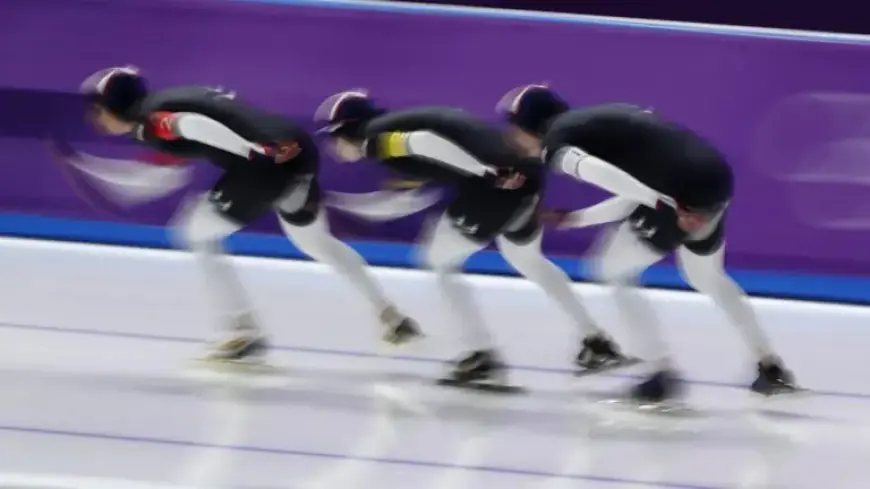
The Team Pursuit event, which features two groups of three skaters racing against each other, requires an extraordinary level of synchronization. Each team navigates a 400-meter track, maintaining close proximity for optimal aerodynamic efficiency. U.S. speed skater Giorgia Birkeland describes the challenge, emphasizing the necessity for skaters to be within “inches” of each other.
As competition speeds reach up to 30 mph, team members must push each other forward by placing a hand on the skater in front. This method aims to create the appearance of a single, cohesive unit on the ice. “You should be seeing only one skater,” Birkeland noted.
Revolutionary Techniques and Innovations
This innovative approach was cultivated after U.S. Speedskating faced disappointing performances for over a decade. Shane Domer, the chief of sports performance for U.S. Speedskating, spearheaded efforts to revamp training methods ahead of the Beijing 2022 Winter Games. To analyze and enhance aerodynamics, Domer employed sports aerodynamicist Ingmar Jungnickel to develop an AI-powered simulation tool.
- Implemented a technique reminiscent of NASCAR bump drafting.
- AI simulations reveal that alternative pushing is significantly faster.
- Teams that use this method have successfully moved from eighth to first in global rankings.
Initially, the strategy faced skepticism among coaches, who were concerned about the physical strain on lead skaters. However, demonstrated improvements in competition outcomes prompted a shift in training protocols. Each athlete began to specialize in a specific position—first, second, or third—while focusing on maintaining close formation throughout the race.
Evolving Team Dynamics
Birkeland highlights the need for trust and communication among team members. As the third skater in the formation, she relies heavily on the lead skaters. “You can’t see anything,” she said, stressing the importance of understanding their body language and skating styles.
With teams worldwide adopting this innovative bump drafting technique, the landscape of competitive speed skating is changing. In the 2022 Winter Olympics, the top three teams utilized this method, signaling its acceptance as the new standard.
Looking to the Future
As U.S. speed skaters continue to refine their training with NASA-inspired methods, they aim for greater success on the international stage. The ongoing improvements are a testament to the hard work and ingenuity of the entire team.
Will technology continue to revolutionize speed skating? The answer may unfold as teams prepare for future competitions. With a blend of traditional skills and innovative techniques, U.S. speed skaters are poised to elevate their performance in the coming years.