






















Elana Meyers Taylor wins women’s monobob Olympic gold as Kaillie Humphries takes bronze

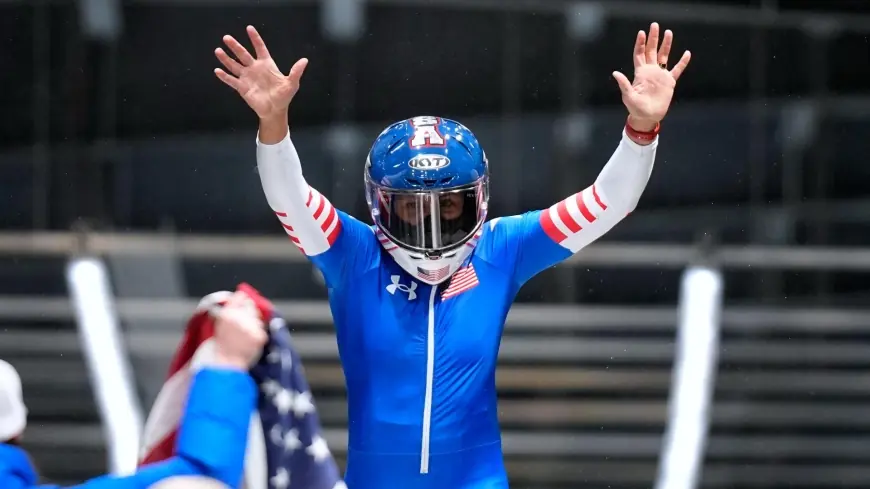
Elana Meyers Taylor delivered the comeback she’d been chasing for more than a decade, winning the women’s monobob Olympics title on Monday, Feb. 16, 2026, and capturing the first Olympic gold of her career. Kaillie Humphries joined her on the podium with bronze, giving the U.S. two medals in the event and sharpening the spotlight on American depth in sliding sports heading into the final week of the Games.
The four-run race at the Cortina sliding track turned in the last heat, when Meyers Taylor jumped from second to first by the slimmest of margins.
Women’s monobob Olympics: final standings and margins
Meyers Taylor’s winning aggregate time was 3:57.93 across four heats, edging Germany’s Laura Nolte by 0.04 seconds after Nolte carried the lead into the final run. Humphries, the defending champion from the event’s Olympic debut in 2022, secured bronze.
| Medal | Athlete | Country | Total time | Margin |
|---|---|---|---|---|
| Gold | Elana Meyers Taylor | United States | 3:57.93 | — |
| Silver | Laura Nolte | Germany | 3:57.97 (approx.) | +0.04 |
| Bronze | Kaillie Humphries | United States | Not publicly confirmed | — |
How the last two runs flipped the race
The decisive stretch came Monday afternoon in Eastern Time, when heats 3 and 4 were staged back-to-back. Heat 3 began around 1:00 p.m. ET, and Heat 4 followed around 3:06 p.m. ET, leaving little room for resetting between runs.
Nolte had been in control at the midpoint, but the final heat punished small mistakes. Meyers Taylor, by contrast, delivered a cleaner, faster closer—exactly the kind of run that wins four-heat events where hundredths matter more than highlight moments. The result read like a familiar Olympic script for her career: always close, finally over the line first.
Why this medal is different for Meyers Taylor
Meyers Taylor is 41, racing in her fifth Olympics, and Monday’s gold was her first after a career that had already produced multiple Olympic silvers and bronzes. That history is part of what made the finish feel so definitive: this wasn’t a breakout, it was a culmination.
It also expands an already rare résumé. With six Olympic medals in total, she has moved into the top tier of U.S. Winter Olympic medalists—an achievement built on longevity, consistency, and the ability to contend across multiple cycles as equipment, tracks, and competitive fields change.
Kaillie Humphries stays on the podium again
Humphries, 40, added yet another Olympic medal to a career that has spanned two national programs and multiple eras of the sport. In monobob, where pilots run solo and the margins can be brutally tight, her bronze reinforced how narrow the gap is at the top—and how often she’s on the right side of it.
For the U.S. team picture, the Meyers Taylor–Humphries one-two on the podium matters beyond a single event. It suggests the program can win with different racing styles, different sled setups, and different pressure responses—useful traits as the schedule shifts to multi-athlete sleds where teamwork, starts, and crew timing become even more decisive.
What it signals for Germany and the rest of the field
Germany’s silver with Nolte will sting because it looked like a likely gold through two heats. But it also confirms the same thing the sport has shown for years: Germany will be in the medal conversation every time the field loads into the start house.
Monobob’s format makes it especially unforgiving. Four runs compress the entire narrative into a handful of seconds, and a slight wall touch or skid can erase an advantage built over three near-perfect heats. The teams that medal tend to be the ones that minimize risk without losing speed—an equation that changes subtly from track to track.
What’s next in bobsleigh after monobob
The bobsleigh schedule now pivots to the remaining marquee events, with medals still to be decided in 2-woman and 4-man later this week. The next women’s bobsleigh medal set, 2-woman, begins Friday, Feb. 20, 2026, with early heats followed by the final day on Saturday, Feb. 21, 2026. The 4-man event follows over Saturday, Feb. 21 and Sunday, Feb. 22, 2026.
For fans who came to monobob for individual star power, the next events add a different kind of drama: synchronization at the start, clean load timing, and whether medal-winning pilots can translate solo precision into team execution. After Monday’s finish, one thing is clear—if the margins stay this tight, the podium could swing on a single imperfect corner.