






















Devin Booker Returns to Center Stage After All-Star Weekend as Suns Manage Ankle Issue and Double Down on Their Long-Term Plan

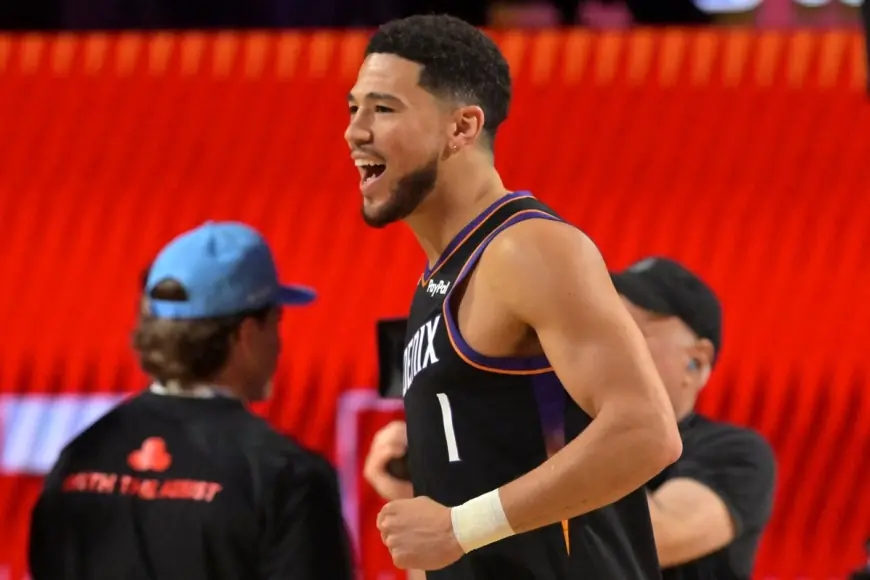
Devin Booker is back at the center of the NBA conversation this week, coming out of All-Star Weekend with renewed attention on two fronts: his health and the Phoenix Suns’ direction after a roster reshuffle. Booker helped his All-Star squad win the 2026 event in Los Angeles, then turned the page quickly toward the regular season as Phoenix balances short-term availability against a long-term investment that now runs through the end of the decade.
The immediate focus is medical. Booker has been dealing with a right ankle sprain in recent weeks, and Phoenix has treated it cautiously, sitting him for select games and monitoring workload. The broader story is strategic: the Suns have signaled that Booker remains the franchise anchor, even as the supporting cast around him continues to change.
What Happened: Booker’s All-Star Impact and the Latest Injury Picture
Booker played a key role in the 2026 All-Star format, contributing across multiple games with scoring, rebounding, and playmaking. His weekend underlined something that matters for Phoenix: even when he is not hunting a high-volume scoring night, Booker’s decision-making and two-way engagement can tilt winning possessions.
Then reality returned. Booker’s right ankle has been the main variable in Phoenix’s late-winter rhythm, with the team choosing rest and “questionable” designations at points rather than pushing him through every rep. The Suns’ approach suggests they are prioritizing stability over hero minutes, especially with the season’s most meaningful games still ahead.
Phoenix is scheduled to resume regular-season action on Thursday, February 19, 2026, ET, against San Antonio. Booker’s availability will be watched closely, but the bigger tell will be how the Suns deploy him: full throttle, minutes restriction, or a measured ramp-up.
Behind the Headline: Why the Suns Are Treating Booker Like a Portfolio, Not a Night-to-Night Asset
Context: the Suns are navigating the modern NBA’s tightrope of star economics and roster churn. When a team commits maximum money to a franchise guard, every injury decision becomes a cost-benefit calculation. One aggressive return can win a Tuesday in February. One setback can compromise April and beyond.
Incentives: Phoenix has two incentives that can look contradictory but actually align. First, they need Booker on the floor to keep the offense coherent, because so much of their shot quality and late-clock problem-solving runs through him. Second, they need Booker healthy enough to justify a contract timeline that stretches into the 2029–30 season. That second incentive is the louder one in February.
Stakeholders: coaches want wins and continuity, teammates want defined roles, and front-office leadership wants proof that the current roster architecture can compete. Booker himself has a reputational stake too: he is constantly measured against the league’s top guards not just by points, but by availability, durability, and postseason leverage.
Second-order effects: when Booker sits, Phoenix’s offense changes shape. The margin for error shrinks, possessions get more scripted, and opponents can load up on predictable actions. When he plays at less than full explosion, defenses test the ankle by crowding his first step and forcing more contact on drives. That can reduce free-flowing offense and increase turnover risk, which is exactly what Phoenix wants to avoid as chemistry develops with a retooled group.
Phoenix’s Roster Shift: What the New Supporting Cast Means for Booker
Phoenix’s recent roster moves have emphasized depth and flexibility, adding and reshuffling perimeter pieces and frontcourt options to stabilize the rotation. The practical impact for Booker is twofold.
First, it can reduce his burden as a constant creator. Better spacing, more secondary handling, and reliable finishing give him more chances to pick spots rather than carry every possession. Second, it can change the defensive demands on him. A roster with more switchable wings can let Booker conserve energy for offense, but only if the group defends consistently without needing him to plug every leak.
In other words, the roster changes are less about replacing Booker’s production and more about creating conditions where Booker can be most efficient when it matters.
What We Still Don’t Know
Several questions remain open heading into the post-break stretch:
-
Whether Booker’s ankle is a day-to-day management issue or something that will linger into March
-
How quickly Phoenix can build reliable late-game habits with the updated rotation
-
Whether the Suns will prioritize seeding or prioritize health with occasional rest nights
-
How defenses will adjust if Booker returns at less than full burst, especially in tight fourth quarters
What Happens Next: 5 Realistic Scenarios and the Triggers to Watch
-
Booker returns with a managed workload
Trigger: Phoenix keeps minutes conservative while testing the ankle in game speed. -
Booker plays, but shifts toward playmaking
Trigger: the ankle limits repeated rim pressure, increasing his facilitation and midrange selection. -
Phoenix leans into depth and spreads creation
Trigger: secondary ball-handlers prove steady, allowing Booker to conserve energy for closing time. -
A short setback forces another brief absence
Trigger: swelling or soreness spikes after a heavy-minute night, prompting a cautious reset. -
Booker catches rhythm fast and Phoenix stabilizes
Trigger: the ankle responds well to ramp-up, and the new lineup settles into defined roles by early March.
Why It Matters
Devin Booker’s week is a snapshot of today’s NBA reality: stars are judged by peak moments, but franchises are built around risk management. Booker’s All-Star performance keeps his stature high. His ankle status determines Phoenix’s ceiling in the weeks that follow. And the Suns’ willingness to prioritize long-term health over short-term urgency is the clearest signal yet that they see Booker not as a season-by-season piece, but as the centerpiece of their next era.