
























USA vs Germany Hockey: Team USA Men’s Hockey Rolls 5–1, Locks Quarterfinal Spot as Auston Matthews and Connor Hellebuyck Set the Tone

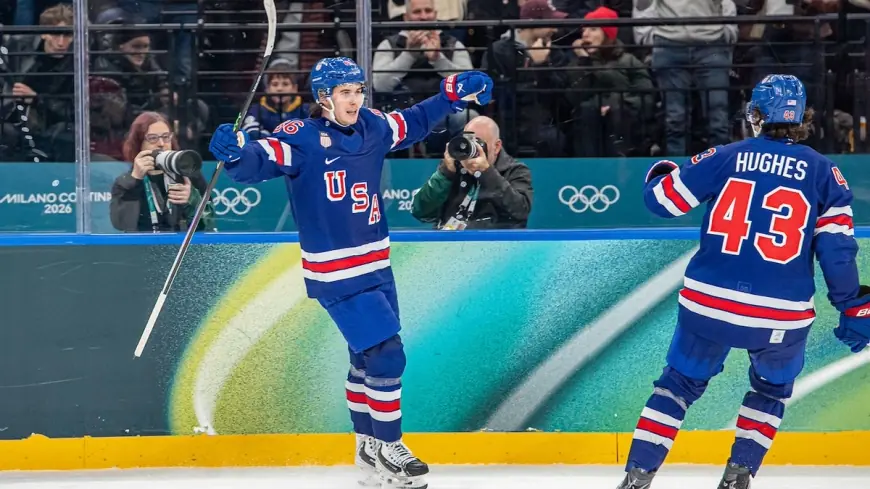
Team USA men’s hockey closed its Olympic group stage with a statement win, beating Germany 5–1 on Sunday, February 15, 2026, in a matchup that doubled as a measuring stick for the knockout rounds. Captain Auston Matthews scored twice, defensemen Zach Werenski and Brock Faber added goals, and the United States leaned on steady goaltending from Connor Hellebuyck to finish group play undefeated at 3–0.
The result matters beyond the scoreline. The United States secured a direct ticket to the quarterfinals and avoided the qualification round, but it did not grab the top overall seed. That seemingly small detail can shape the path to a medal by changing opponents, rest days, and the level of difficulty in the first elimination game.
USA hockey score today: how the United States beat Germany
The game tilted early in the U.S. favor, with pressure shifts driven by pace through the neutral zone and quick activation from the blue line. Werenski opened the scoring late in the first period, setting a tone that the U.S. defense would be part of the attack, not just the safety net.
Matthews delivered the turning point early in the second period on the power play, and the Americans never let Germany settle into its preferred rhythm. Faber’s long-range strike extended the lead, and the United States kept stacking good shifts rather than drifting into a protect-the-lead shell. Matthews’ second goal and a finish from Tage Thompson put the game away before a late German goal spoiled what had been a near-shutout bid for Hellebuyck.
The stat sheet is the headline, but the real tell was control: cleaner exits, fewer extended defensive-zone sequences, and a more connected five-man structure than the U.S. showed in parts of earlier group games.
Behind the headline: what this win says about Team USA hockey
This was the most complete “tournament-style” performance from the United States so far: special teams contributed, top stars produced, and the defensive group impacted play without becoming reckless. That combination is exactly what contenders want right before the bracket starts.
The incentives are also clear. In Olympic hockey, the margin for error shrinks to one bad period. Coaches are trying to peak at the right time, not win the prettiest preliminary games. This win suggests the U.S. coaching staff is tightening details at the right moment: disciplined forechecking, better spacing on reloads, and fewer low-percentage passes that lead to odd-man rushes.
There is another layer, too: star management. Matthews is the type of player opponents game-plan around, and he still found space. That matters because elimination opponents will throw more aggressive matchups and heavier physicality at him. If he can keep generating offense without the U.S. compromising defensively, the entire roster becomes harder to solve.
Connor Hellebuyck and the goaltending question that always follows Team USA
Every Team USA medal run eventually comes down to goaltending under pressure. Hellebuyck’s performance against Germany was the kind coaches love heading into knockout play: calm tracking, controlled rebounds, and no chaos that drags teammates into panic shifts.
The stakeholder dynamic here is simple: the U.S. has the scoring talent to win games, but in a single-elimination format, one elite opposing goalie can steal a night. The U.S. answer must be a goalie who can match that theft attempt save-for-save. Sunday’s game was a confidence builder for Hellebuyck and a signal that the Americans can win with structure, not just firepower.
USA hockey roster: the names driving the run
The Team USA hockey roster is built around NHL-level star power and a defense group designed to move pucks fast. The leaders have shown up in layers:
Key forwards include Auston Matthews, Jack Eichel, Jake Guentzel, the Tkachuk brothers, Matt Boldy, J.T. Miller, and Tage Thompson. That group gives the U.S. multiple lines that can score, which forces opponents to pick their poison.
On the back end, the roster features Zach Werenski and Brock Faber among the headline contributors, along with puck-moving skill that turns quick retrievals into instant counterattacks. When that unit is clean, Team USA can play the kind of speed game that breaks teams before they can set their defensive shape.
Germany hockey: what went wrong and what still makes them dangerous
Germany entered the tournament with a top-heavy profile: high-end talent capable of stealing games, but less margin for error if the supporting cast gets pinned. Even in a lopsided loss, the warning remains the same for future opponents: Germany can be lethal if it gets power plays and turns transition chances into quick strikes.
Germany’s Olympic hockey team features captain Leon Draisaitl, Tim Stützle, and Moritz Seider as the centerpiece names, with Philipp Grubauer in goal on the roster. The issue on Sunday was not that Germany lacked talent; it was that the U.S. limited the kind of time and space those players need to punish teams.
Olympic hockey schedule: what’s next for USA men’s hockey
With the group stage complete, the U.S. now shifts into bracket mode. The next key dates in Eastern Time:
Tuesday, February 17, 2026: Qualification round games determine quarterfinal matchups.
Wednesday, February 18, 2026: Team USA plays in the quarterfinal at 3:10 p.m. ET, facing the winner of a qualification matchup involving Sweden and Latvia.
From there, the schedule tightens quickly: semifinals follow on Friday, February 20, 2026, with medal games on Saturday, February 21, 2026, and Sunday, February 22, 2026.
What we still don’t know, and the triggers that will decide Team USA’s ceiling
The U.S. has momentum, but the missing pieces are the ones that decide medals:
Can the U.S. keep converting power plays against stronger penalty kills?
Will the defensive group maintain discipline when opponents push pace and physicality?
Can Hellebuyck deliver a “steal-a-period” performance if the U.S. gets outplayed for stretches?
Which version of Team USA shows up if it falls behind early?
Realistic next steps are straightforward. If the U.S. starts fast in the quarterfinal and keeps special teams even or better, it should advance. If it takes penalties, chases offense, and lets games turn into track meets, it increases upset risk against disciplined opponents that live for single-elimination chaos.
Sunday’s 5–1 win over Germany did not win a medal, but it did something just as important at this stage: it made Team USA look organized, dangerous, and on time for the moment when the Olympics stop being a tournament and become a survival test.