























How Did Cathy Die in the New Wuthering Heights Movie? The Ending Explained, and Why It Differs From the Book

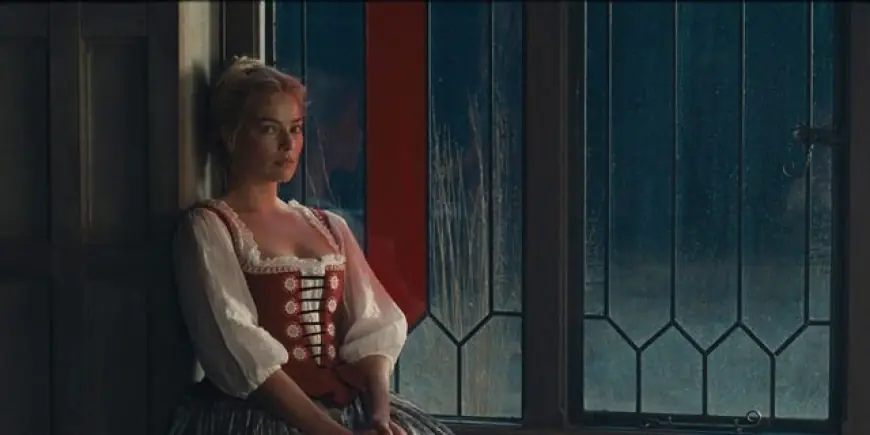
Viewers leaving the latest Wuthering Heights movie have been asking the same question: how, exactly, does Cathy die? The short answer is that the film frames her death as the result of a severe infection after a pregnancy loss, following a spiral of emotional collapse and physical self-neglect. It is a blunt, bodily ending for a character whose story is often treated as more romantic, more spectral, and less medical on screen.
That choice is also a clear departure from the novel’s most widely recognized version of events, where Cathy’s decline culminates around childbirth. The movie’s shift changes not only the mechanics of her death, but the meaning of the story that follows.
What happens to Cathy in the movie ending
In the film, Cathy deteriorates rapidly after the central relationship ruptures again and her mental health collapses. Her behavior turns self-destructive, and the movie ties that breakdown to a pregnancy loss. The pivotal detail is that complications develop into a serious infection, and her condition becomes fatal.
The tone of her final stretch is claustrophobic and physical: feverish, disoriented, and increasingly fragile. Rather than treating her death as an abstract “wasting away,” the movie gives it a specific cause that modern audiences recognize as deadly when untreated or discovered too late. The final sequence leans into the idea that the tragedy is not only emotional, but also avoidable in a different world with different care, attention, and timing.
How that compares with the book’s version of Cathy’s death
In the novel, Cathy’s decline is tied to intense emotional turmoil and a prolonged illness, but the endpoint most readers remember is that she gives birth and dies shortly afterward. That matters because the book continues well beyond her death, following the next generation and showing how the damage she and Heathcliff set in motion echoes through other lives.
Many screen adaptations traditionally keep the “dies after giving birth” backbone even when they compress the timeline, because it preserves the generational hinge: Cathy’s daughter becomes central to the second half of the story.
The latest movie chooses a different hinge. By tying Cathy’s death to infection after pregnancy loss and stopping the narrative where it does, it narrows Wuthering Heights into a single, doomed romance rather than a multi-generational reckoning.
Behind the headline: why the movie made the death more literal and medical
This is not just a plot tweak. It reflects what modern prestige adaptations often prioritize.
Clarity is one incentive. Classic literature frequently signals illness in impressionistic terms, but film audiences expect concrete stakes and recognizable causality. A medical explanation also stops the ending from drifting into soft-focus romanticism. Cathy does not simply fade like a tragic heroine. She dies because her body fails after a crisis that the film frames as both emotional and physiological.
Another incentive is focus. The more the movie invests in the central couple’s volatility, the less runtime it has for the book’s wider architecture. Ending with Cathy’s death gives a clean, devastating full stop. It also turns the story into a closed circuit: passion, rupture, collapse, loss. No second act about consequences. No slow redemption through the younger generation.
Stakeholders and what changes when Cathy dies this way
For the character of Heathcliff, this kind of ending intensifies guilt and helplessness. A death that feels medically specific reads less like fate and more like a sequence of failures, missed interventions, and emotional wreckage. That shifts the audience’s moral accounting. The story becomes less about gothic destiny and more about how cruelty and obsession can manifest as real harm.
For Cathy, the film’s choice can read as a critique of the romantic myth itself. If the relationship is framed as poisonous rather than merely passionate, then her death becomes an outcome of that poison rather than a tragic flourish.
For viewers, it creates a different kind of closure. The haunting vibe still exists, but the movie’s emphasis lands on the cost paid in the body, not only the afterlife.
What we still don’t know, and what viewers should watch for
Some details are intentionally left ambiguous in the film language: the exact timeline of her decline, how quickly the infection takes hold, and how much can be attributed to neglect versus inevitability. The movie also pushes emotion ahead of logistics, which can leave viewers uncertain about what, precisely, happened first.
If you are rewatching, watch for three signals that the film uses to clarify the “how” without stopping for exposition: the escalation of fever-like symptoms, the depiction of blood loss or collapse after the pregnancy event, and the moment when caretaking either fails or arrives too late. Those are the breadcrumbs the movie uses to move from heartbreak to fatal complication.
What happens next, depending on which version you follow
There are two realistic pathways audiences take after this ending.
One path is to treat the movie as a standalone tragedy: Cathy dies, Heathcliff is spiritually stranded, and the story ends as a sealed wound.
The other is to go back to the novel’s structure: Cathy’s death is not the end but the pivot, and the second generation becomes the arena where vengeance either calcifies or dissolves. The movie’s choice to stop early is the real twist, not only how Cathy dies, but what the film refuses to explore afterward.
Either way, the answer to the headline question is now sharper than in many prior versions: in the movie, Cathy dies from a fatal infection tied to pregnancy complications, after a period of severe emotional and physical decline. The story wants you to feel that this was not only tragic, but consequential, specific, and irrevocably human.