




















World vs Stars Lineup Takes Center Stage at NBA All-Star 2026 as USA Stars Edge Team World in a Tight Opener

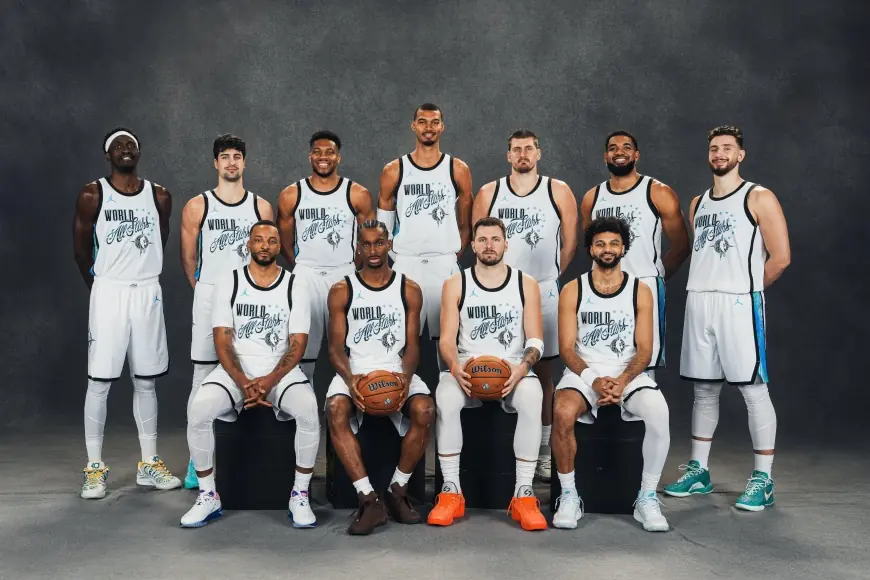
The “World vs Stars” matchup became the focal point of NBA All-Star 2026 on Sunday, February 15, 2026 (ET), as the league’s revamped USA-versus-international concept delivered exactly what it was designed to produce: urgency, recognizable identity, and lineups that feel like a real basketball argument. Played at Intuit Dome in Inglewood, the opening game put the youthful USA Stars group against a stacked Team World roster featuring elite playmaking and size, and it ended with USA Stars scraping out a narrow overtime win that instantly raised the stakes for the rest of the mini-tournament night.
This wasn’t a legacy East-West talent parade. It was a three-team format built around pride and matchup logic, and the World vs Stars lineup was the reason it worked.
World vs Stars lineup: who’s on each side
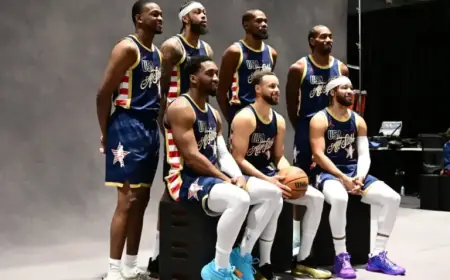
USA Stars roster
The USA Stars team leaned into speed, athleticism, and two-way pressure, blending established scorers with rising stars:
-
Devin Booker
-
Cade Cunningham
-
Anthony Edwards
-
Tyrese Maxey
-
Scottie Barnes
-
Chet Holmgren
-
Jalen Johnson
-
Jalen Duren
The functional identity here is clear: multiple downhill guards, wings who can switch, and bigs who can run. It’s built to turn every loose ball into a transition threat.
Team World roster
Team World came in with a reputation advantage: the international group has dominated awards conversations in recent years, and the lineup looked like a shorthand for modern NBA power.
-
Luka Dončić
-
Nikola Jokić
-
Victor Wembanyama
-
Pascal Siakam
-
Karl-Anthony Towns
-
Deni Avdija
-
Jamal Murray
-
Norman Powell
There were also key availability constraints entering the night, with some prominent international names unavailable due to injury, affecting depth and late-game combinations.
Likely starting fives and how the matchup plays
Because All-Star nights can mix starters and bench groups quickly, “starting five” often means “first look” rather than “finishing lineup.” Still, the most natural opening groups were easy to read.
USA Stars projected starters
-
Cade Cunningham
-
Devin Booker
-
Anthony Edwards
-
Scottie Barnes
-
Chet Holmgren
This group is built to defend without compromising offense. Barnes and Holmgren allow switching and rim protection, while Cunningham, Booker, and Edwards can all create shots without a scripted set.
Team World projected starters
-
Luka Dončić
-
Jamal Murray
-
Pascal Siakam
-
Nikola Jokić
-
Victor Wembanyama
It’s a heavy, skilled front line with two elite decision-makers. The basketball idea is to force USA Stars to choose: switch and risk size mismatches, or stay home and risk open threes and cutting lanes created by Jokić’s passing.
What happened in World vs Stars, and why the lineups mattered
The opener finished 37–35 in overtime, and the scoreline tells you the story: the new format compressed the game into a sprint where every possession felt loud. Team World’s advantage was control. With Dončić and Jokić orchestrating, they could slow chaos into half-court choices, punish mistakes, and generate clean looks without needing pace.
USA Stars’ advantage was stress. Their lineup is designed to make even simple actions uncomfortable: ball pressure up top, athletes flying into passing lanes, and bigs who can contest without abandoning the glass. In short bursts, that style is exhausting for opponents and addictive for crowds.
The overtime finish also exposed the new incentive structure: when you only have a short game to survive, you don’t “save energy for later.” You either execute now or you’re done.
Behind the headline: the stakes the league is trying to manufacture
The league’s challenge has been effort, not talent. A World vs Stars lineup gives players a built-in narrative they can’t ignore: national identity, league status, and the ongoing debate over where the game’s best players come from. That framing changes behavior.
For USA Stars, the incentive is proving the next era of American talent is not just marketable but dominant. For Team World, the incentive is defending the reality that international stars have driven the league’s highest level for years. Fans get a simpler storyline, and players get a reason to care that doesn’t require pretending an exhibition trophy is sacred.
What we still don’t know and what to watch next
Even with a thrilling opener, the biggest questions are lineup questions:
-
Which team finds the best closing five when the game tightens
-
Whether Team World leans into size with two bigs late, or spreads out around a single anchor
-
Whether USA Stars finishes with pure offense, or keeps a defender-heavy look that forces turnovers
The next trigger to watch is adjustment. If Team World responds by spacing Jokić and Wembanyama differently, it can neutralize pressure. If USA Stars responds by hunting mismatches earlier, it can prevent Team World from settling into control.
World vs Stars worked because the lineups made sense, the identities were real, and the format forced everyone to treat it like a game that mattered—at least for a night.