
























Nancy Guthrie Update Today: DNA From a Recovered Glove Raises New Leads as Investigators Press for a Break

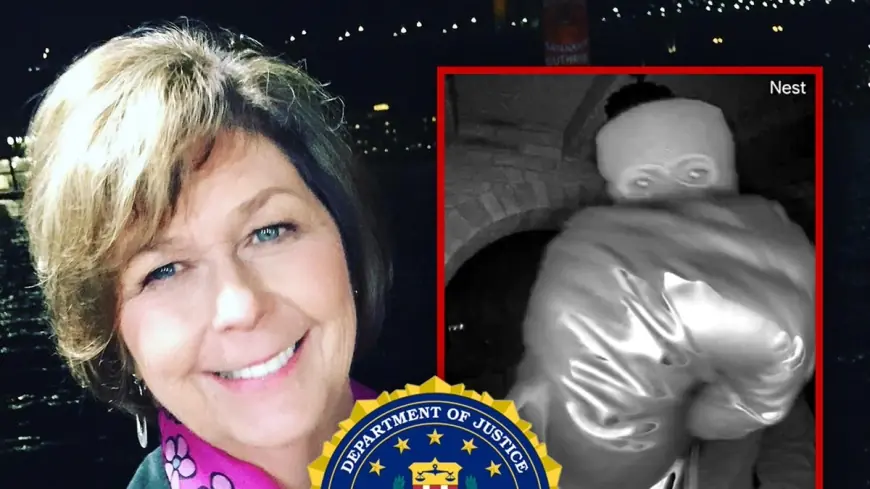
Investigators searching for 84-year-old Nancy Guthrie say they’ve reached a potentially significant forensic milestone: DNA has been recovered from a glove found miles from her Tucson-area home, and authorities believe the glove visually matches what a masked figure wore in security-camera footage captured around the time she disappeared. As of Monday, February 16, 2026 (ET), Nancy Guthrie has still not been found, and no arrests have been announced.
The case remains classified as a suspected abduction. Officials have repeatedly emphasized that Guthrie’s physical limitations make it unlikely she left on her own, and they have tied blood found at the home to her.
What happened and what’s new today
Authorities say the glove that produced DNA was recovered in a field roughly two miles from Guthrie’s home during a broader evidence search that turned up about 16 gloves in total. Investigators believe most of those other gloves were discarded by people involved in search efforts, which is why this specific glove stands out: it appears consistent with what the masked person was wearing on the night Guthrie vanished.
Forensic testing is ongoing. Officials have indicated the DNA work has reached a stage where results are being confirmed before any database comparisons proceed. In practical terms, that means the glove could become a bridge between video evidence and a real-world identity, but it is not yet being treated as a confirmed match to any named suspect.
Investigators have also shared a clearer physical description of the person seen on camera: a male around 5-foot-9 to 5-foot-10 with an average build, wearing a mask and gloves and carrying a medium-sized hiking backpack.
Where the investigation stands right now
The search has moved in waves: initial neighborhood canvassing and scene processing, then targeted efforts tied to tips and potential routes away from the home. In recent days, authorities executed a court-authorized search connected to a lead south of the Tucson area and towed a vehicle believed to be relevant to the investigation. One person was stopped for questioning during that sequence but was later released.
Two ransom notes have circulated during the investigation, and law enforcement says payment deadlines included in the messages have passed without resolution. Officials have not presented proof-of-life publicly, but they have also said they do not have evidence confirming Guthrie is dead.
A reward remains in place for information that leads to Guthrie’s recovery or an arrest.
Behind the headline: why the glove matters, and why it’s complicated
A glove is the kind of evidence investigators love and fear at the same time.
Why it matters: If the glove truly belongs to the masked figure, it may contain biological material that can identify the person directly, link them to other evidence, or connect them to an associate or location. It can also support a stronger legal narrative: not just “a masked figure was present,” but “this person left trace evidence that ties them to the scene and the timeline.”
Why it’s complicated: The search itself can contaminate a scene in innocent ways. That is why officials are stressing that most gloves found were likely left by searchers and why they are being cautious about describing the glove’s DNA as a definitive breakthrough. The investigation is threading a needle between urgency and evidentiary discipline.
Stakeholders and incentives shaping the next moves
For investigators, the incentive is to convert the case from “wide-net” tip gathering into “narrow-target” suspect development. A usable DNA profile can accelerate that shift, but only if it is reliable and connected tightly to the abduction window.
For the person responsible, the incentive is time. Every passing day makes it easier to distance oneself from physical evidence, dispose of clothing, clean vehicles, and create alibis. That’s one reason authorities often lean heavily on forensic timelines early: they lock the story down before it becomes malleable.
For the family, visibility is a double-edged sword. High public attention can generate tips, but it also generates noise, hoaxes, and harmful speculation, all of which can slow investigators and amplify distress.
For the local community, the central stake is whether this was targeted or opportunistic. A targeted abduction suggests personal knowledge and planning; an opportunistic one suggests broader public risk.
What we still don’t know
Several pieces remain missing, and they will determine whether the glove becomes a turning point or a false trail:
-
Whether the DNA is a clean, single-source profile usable for identification
-
Whether the glove can be tied to the suspect beyond “looks similar” through fibers, wear patterns, or other trace evidence
-
Whether investigators have confirmed a vehicle route from the home using nearby cameras
-
Whether the ransom notes are authentic communications from the abductor or an attempt to misdirect
What happens next: scenarios to watch
-
A suspect identification if the DNA profile is confirmed and produces a viable match or lead.
-
A tighter public request for specific information, such as a vehicle type, a route corridor, or a narrowed time window.
-
Additional targeted searches if a verified lead connects the suspect to a property, storage site, or secondary location.
-
A shift in strategy if the ransom-note trail proves unreliable, focusing the case more heavily on forensics and video reconstruction.
For now, Monday’s “today” update is simple but consequential: investigators believe they have DNA from an item that may have been worn by the masked figure seen near Nancy Guthrie’s home. If confirmed, that is the most direct path yet from mystery to a name, but it’s still one step short of the finish line.