




















Kevin Durant Pushes Back on Claim That Old All-Star Games Were More Competitive

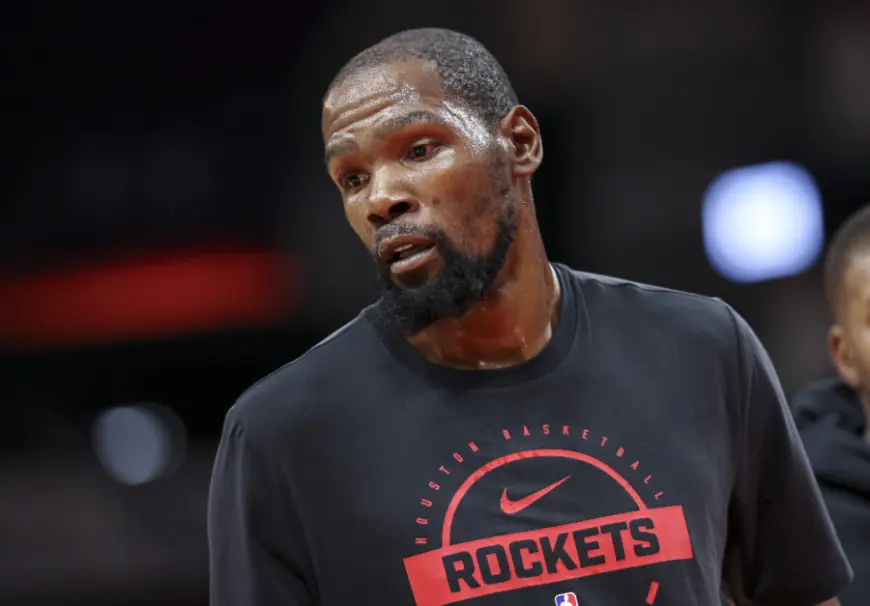
Kevin Durant challenged the narrative that All-Star Games of past decades were universally played with greater intensity, saying he reviewed footage from the 1970s through the late 1990s and didn’t see the sweeping difference some critics describe. The Rockets forward used the weekend to defend current stars and to argue that waning interest in the midseason showcase is a broader cultural issue, not simply the result of veteran superstars taking it easy.
Durant’s All-Star film study: what he watched and what he saw
Durant said he went back and watched “at least the first quarter of every All-Star Game from like the ’70s up until the late ’90s” before weighing in on the conversation about effort and intensity. After that review, he expressed skepticism about the common refrain that earlier generations treated the contest far more seriously than today’s players.
“I’ve been watching All-Star Games and the intensity the older generation been talking about, ” Durant said, then trailed off and shook his head. “I don’t know if I’ve seen it. ” His point: moments of genuine competitiveness likely existed, but the blanket claim that the game used to be uniformly harder may be overstated.
Durant framed his remarks as coming from experience — this All-Star Game marks his 16th appearance — and from direct comparison of footage, not just nostalgia. He suggested that people who long for a bygone intensity may be selectively remembering specific plays or players rather than the whole contest.
Who gets blamed — veterans, internationals or the event itself?
Rather than accept criticism aimed mainly at veteran American stars, Durant shifted scrutiny to members of the World team, calling out Luka Dončić and Nikola Jokić as examples of players who “don’t care about the game at all” when it comes to All-Star play. He pointed to habitual lounging on the floor and low-effort long-distance heaves as evidence that the issue spans player backgrounds and generations.
“You should ask the Europeans and the World team if they’re going to compete, ” Durant said, adding that it’s inconsistent to single out older American players while ignoring what international stars do during the exhibition. His comments underline a broader argument: blame for declining competitiveness is often misdirected and oversimplified.
Declining viewership and the search for solutions
Audience numbers for the All-Star Game have shrunk in recent seasons, a fact frequently cited in debates about the event’s relevance. Viewership for the 2025 game fell roughly 13 percent from the year prior, landing around 4. 7 million viewers, and recent years have produced some of the lowest totals since 2000. That drop has fed the narrative that players’ approach to the game is driving fan disengagement.
Durant pushed back on that causal link. “I just feel like fans and media need something to complain about, ” he said, calling All-Star Weekend a celebration of the game rather than an occasion to relive childhood memories of a supposedly more intense past. His stance implicitly asks leagues, broadcasters and fans to rethink expectations for an exhibition designed to showcase skill and entertain, not replicate playoff-level competition.
League officials have experimented with formats — drafts, team compositions and now country-based matchups — to inject stakes and revive interest. Durant’s view complicates the narrative: if past games weren’t uniformly more competitive, then format changes alone may not be the silver bullet. Restoring viewership and engagement could require a mix of format tweaks, marketing that sells the event’s spectacle, and realistic expectations about the nature of a midseason exhibition.
Whether fans accept Durant’s read of the archives or remain nostalgic for old rivalries, his comments guarantee the conversation about the All-Star Game’s future will continue to be a central storyline around the midseason showcase.