

























Consensus Hong Kong 2026: Crypto, AI Agents and the New Machine Economy

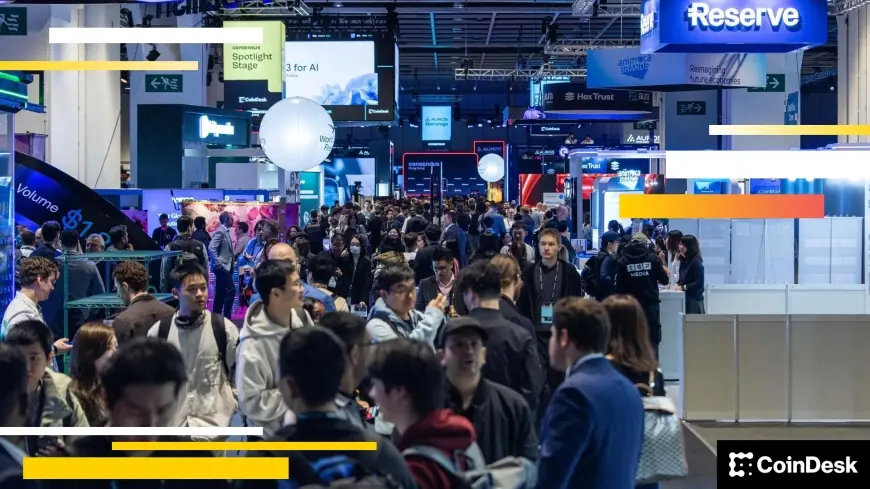
Industry leaders, policymakers and technologists converged in Hong Kong this week to map how crypto could become the payments backbone for autonomous AI agents, debate market stability and weigh regulatory change. Speakers painted a picture of an emerging machine economy in which digital assets and stablecoins fuel automated transactions — even as bitcoin’s recent slide and liquidity concerns in prediction markets kept many on edge.
AI agents and the machine economy: crypto as the payments rail
Hong Kong’s Financial Secretary cast the shift toward machine-driven payments as inevitable, urging the market to plan for agents that can hold and transfer digital assets to pay for services onchain. “As AI agents become capable of making and executing decisions independently, we may begin to see the early forms of what some call the machine economy, where AI agents can hold and transfer digital assets, pay for services and transact with one another onchain, ” he said.
Executives framed stablecoins and crypto tokens as the logical medium for those agentic transactions. An exchange chief described commonplace consumer tasks — booking hotels, flights and other routine purchases — being automated and settled with crypto, calling the technology “the currency for AI. ” That framing positions crypto not just as an investment vehicle but as infrastructure for a new class of automated commerce.
Voices across the ecosystem — from exchange executives to builders and outspoken founders like justin sun — are now part of a broader debate about how to stitch together identity, custody and onchain payment rails for machines. Panelists emphasized technical and policy work remains to ensure secure agent custody, programmable payment flows and protections against misuse as wallets and smart contracts increasingly operate autonomously.
Market turbulence, prediction markets and regulatory focus
Market dynamics tempered optimism. Bitcoin’s value has tumbled sharply in recent weeks, with some participants tracking a drop of nearly $30, 000 in a month and watching the $50, 000 level as a critical point for sentiment. Several attendees warned bitcoin could fall further before finding a bottom, and that volatility may complicate the rollout of crypto-denominated machine payments.
Discussion also turned to prediction markets, which founders argued can monetize information and improve decision-making but which are starting to draw scrutiny for potential side effects. Traders expressed concern that prediction platforms could siphon liquidity away from productive sectors, creating a “negative wealth effect” if betting activity concentrates capital rather than redistributing useful information. Founders noted that blockchain transparency is the primary defense against insider trading, but conceded the line between information markets and gambling can blur.
Regulatory developments were front and center. Hong Kong policymakers reiterated plans to bring crypto companies further into the formal regulatory sphere, with the local securities regulator advancing proposals intended to integrate digital-asset firms more tightly with existing rules. At the same time, market participants signalled they’re watching U. S. lawmaking closely; the size and reach of the U. S. market means its legislative outcome may ripple globally. Some jurisdictions are waiting to see how U. S. negotiations conclude before finalizing their own frameworks, while Hong Kong appears to be moving ahead on its own timetable.
What comes next
Consensus attendees left with a clear sense that crypto’s next chapter will be less about hype and more about plumbing: secure custody for autonomous agents, reliable stablecoins for low-friction payments, and regulatory guardrails to reduce systemic risk. The path forward will require technical standards, cross-border coordination and practical use cases that demonstrate crypto’s utility beyond speculation.
For now, the conference crystallized a dual message: optimism about crypto’s role powering an automated, agent-led economy, paired with sober attention to market stability and policy design. Industry figures, regulators and investors will be watching price levels, liquidity flows and legislative developments closely in the coming months as the sector pushes from concept toward implementation.