

























Erin Jackson leans on Special Forces trial and Olympic pedigree as she defends 500m crown

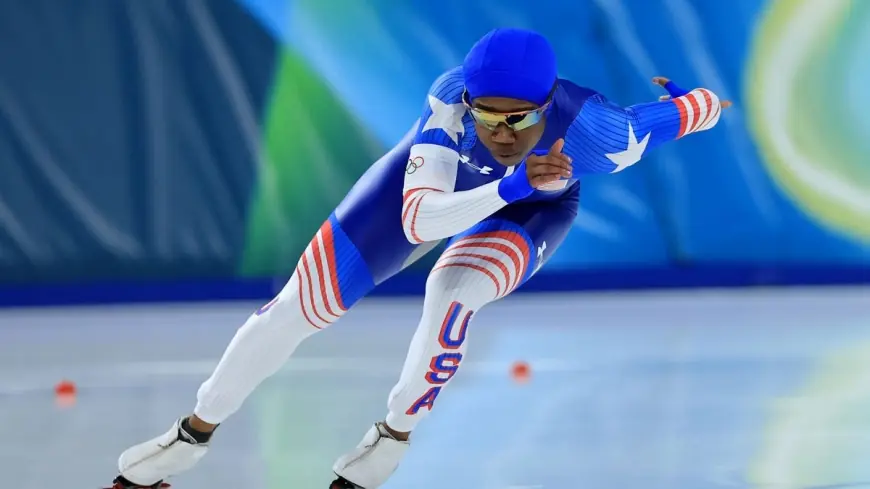
Erin Jackson arrives at the Milano Cortina Oval this weekend with more than gold-medal history on her mind. The 33-year-old American, who became the first Black woman to win an individual Winter Olympic gold in 2022, will skate the women’s 500 meters on Sunday, Feb. 15 at 11 a. m. ET. Recent on-ice form and an off-ice crucible on a reality challenge have both become part of her mental toolkit heading into the title defense.
From submerged panic to renewed confidence
Last fall, Jackson stepped out of her usual training bubble and into a rigorous reality series that tests endurance and composure under extreme stress. The experience pushed her out of comfort zones she had not confronted since childhood. In one drill meant to simulate an aircraft dunk, she was strapped into a mock helicopter, plunged into cold water and told to hold her breath before freeing herself and reaching safety. The exercise triggered a moment of panic; Jackson exited the dunk well short of the time she was instructed to hold.
Despite that reaction, she completed the larger course and emerged with a clearer view of her limits. She called the experience character-building, noting that confronting feared scenarios helped sharpen resolve. That tougher edge, born of discomfort, has translated to a steadier focus on the ice in Milan and a renewed belief that she can perform when margins are smallest.
Ice form, competition and what to watch on Sunday
Jackson’s mileage and results this week point to a mixed but optimistic picture. She posted her second-best ever time in the 1000 meters and finished sixth, a performance that left her sounding confident heading into the 500m. Her signature race remains the 500, and she will draw a deep field of 30 skaters on Sunday. Jackson will skate in the final pairing of the session, a slot that can add pressure but also offers a clear target to chase.
Among the names to watch is a dominant Dutch contender who has been unbeaten at this distance this season and holds the world record. That rival has often finished races with a margin that forces challengers to deliver near-perfect laps. Jackson has shown she can close the gap when healthy; back trouble has cropped up at times, but she said the pain has been manageable in recent outings. If she can marry technical precision with the mental toughness honed off the ice, she gives herself a strong chance of standing on the podium once more.
Jackson’s path to this moment has been unconventional. Raised on inline skates in Ocala, Florida, she amassed dozens of national titles on wheels and even skated roller derby before switching to ice at 24. Within months she qualified for the 2018 Winter Games and, four years later, set track records on her way to historic gold. Those late starts and steep learning curves have shaped a competitor who embraces challenge rather than shies away from it.
Mental margins, team support and the final push
Beyond raw speed, Jackson credits small margins of preparation for major outcomes. Work on starts, tighter crossovers and the ability to remain metronomic under pressure are recurring themes in her training logs. Off-ice, observers and teammates have noted a calmness that belies the anxiety she has worked through. Sarah Warren, present at practice sessions, commented on how Jackson’s focus had tightened this week, pointing to measured warm-ups and intentional breathing routines that suggest a skater in command of the moment.
Sunday’s 500m will test everything Jackson has refined: the explosion from the gate, the ability to hold a perfect lane, and the psychological steel to race clean when every hundredth of a second counts. Whether the Special Forces-style trial or years of wheels-to-blades evolution matter in the result will be decided in two laps. For now, Jackson heads into her title defense with history behind her, resilience beside her, and a plan to race on the narrowest of edges.