











Scottie Scheffler’s 233‑Yard Shot Sets Up Early Eagle on No. 2

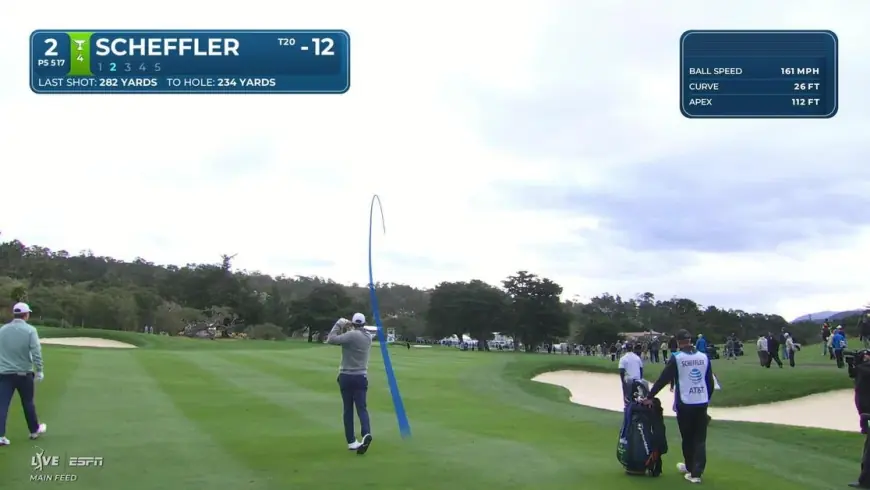
Scottie Scheffler produced a highlight‑reel moment when a 233‑yard approach found the fringe at roughly four feet, leaving him a short eagle try that he calmly converted. The sequence — long, precise tee shot followed by a near‑perfect approach and a made putt — gave him an instant boost early in his round.
The shot: length meets precision
The play began with a powerful tee ball, setting up a long second shot into the green. From 233 yards out, Scheffler emptied the club and flighted a high, controlled approach that landed with soft spin and checked close to the hole. The ball settled to about four feet, a near‑certain birdie look that became an eagle when he calmly stroked the putt. It was a compact sequence that showcased two pillars of his game — length off the tee paired with deft wedge work around the green.
Executing a 233‑yard approach with that level of precision is a reminder of how complete his game can be. Long hitters often rely on brute force, but Scheffler’s strike here blended power with feel, allowing the ball to hold the green and release toward the hole instead of bouncing past. The finish—sinking the short eagle putt—removed any doubt and produced a momentum swing that’s visible even in the early holes of a round.
Immediate impact and broader implications
An eagle on the second hole does more than alter a scorecard; it reshapes a player’s rhythm. For Scheffler, it meant an early injection of confidence that can translate into more aggressive course management and a calmer demeanor when the course tightens later in the day. The combination of length and touch shown on that hole gives him multiple pathways to attack tougher layouts, particularly when drivers and long irons are required.
From a tournament perspective, an eagle this early creates scoreboard pressure. Competitors must chase, and leaders who don’t respond can feel the momentum shift. Even if one hole doesn’t decide a week, it often sets the tone: players who capitalize on early chances force others into riskier decisions that can lead to mistakes. Scheffler’s ability to manufacture low scores from distance keeps him in the mix whenever flags are tucked or conditions become firm and fast.
What to watch next
After a momentum‑building moment like that, the follow‑through matters. Observers will be watching how Scheffler manages the mid‑round stretch: whether he leverages the confidence to attack pins or plays conservatively to protect the early gain. His short game and putting will be under particular scrutiny, since converting pressure putts and scrambling when misses occur will determine how far the early eagle carries him up the leaderboard.
Scheffler’s skills—distance, precision iron play and steady putting—are what make him a perennial threat. This 233‑yard approach to four feet and the ensuing eagle simply underscored that blend in one brief, decisive moment. For fans and rivals alike, it was a reminder that on any given day he can turn a long birdie opportunity into something even bigger.