






















Wuthering Heights review roundup: Fennell’s brazen new take divides critics

Published Feb. 15, 2026, 8: 00 PM ET
Emerald Fennell’s controversial reworking of Emily Brontë’s Wuthering Heights has landed with a theatrical thump. Early critical responses single out the film’s swaggering style, provocative eroticism and bold omissions from the source text — and they differ sharply on whether those choices amount to reinvention or ruin.
Campy, sexual and visually lavish — but emotionally thin
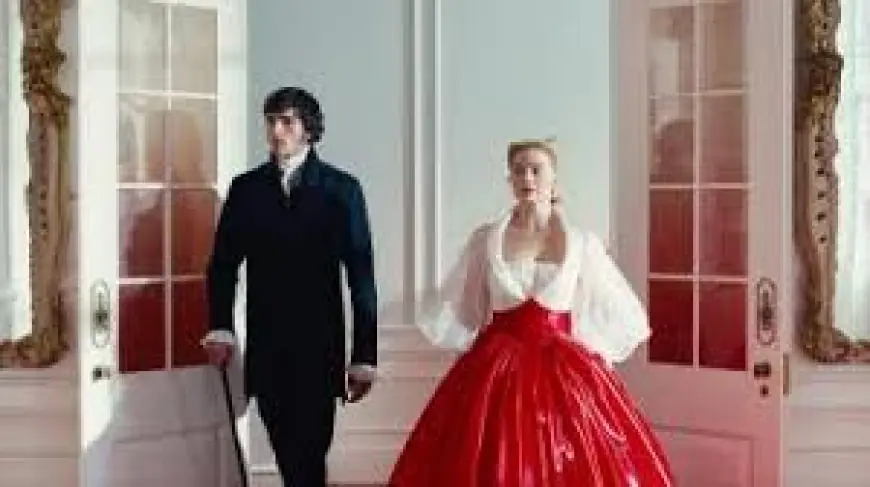
Reviewers note that Fennell amplifies the story’s melodrama into near-burlesque territory: abundant fashion moments, ripped bodices and an overlay of playful BDSM are woven into the windswept moorland drama. The director frequently treats the material as a heightened, postmodern pastiche — an approach punctuated by the film’s title appearing in inverted commas — and that stylistic choice has proved polarising.
Margot Robbie’s Cathy and Jacob Elordi’s Heathcliff are deployed as glamorous archetypes rather than fully realised literary people. Critics argue the leads are too often reduced to sizzling tableaux: moments of sexual teasing and atmosphere replace deep emotional development. The result is a film that many say looks stunning and shocks on cue, but struggles to deliver the moral and psychological heft of Brontë’s novel.
Strong supporting turns and troubling erasures
Among the cast, Martin Clunes emerges as a rare unanimous success. Several reviews single out his performance as a scene-stealing, roistering patriarch; his portrayal is credited with giving the film some much-needed emotional ballast. Other supporting performances draw mixed notices: Charlotte Mellington and Owen Cooper are noted for their work as the young Cathy and Heathcliff, while Shazad Latif’s Edgar Linton and Alison Oliver’s Isabella register variously as comic or tragic figures depending on one critic’s read.
But mixed praise for acting is accompanied by sustained critique of the screenplay’s choices. Fennell’s adaptation excises key narratives from the original, most notably the elder brother Hindley and the novel’s second-generation arc that follows the children of Cathy, Hindley and Heathcliff. Those omissions compress the story and reshape motives, a move that some reviewers say simplifies emotional complexity into surface spectacle.
Wider concerns stem from how the film handles Heathcliff’s background. Critics note a near-erasure of the character’s historically signalled racial otherness, an omission that alters the novel’s dynamics and removes one of the book’s central tensions. That choice has prompted debate over fidelity to source material versus deliberate modern reimagining.
Unreliable narration and tonal whiplash
Hong Chau’s Nelly Dean, the novel’s crucial narrative lens and an archetype of the unreliable narrator, is used in ways that attempt to interrogate the book’s storytelling frame. One reviewer highlights a scene in which Cathy directly confronts Nelly, a moment that suggests the film is at least trying to grapple with narrative culpability.
Still, tonal inconsistency remains a frequent criticism. Shifts from slapstick and camp to genuine heartbreak are described as abrupt and sometimes unearned. The portrayal of Isabella’s relationship with Heathcliff is called out by some as being treated with an unsettling wink, where sharp cruelty in the source text is reframed as performative consent. For a story whose violence and longing are integral, these tonal recalibrations have left several critics uneasy.
As the film reaches wider audiences, conversation is likely to centre on where reinvention crosses into erasure. For viewers drawn to daring, visually charged adaptations the movie offers much to admire; for those seeking fidelity to Brontë’s moral and racial complexities, the new version will feel like a provocative, and for some, a deeply misguided experiment.
Whether Fennell’s choices will ultimately be viewed as bold reinvention or an indulgent misfire may depend as much on audience appetite for style over substance as on how the debate around casting and narrative omission unfolds in the weeks ahead.