
























Nick Viall privately apologized to Austen Kroll after tense podcast exchange, Salley Carson says

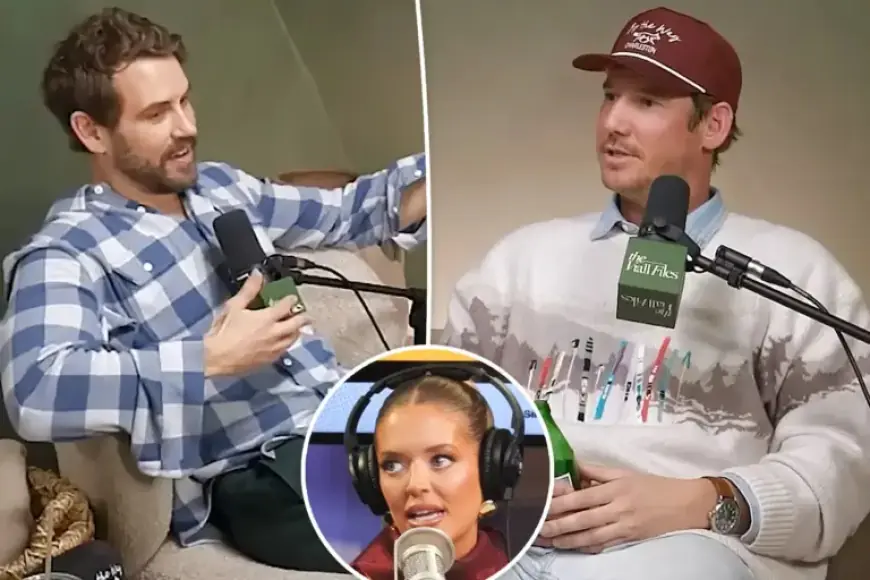
Nick Viall and his wife, Natalie Joy, have privately apologized to Austen Kroll for a podcast segment that pressed the Southern Charm personality about the death of his sister, Salley Carson said this week. Speaking about the fallout, Carson urged the couple to make a public statement as criticism of the January episode continues.
Carson: Private apologies were made, but a public one is needed
Carson said both Viall and Joy reached out to Kroll directly to apologize for the line of questioning, which revisited the traumatic loss of his older sister, Kyle, who died at age 9 during a family hiking trip. While acknowledging the outreach, Carson argued that the moment and its impact warrant a public response. She added that the situation called for something “bigger” and questioned why no broader acknowledgment has been issued.
What went wrong during the Jan. 7 podcast
The episode, recorded on Jan. 7 (ET), veered into Kroll’s childhood when the hosts pressed him about the circumstances surrounding his sister’s death. Kroll signaled discomfort as the conversation changed course, at one point saying, “Okay we are switching gears.” The questions continued, including what age he was at the time, whether he was present when it happened, and details about the location. Kroll declined to share the town where the tragedy occurred.
Viewers familiar with Kroll’s story noted the visibly uncomfortable exchange. Carson said she immediately thought of how difficult it must have been for him and checked in afterward. She also observed signs of unease in the interview, saying his leg was shaking during the conversation—a telltale sign, in her view, that the topic had come out of nowhere and crossed a line.
Backlash builds and calls for editing resurface
Reaction online was swift, with fans and fellow reality TV figures criticizing the tone and content of the questions. The consensus among many was that the tragedy was too personal to probe in that manner, particularly in a public setting without preparation or clear consent. Carson echoed a suggestion that, if the hosts felt regret, the section could have been edited out before the episode went live.
Beyond audience response, the exchange has resurfaced broader critiques around boundaries in podcast interviews—especially when guests are asked to recount traumatic events. For many in the reality TV community, the moment felt needlessly invasive, with the fallout lingering weeks later.
Carson’s wider perspective on boundaries and timing
Carson emphasized that topics as sensitive as a sibling’s death should be navigated on the guest’s terms. In her experience, she said, this is the kind of subject a person raises when—and only when—they feel safe and ready. She stressed that proximity and friendship do not automatically grant permission to revisit painful memories in a public forum.
Her comments also touched on the responsibility of interviewers to read the room and act accordingly. If a guest shows visible discomfort or attempts to steer away, Carson suggested, that’s a signal to change course—and, if necessary, to remove the content before publication.
Where things stand
As of Thursday afternoon (ET), no public statement from Viall or Joy had been issued about the Jan. 7 (ET) exchange. Representatives for Viall, Joy and Kroll were not immediately available for comment. Though the private outreach acknowledged by Carson appears to have taken place, the lack of a public apology remains a sticking point among fans and within the reality TV orbit.
The episode has reignited conversations about duty of care in entertainment interviews—particularly in unscripted formats, where boundaries can blur quickly. With Carson’s on-air comments placing fresh attention on the matter, the ball is now in Viall and Joy’s court to determine whether a broader acknowledgment is forthcoming.