
























LeBron James’ next move: Windhorst floats four-team list as Lakers future hangs in the balance

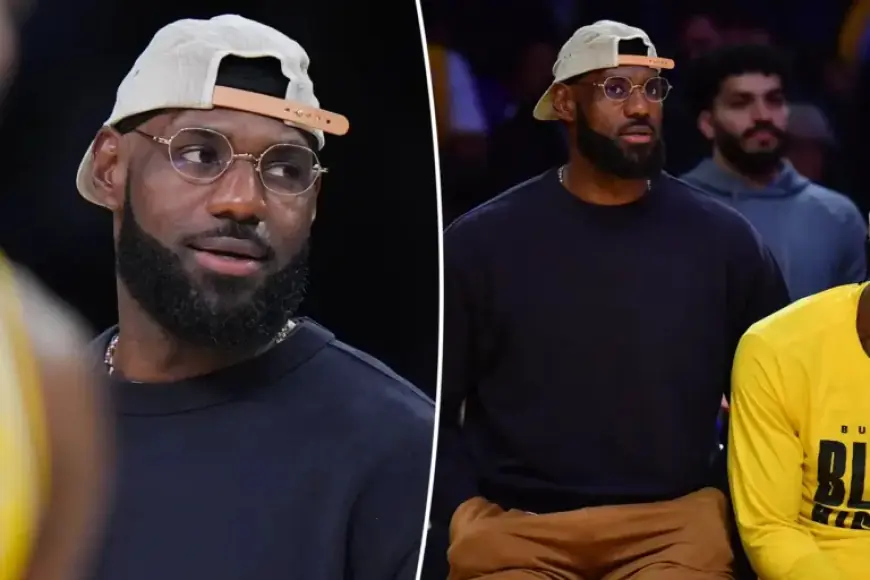
As the NBA pauses for All-Star festivities, the league’s biggest question sits squarely on LeBron James’ shoulders: Will the 41-year-old extend his career into a 24th season — and will it be in Los Angeles or somewhere new? This week, Brian Windhorst stated that James would be open to four potential destinations if he and the Lakers part ways, with Golden State and Cleveland identified and two other teams left unnamed.
A four-team framework emerges
James has not publicly committed to his 2026–27 plans, keeping his options tight to the vest. Windhorst’s remarks sharpened a narrative that has been simmering for weeks: a return to Cleveland remains in play, the Warriors’ star-laden core is intriguing, and there are additional suitors who have yet to surface publicly. Separately, league insider Jake Fischer recently suggested both sides may be prepared for a split, framing this summer as a decision point after a long and decorated run in Los Angeles.
The headline is less about whether James will play — expectations around the league lean toward another season — and more about where. That question now moves front and center as front offices take stock of cap sheets, draft picks, and the complex mechanics required to land a player of James’ stature at this stage of his career.
What it would take financially
Any pathway to Golden State or Cleveland would be shaped by dollars and flexibility. Both teams carry significant salary commitments, which limits straightforward routes to a market-value deal for James. The most plausible mechanisms are a substantial pay cut, a sign-and-trade, or creative multi-team construction — each with drawbacks, particularly hard-cap implications and depth trade-offs.
For a contender already deep into luxury tax territory, the cleanest scenario is James accepting well below his typical rate, potentially even a figure approaching the veteran minimum — an idea floated in recent chatter but one that would represent a dramatic concession. A sign-and-trade increases optionality but adds restrictions and often costs rotation pieces and draft capital. By contrast, the Lakers can leverage continuity and existing rights to keep James on a top-of-market number with fewer moving parts, preserving more roster control around him.
Warriors intrigue vs. cap reality
The Warriors concept is obvious: elite shooting, advanced playmaking, and the chance to pair James with Stephen Curry in a fully realized, night-to-night setting after past Team USA cameos. Draymond Green has long expressed interest in sharing the floor with James, noting the appeal of experiencing his in-game calculus up close. Even so, Green has acknowledged a practical hurdle: the path is murky given the current cap landscape.
On-court, the fit would be fascinating — Curry’s gravity, James’ downhill creation, and Golden State’s motion principles could generate clean looks at scale. The question is whether the Warriors could assemble a workable deal without stripping away the connective tissue that makes their system hum, and whether James would sacrifice salary to make the numbers meet.
Cleveland’s pull and the cost of a reunion
A Cleveland reunion always commands attention. The franchise and fan base are intertwined with James’ legacy, and the Cavaliers’ competitive posture keeps the idea alive. The complications mirror Golden State’s: cap constraints, asset calculus, and the need to maintain enough depth to contend once James is in the building.
Sentiment alone won’t close a deal. Any return would require synchronized priorities — a shared vision on role, contract structure, and roster reshaping — while avoiding overreach that undermines the contention window James would be joining.
The Lakers’ stance and what comes next
The Lakers remain firmly in the conversation to retain James, with organizational continuity and off-court roots in Southern California serving as natural advantages. The franchise can present clarity: a contract framework that reflects his stature and a plan to optimize the remaining title window. That said, the noise around potential alternatives isn’t fading, and it will shadow the back half of the season.
For now, expect patience. James typically sets his timeline, and with playoff seeding and postseason performance still to come, the calculus can change quickly. Windhorst’s four-team framing provides a roadmap for what to monitor, but the only clock that matters is James’ own — and when he’s ready, the league will move to meet his decision.