

























“Rising Wood Imports Raise Questions on Source Transparency”

As timber imports surge in Australia, consumers are increasingly demanding transparency in sourcing practices. A recent survey by Choice revealed that nearly all Australians want country-of-origin labels on wood products.
Rising Wood Imports Raise Questions on Source Transparency
Timber imports in Australia have reached unprecedented levels, fueled by heightened post-pandemic demand for construction materials. Choice, a consumer advocacy group, conducted a survey involving over 7,200 participants. The results showcased a strong preference among consumers for knowing the origin of timber products.
Survey Insights
- 99% of respondents expressed a desire for information on timber sourcing.
- Nearly all participants indicated that origin labels would influence their purchasing decisions.
“People are concerned about making environmentally friendly choices,” noted Jarni Blakkarly, a reporter from Choice. This growing awareness has sparked calls for clearer labeling laws to empower consumers to make informed decisions.
Current Timber Import Trends
The Australian Bureau of Agricultural and Resource Economics and Sciences (ABARES) reported a staggering 40% increase in laminated veneer lumber (LVL) imports from 2022 to 2023. Specifically, imports rose from 120,000 cubic meters in 2022-23 to 167,000 cubic meters in 2023-24.
- Approximately 50% of LVL imports originate from China.
- Malaysia and Indonesia contribute about 10% each to the import volume.
Urgent Need for Timber Labelling Reform
The Australian Forest Products Association (AFPA) is advocating for reform in timber labeling regulations. Diana Hallam, AFPA’s chief executive, emphasized that consumers deserve more information about their timber products. “If consumers are the loudest voice in this, then I’ll be sure we’ll get there,” she stated.
Despite established laws against illegal logging since 2012, wholesalers are not mandated to provide traceability records to buyers. Hallam pointed out that recent surveys identified imported timber that did not pass traceability requirements. Alarmingly, some laminated veneer lumber from China contained banned timber sourced from Russia.
Impact of Logging on Indigenous Communities
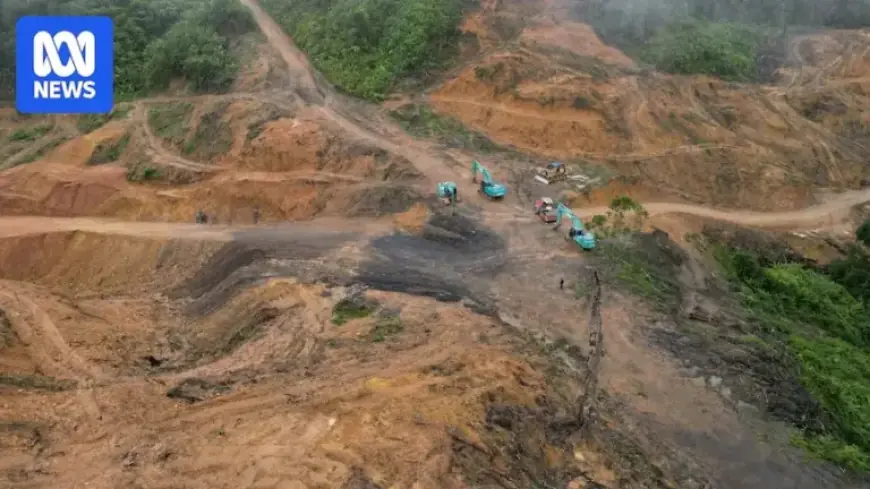
The repercussions of logging extend beyond Australia, affecting communities in timber-producing countries. Blakkarly traveled to Sarawak, Malaysia, where he observed the impact of timber harvesting on Indigenous populations. Many villagers lamented that loggers often operated without proper consent, leading to disruptions in their traditional way of life.
These communities rely on the jungle for food and medicine. “They are determined to highlight the real-world impacts on their livelihoods,” said Blakkarly. As the demand for timber grows, the call for transparency in sourcing has never been more critical.