

























The Harsh Economics Driving Orbital AI Development

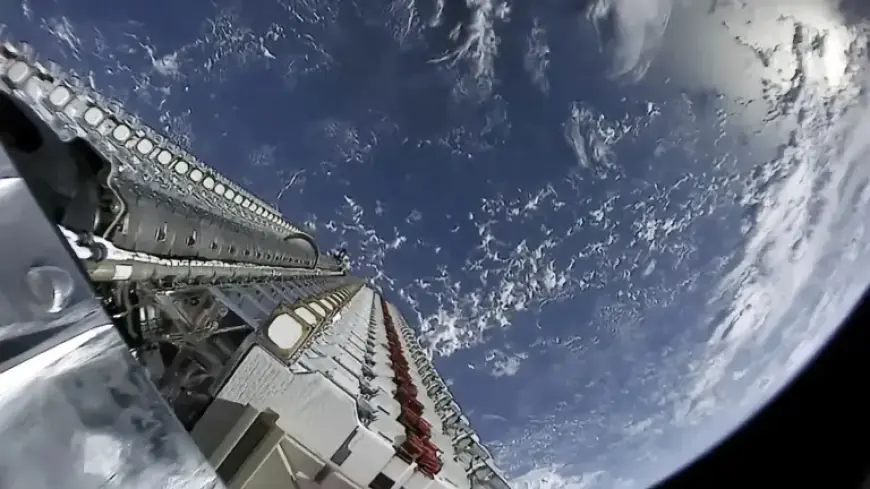
The increasing intersection of artificial intelligence and space technology is raising intriguing possibilities, particularly the development of orbital AI data centers. Companies like SpaceX, Google, and xAI are spearheading initiatives that promise to leverage orbital environments for significant computational power. However, several economic challenges lie ahead in transforming this vision into reality.
The Vision for Orbital AI Development
Elon Musk has long championed the notion of utilizing AI in space, drawing inspiration from science fiction. Recently, SpaceX sought regulatory approval to construct solar-powered orbital data centers, potentially distributed across a million satellites. Musk believes that, within three years, space may become the most economical location for AI operations.
Major Players in Orbital AI
- SpaceX: Seeking to build solar-powered data centers utilizing up to 100 GW of compute power.
- xAI: Led by Musk, focusing on integrating AI with orbital infrastructure.
- Google: Launching Project Suncatcher, expecting to deploy prototypes by 2027.
- Starcloud: A startup with plans for an 80,000 satellite constellation, recently raising $34 million.
Economic Considerations: The Costs of Space Data Centers
Despite the ambitious plans, current terrestrial data centers are still more cost-effective than their orbital counterparts. An analysis reveals that establishing a 1 GW orbital data center could cost around $42.4 billion, almost three times that of a similar ground-based facility.
Cost Factors
- Launch Costs: Presently, SpaceX’s Falcon 9 rocket charges approximately $3,600 per kilogram.
- Technical Improvements: A target cost of $200 per kilogram is essential to make orbital data centers viable.
- Satellite Manufacturing: Right now, the cost for manufacturing satellites can be close to $1,000 per kilogram.
Overcoming Technical Challenges
The successful realization of orbital data centers will hinge on several technological advancements. Key challenges include thermal management, cosmic radiation exposure, and the durability of solar panels in a harsh environment.
Key Technical Challenges
- Thermal Management: Effective heat dissipation in space requires complex systems.
- Cosmic Radiation: Chips may experience degradation from rays, requiring protective measures.
- Solar Panels: Balance between efficiency and cost is crucial; current solutions have limitations.
Future Perspectives
As the economic and technical landscapes evolve, so too will the applications of orbital AI data centers. Current predictions suggest that, while the main value likely lies in inference tasks, ideal conditions for AI training in space remain uncertain. The first applications may involve conducting inference workloads with reduced hardware requirements.
Industry leaders, including SpaceX and Google, are exploring the intricate dynamics of combining terrestrial and orbital systems. As efforts advance, the focus will shift on resolving how best to integrate these technologies effectively.