
























Analyzing Police Actions at Sydney Protest: Excessive or Reasonable?

The recent protests in Sydney sparked a significant debate about police use of force. Crowds gathered in the CBD to demonstrate against Israeli President Isaac Herzog’s visit, leading to confrontations with law enforcement. Footage from the rally raised concerns over the appropriateness of police actions during these interactions.
Analyzing Police Actions at Sydney Protest: Excessive or Reasonable?
During the protests, protesters reported being physically pushed and punched by police officers. While some claimed police used excessive force, NSW Premier Chris Minns defended the officers’ actions. He emphasized the necessity of evaluating the context surrounding police decisions in such volatile situations.
The Use of Force Guidelines
NSW police are permitted to use reasonable force during operations, which can range from physical restraint to more serious measures. Vince Hurley, a criminologist from Macquarie University, highlighted that the discretion of police varies based on the circumstances they encounter. The force applied is often based on the officer’s experience and the perceived risk at that moment.
The New South Wales Police Use of Force Manual outlines three key principles:
- Force must be reasonably necessary.
- It should be appropriate to the situation at hand.
- Officers should attempt to de-escalate tensions where possible.
Expert Opinions on Police Actions
Experts analyzed the protest footage and expressed differing views on the appropriateness of force use. Vicki Sentas, an associate professor at UNSW, noted that the aggressive nature of police responses appeared disproportionate. She argued it is unjustifiable for officers to resort to repeated force without giving protesters a chance to comply with orders to disperse.
Samantha Lee from the Redfern Legal Centre complemented these views by stating that legality hinges on whether a reasonable person in the officer’s position would have acted similarly under the same circumstances.
Incident Analysis
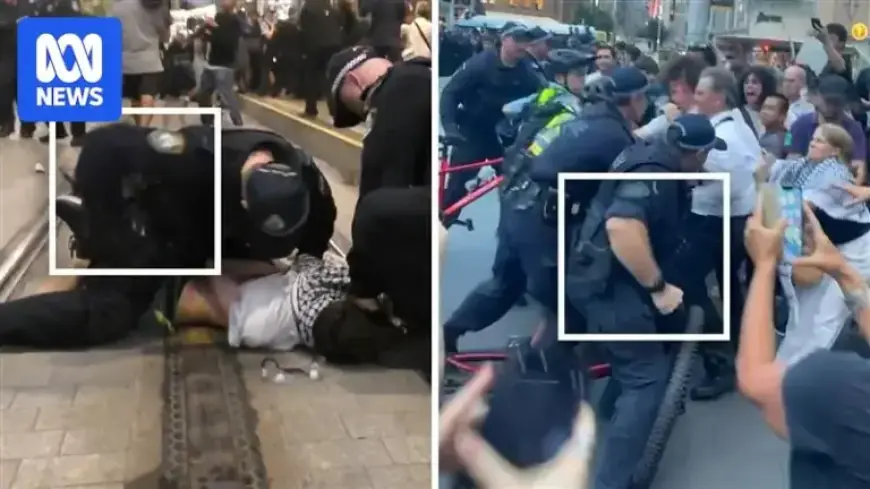
Two notable incidents emerged during the protests. One involved a man being restrained on the ground, during which he allegedly bit an officer. Witnesses observed that he was subjected to multiple punches while immobilized. Sentas condemned the use of force in this instance, asserting it lacked justification.
Another situation featured a protester clashing with a bicycle officer. Footage showed the officer apprehending the protester’s shirt, leading to a struggle. This encounter escalated as additional officers intervened, resulting in punches being thrown at the man. Experts again expressed concerns regarding the proportionality of the police response.
Next Steps and Investigations
In light of the events, calls for comprehensive investigations into police conduct have emerged. NSW Police Commissioner Mal Lanyon confirmed that a review of body-worn camera footage will be conducted to assess the incidents. Furthermore, some protesters are seeking legal recourse, suggesting ongoing discussions about the balance between police authority and civil rights.
As public scrutiny continues, experts emphasize the importance of accountability and clarity regarding police actions. The evaluation of this incident may shape future policies and procedures surrounding police use of force in Australia.