























Guthrie Update Today: New Law-Enforcement Canvass, Renewed Searches, and Fresh Scrutiny Around Nancy Guthrie, Annie Guthrie, and Tommaso Cioni

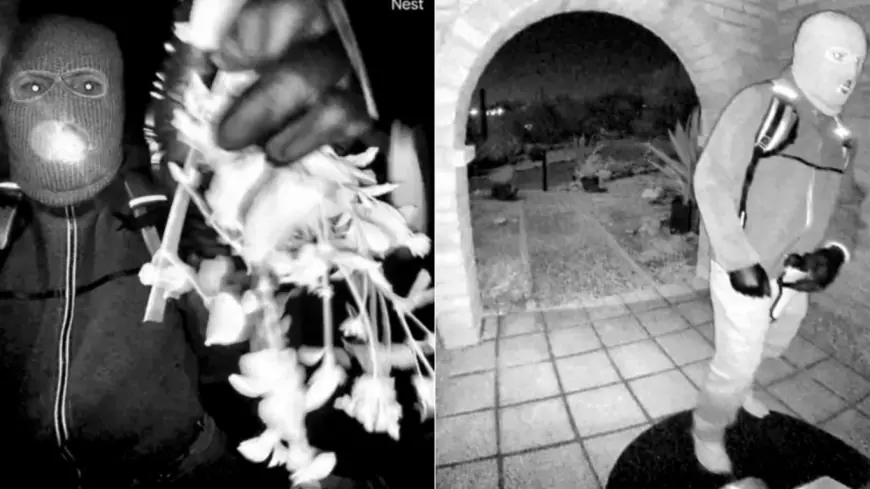
A new Guthrie update today centers on intensifying investigative activity tied to the disappearance of Nancy Guthrie, with law enforcement expanding canvassing efforts and returning attention to locations linked to her family. The latest developments have pulled Annie Guthrie and Tommaso Cioni deeper into the public spotlight, even as key details remain unconfirmed and officials have kept core investigative findings close.
What happened in the latest Nancy Guthrie update
In the past 24 hours, the most visible shift has been a broader, more public-facing investigative posture: officers have been seen going door-to-door in a neighborhood connected to the case, a tactic typically used to lock down timelines, identify unfamiliar vehicles, and locate any overlooked camera footage.
Investigators have also conducted additional activity tied to Annie Guthrie’s home, described as a renewed search rather than a one-off visit. In cases like this, repeat searches often indicate one of two things: either new information has emerged that makes a prior location relevant again, or analysts have reinterpreted earlier evidence and want to verify a specific theory using targeted checks.
Meanwhile, Tommaso Cioni’s name continues circulating online in connection with the investigation. At this stage, what is clear is attention and curiosity—not a confirmed public designation of his status. Where people stand in a case can change quickly, and the public usually learns far less than investigators know in real time.
Why the investigation is widening now
Door-to-door canvassing and repeat-location searches usually signal urgency and sequencing. The practical goal is to collapse the uncertainty around “who saw what, when” so investigators can test competing narratives against time-stamped reality: sightings, unusual sounds, unfamiliar visitors, or cars that appeared out of place.
There’s also a strategic reason for visibility. When investigators go overtly door-to-door, it can prompt reluctant witnesses to speak, encourage residents to preserve camera clips before they auto-delete, and generate tips that fill gaps no lab can solve. It also pressures anyone with relevant knowledge—innocent or otherwise—to account for their time.
Stakeholders and incentives behind the headline
This Guthrie update is not just a missing-person story; it’s an information-and-trust test involving multiple stakeholders:
-
The family: Their incentive is to find Nancy Guthrie quickly while protecting privacy and avoiding rumor-driven harm.
-
Local and federal law enforcement: Their incentive is to gather verifiable evidence fast, prevent tip overload from drowning useful leads, and preserve the integrity of any eventual prosecution.
-
The community: Neighbors want safety and clarity, but also fear becoming unwilling characters in a high-profile case.
-
Online spectators: Attention rewards certainty, even when certainty is not available—creating a pipeline for misidentification and narrative drift.
The tension is predictable: investigators want controlled disclosure, while the public wants immediate answers. That mismatch is where speculation thrives.
What we still don’t know
Despite the visible activity, several missing pieces remain central:
-
The confirmed timeline: The last verified sighting, the precise window of disappearance, and whether there were intermediate contacts remain unclear publicly.
-
The evidentiary basis for renewed searches: Investigators have not fully explained what prompted a return to a family-linked location.
-
The status of named individuals: Annie Guthrie and Tommaso Cioni are being discussed widely, but public chatter is not the same as an official finding.
-
The role of any digital trail: If there were ransom communications or financial demands, the public still lacks confirmed details about what has been validated versus what is rumor.
Second-order effects: the costs of publicity and rumor
High-profile cases can distort behavior. Neighbors may delete footage out of privacy concerns or fear of being dragged into public controversy. Tip lines can become clogged with look-alike sightings. People connected to the family can be subjected to harassment, which can reduce cooperation and degrade the quality of information investigators receive.
There’s also a legal second-order effect: premature conclusions can complicate jury selection and create defense arguments about tainted public perception, even if investigators ultimately build a strong case.
What happens next: realistic scenarios and triggers to watch
Here are the most plausible next steps in the Nancy Guthrie update cycle, with clear triggers:
-
More public video stills or surveillance frames released
Trigger: investigators determine community recognition is more valuable than keeping visuals private. -
A clarified timeline from officials
Trigger: door-to-door canvassing yields corroboration strong enough to publish without compromising the investigation. -
Search activity shifts to a new geographic focus
Trigger: a verified camera hit, vehicle identification, or location-based digital data points away from the current area. -
Public clarification of key individuals’ status
Trigger: online speculation reaches a level that threatens safety or materially disrupts investigative work. -
Targeted requests to the public for specific items
Trigger: investigators realize they need one missing detail—such as a make and color of a vehicle or a precise time window—to validate a lead.
Why it matters
This Guthrie update matters because time compresses options in missing-person investigations. The current phase—rechecking locations, canvassing, and tightening the timeline—is often where cases pivot: either toward a verified trail that can be pursued quickly, or into a slower, more complex effort where uncertainty expands.
For now, the most accurate description is still developing: visible investigative steps have increased, but the public record remains incomplete. The next meaningful milestone will likely be an official timeline clarification, a confirmed lead that redirects search resources, or a targeted public request that signals investigators know exactly what they need next.