






















Lowest-scoring Super Bowl: Patriots-Rams 13–3 still stands as the record

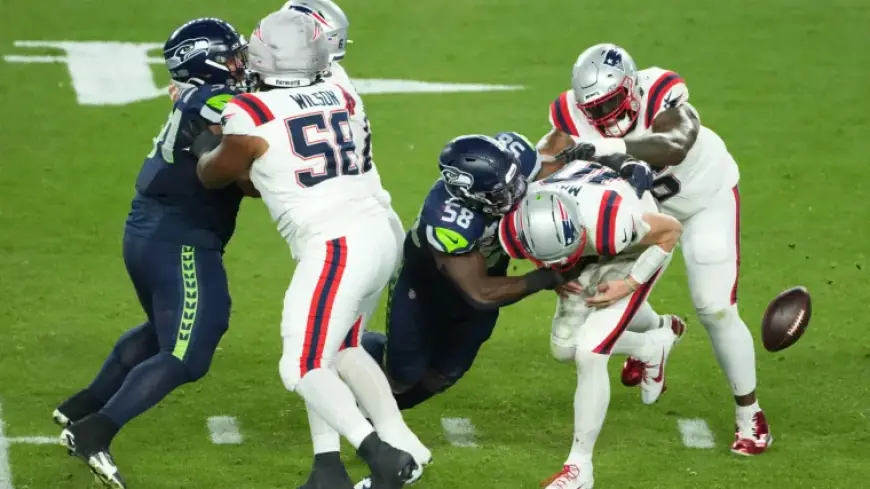
With Super Bowl season again putting defense-heavy games back in the spotlight, the NFL’s lowest-scoring championship remains the same: Super Bowl LIII, when the New England Patriots beat the Los Angeles Rams 13–3 on Feb. 3, 2019. The final added up to 16 total points, the fewest ever in a Super Bowl, and it has held up even as the league’s offense-friendly era has pushed regular-season scoring higher.
The game has become shorthand for a specific kind of Super Bowl tension—one where every punt matters, field position is a weapon, and a single touchdown can feel like a knockout blow.
The night 16 points became the benchmark
Super Bowl LIII kicked off in prime time on Sunday, Feb. 3, 2019 (ET) in Atlanta. What many expected to be a high-scoring matchup instead turned into a long stalemate shaped by two disciplined defenses and conservative game management.
At halftime, New England led 3–0, and neither team found the end zone until the fourth quarter. The Rams managed only a field goal, and New England’s lone touchdown ended up being the decisive swing in a game where yards were hard to come by and mistakes were punished immediately.
How the scoring unfolded
The scoring summary is unusually short for a modern Super Bowl:
-
Patriots 3–0: A second-quarter field goal put New England ahead.
-
Tie game 3–3: The Rams answered with a long field goal in the third quarter.
-
Patriots 10–3: New England scored the game’s only touchdown early in the fourth.
-
Patriots 13–3: A late field goal extended the lead and left Los Angeles needing a miracle.
The Rams reached scoring range late, but the comeback never materialized. In the end, the game hinged on a small number of drives—and one key defensive play that flipped momentum for good.
The defensive moment that broke the stalemate
The signature sequence came late in the fourth quarter when New England’s defense produced a turnover that effectively ended Los Angeles’ chances. Instead of giving the Rams another shot to tie the game, the takeaway set up a clock-draining march and the final points that sealed it.
That’s a big reason Super Bowl LIII is remembered less for flashy highlights and more for situational football: disguised coverages, timely pressure, and the ability to win third downs even when neither offense could consistently win first downs.
How it compares to other low-scoring Super Bowls
Super Bowl LIII didn’t just edge out the previous record—it separated itself clearly. For decades, Super Bowl VII (14–7) had been the standard for “lowest-scoring Super Bowl,” but LIII pushed the floor lower.
Here’s how the bottom of the scoring list stacks up:
| Super Bowl | Season | Final score | Total points |
|---|---|---|---|
| LIII | 2018 | Patriots 13, Rams 3 | 16 |
| VII | 1972 | Dolphins 14, Washington 7 | 21 |
| IX | 1974 | Steelers 16, Vikings 6 | 22 |
| VI | 1971 | Cowboys 24, Dolphins 3 | 27 |
| V | 1970 | Colts 16, Cowboys 13 | 29 |
The pattern is consistent: when total points dip this low, the margin for error vanishes. A single turnover, a missed kick, or one broken tackle can decide everything.
Why the record is hard to break
It may seem counterintuitive, but in today’s NFL the “lowest-scoring Super Bowl” record is surprisingly difficult to top—even with elite defenses. A few structural factors work against it:
-
Field goal reliability: Modern kickers convert at high rates, so stalled drives still tend to produce points.
-
Fourth-down aggression: Teams are more likely to keep possessions alive instead of trading punts, which can create short fields.
-
Rules that protect passing: Even when offenses struggle, a couple of penalties or quick completions can flip a game script fast.
To beat 16 total points, you effectively need a game where both offenses are shut down and the kicking game doesn’t inflate the score—an unusually narrow set of circumstances.
What to watch when a Super Bowl starts slow
When a championship game opens with punts and field goals, the historical comparison always comes up. But the key indicator isn’t the score alone—it’s whether either team can generate explosive plays or create short fields.
If both quarterbacks are forced into long drives, and the defenses avoid penalties, a game can stay “stuck” in low gear for three quarters. If one turnover sets up a short touchdown, though, the math changes quickly. That’s what made Super Bowl LIII so unusual: it stayed locked until late, then ended without the kind of scoring rush that normally follows.
Sources consulted: NFL, ESPN, Guinness World Records, NBC Sports