

























Trump Greenland dispute drives new diplomacy push and sharper European backlash

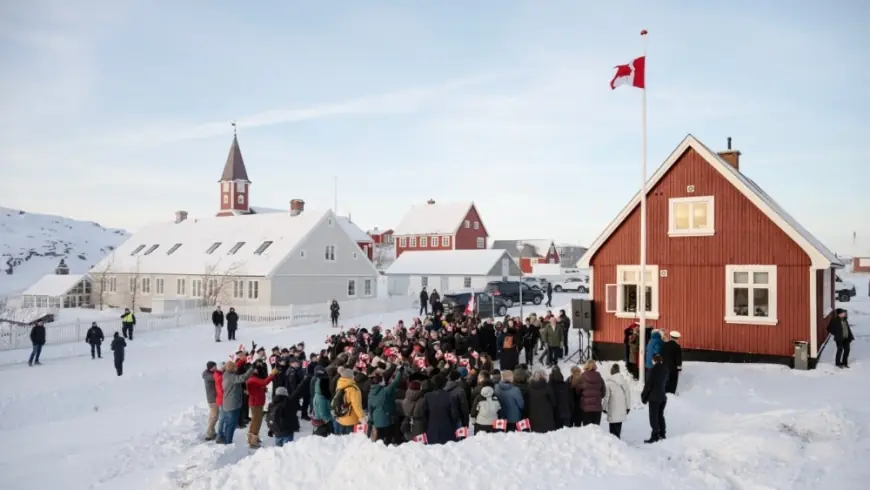
The “trump greenland” dispute has moved from provocative rhetoric into a more formal diplomatic phase, with Greenlandic and Danish officials signaling that talks with Washington are underway but far from resolving the underlying standoff. The latest meetings in Nuuk this week came as allies expand their presence on the island and as public opinion in parts of Europe hardens against the United States.
The immediate issue is sovereignty: Greenland is an autonomous territory within the Kingdom of Denmark, and its leaders have repeatedly rejected any idea of U.S. control. The broader stakes involve Arctic security, military access, shipping routes, and the growing strategic value of the High North.
Trump Greenland talks shift to Nuuk
On Saturday, February 7, 2026 (ET), Greenland’s foreign minister, Vivian Motzfeldt, described ongoing discussions with the United States as positive in tone while stressing that outcomes remain uncertain and the process could be long. The comments came alongside appearances with Danish and Canadian counterparts in Nuuk, underscoring a coordinated front among close partners as Washington presses its case.
The recent round of meetings reflects an effort to channel the dispute into structured negotiations rather than headline-driven escalation. But the gap between positions remains wide: Greenland’s elected leadership has treated U.S. control as a non-starter, while Washington has argued that strategic imperatives in the Arctic require a new arrangement.
Why Greenland matters in 2026
Greenland’s value is not a single issue—it’s a bundle of geography and infrastructure. The island sits astride key North Atlantic and Arctic approaches and hosts long-standing U.S. military interests. As the Arctic becomes more navigable in warmer seasons, the region’s relevance to surveillance, missile warning, undersea cables, and shipping has increased.
That strategic argument has been central to the pressure campaign: greater U.S. access, a stronger security footprint, and more dependable basing and logistics. Greenland and Denmark have emphasized that these concerns can be addressed through alliances and agreements without changing sovereignty.
The tension is amplified by domestic politics on all sides. In Greenland, leaders have faced the difficult task of defending autonomy while also weighing economic development, infrastructure needs, and long-term debates over independence.
Allies expand presence as pressure rises
This week also brought a symbolic counterweight: partners are deepening their diplomatic footprint in Greenland. Canada moved to open a consulate in Nuuk, and France has taken steps to establish a new consular presence as well—moves framed as support for Greenlandic society and closer engagement in the Arctic.
These openings do not change Greenland’s status, but they do change the texture of the moment: more flags, more diplomats, and more formal channels to push back against coercion. For Greenland’s local leadership, that added visibility matters, because it signals that the island is not negotiating alone.
European opinion shifts amid sovereignty dispute
The Greenland dispute is also bleeding into broader transatlantic sentiment. A recent multinational survey found unfavorable views of the United States rising across several Western European countries, with respondents citing alarm over threats to the sovereignty of a European partner and unease about how far Washington might push.
That shift is politically consequential. European leaders can negotiate security issues, but they also need public legitimacy to cooperate on defense spending, Arctic patrols, and shared deterrence. If the dispute continues to dominate headlines through 2026, it risks turning routine alliance coordination into a harder sell at home.
What comes next and what to watch
The next phase will likely hinge on whether the parties can define a framework that addresses U.S. security priorities while preserving Greenland’s and Denmark’s red lines. Observable milestones to watch over the coming weeks include:
-
Any joint statement that clarifies whether discussions are about expanded access, new basing terms, or broader economic cooperation
-
Concrete timelines for infrastructure projects tied to Arctic logistics, including ports, airfields, or communications upgrades
-
Parliamentary and municipal reactions inside Greenland, especially if proposed arrangements touch land use, environmental rules, or local governance
For now, the story is less about a sudden breakthrough and more about a controlled attempt to lower the temperature without conceding the core question. Greenland’s leaders have been explicit that sovereignty is not negotiable. Washington has been explicit that Greenland remains a strategic priority. That combination makes “resolution” difficult—but it also makes formal diplomacy the only sustainable path forward.
Sources consulted: Reuters, The Guardian, Time, UK House of Commons Library