























Benghazi attack: U.S. takes new suspect into custody in 2012 case

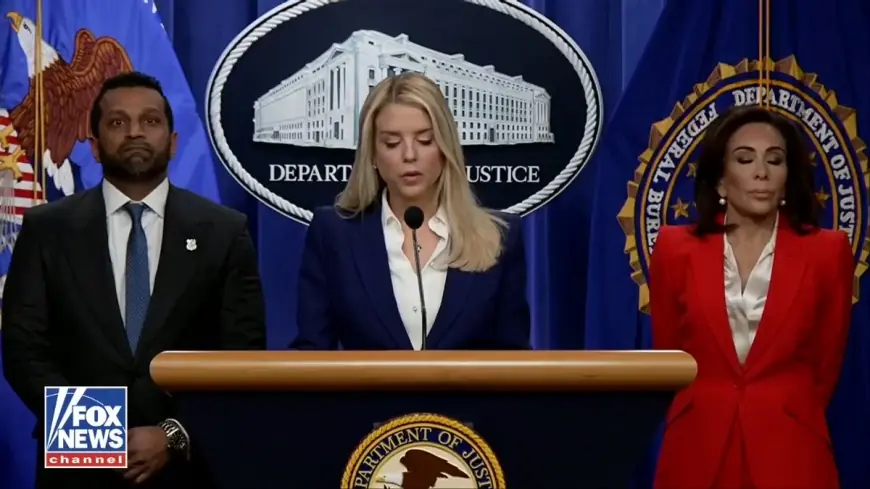
A suspect tied to the 2012 Benghazi attack that killed four Americans is now in U.S. custody, marking the most significant development in the long-running case in years. Federal officials said the man, identified as Zubayr Al-Bakoush, was brought to the United States and will face prosecution for his alleged role in the assault on the U.S. diplomatic compound in Benghazi, Libya.
The move immediately reignited attention around the Benghazi case, both for its enduring national-security implications and for how long it has taken to bring additional suspects before a U.S. court.
What happened today and what’s next in court
Federal officials announced on Friday, February 6, 2026, that Al-Bakoush had been arrested, extradited, and transferred into U.S. custody. He arrived in Maryland early Friday morning, around 3:00 a.m. ET, and is expected to make an initial court appearance in Washington, D.C., where the Benghazi prosecutions have historically been handled.
Public details on the extradition pathway have been limited so far, but the next steps typically include an arraignment, detention hearing, and the start of pretrial litigation over evidence, witnesses, and statements. If the case proceeds to trial, it will test how prosecutors present events that occurred more than 13 years ago, including how they connect alleged roles on the ground to specific crimes charged.
The Benghazi attack, in brief
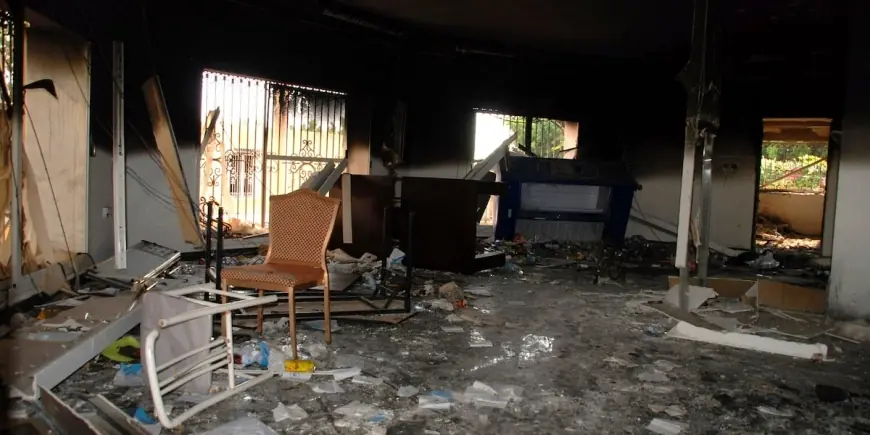
The attack unfolded on the night of September 11, 2012, when armed militants stormed the U.S. Special Mission compound in Benghazi. Fires were set during the assault, and fighting later shifted to a nearby CIA annex. Four Americans were killed:
-
Ambassador J. Christopher Stevens
-
State Department information management officer Sean Smith
-
Security personnel Tyrone Woods and Glen Doherty
The attack became a defining moment in U.S. policy debates over diplomatic security and the threat environment in post-revolution Libya. It also fueled years of domestic political controversy and multiple investigations focused on security posture, decision-making, and public messaging in the immediate aftermath.
Charges Al-Bakoush faces
Officials said Al-Bakoush faces a multi-count federal indictment that includes allegations tied to murder and terrorism-related offenses, as well as arson connected to the fires set during the assault. The precise counts and maximum penalties will depend on how the charges are framed in court filings, including whether prosecutors pursue enhancements tied to terrorism statutes.
While the government described Al-Bakoush as a key participant, the court process will still require prosecutors to show what he allegedly did, when he did it, and how that conduct links to specific outcomes—especially the deaths and the destruction at the compound and annex.
How this fits with prior convictions
The Benghazi case has produced convictions before, but the overall number of defendants tried in U.S. courts has remained limited relative to the size of the attacking force described in earlier investigations. Federal officials have noted that two men have previously been convicted in connection with the attack.
One of the best-known cases involved Ahmed Abu Khattala, who was seized by U.S. forces in 2014 and later convicted on terrorism-related counts. He was resentenced in September 2024 to 28 years in prison on federal terrorism charges and other offenses tied to the Benghazi attack.
The Al-Bakoush case signals a renewed effort to pursue additional alleged participants, even more than a decade after the events.
Why “Benghazi suspect” searches are surging again
Public interest tends to spike when new arrests occur because the Benghazi case sits at the intersection of terrorism, diplomacy, intelligence operations, and partisan debate. The word “suspect” also triggers uncertainty: many people remember the original attack but not the subsequent legal timeline, which has included captures, trials, resentencing, and long gaps between major updates.
Another driver is the evolving landscape in Libya and the region. Securing custody of a defendant in a terrorism case often depends on shifting conditions, cooperation across jurisdictions, and operational windows that may not be publicly explained.
Timeline of major case milestones
| Date (ET) | Event | Why it mattered |
|---|---|---|
| Sept. 11, 2012 | Attack in Benghazi kills four Americans | Triggered global security reviews and U.S. investigations |
| June 2014 | U.S. forces seize Ahmed Abu Khattala | Opened the first major U.S. prosecution track |
| Sept. 26, 2024 | Khattala resentenced to 28 years | Reinforced long-term federal case posture |
| Feb. 6, 2026 | Al-Bakoush arrives in U.S. custody | Brings another alleged participant into U.S. court system |
What to watch in the days ahead
The immediate questions will be procedural and factual: whether Al-Bakoush is detained pending trial, how prosecutors describe his alleged role, and what evidence is made public through court filings. Longer term, the case could clarify whether U.S. authorities are positioned to pursue additional suspects and whether new cooperation mechanisms are in place to make those arrests viable.
If prosecutors move quickly, early hearings could produce the first substantive public record—beyond the announcement itself—showing how the government plans to prove the case after so many years.
Sources consulted: Reuters, Associated Press, The Washington Post, U.S. Department of Justice