























Trump shares “Obama apes” video, igniting bipartisan condemnation and White House pushback

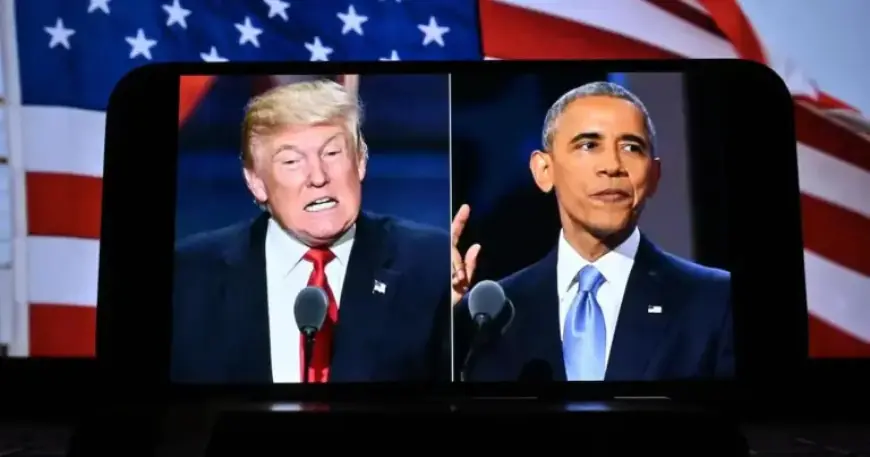
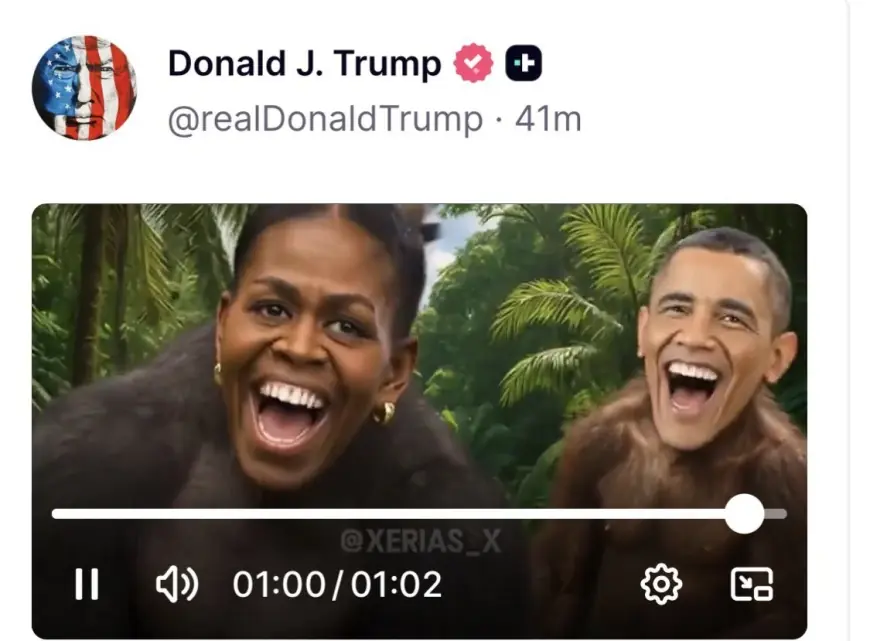
President Donald Trump late Thursday reposted a short video that ends with racist imagery depicting Barack Obama and Michelle Obama as apes, triggering swift condemnation from Democrats and a handful of Republicans and sparking a new fight over the president’s use of inflammatory meme-style content.
The clip appeared on Trump’s social media feed at 11:44 p.m. ET on Thursday, February 5, 2026, and drew escalating backlash through Friday, February 6, 2026 (ET) as lawmakers and civil-rights voices urged its removal and an apology.
What the “Trump Obama apes” clip showed
The video is roughly a minute long and is built around revived claims that the 2020 election was rigged—allegations that have been rejected repeatedly by courts and election officials. Near the end, the video briefly cuts to an animated sequence showing the Obamas’ faces edited onto primate bodies, set to a familiar pop standard.
The imagery is widely recognized as a racist trope used historically to dehumanize Black people. Its appearance in a presidential post—during the first week of Black History Month—became the central reason the clip dominated political coverage, eclipsing the broader election-conspiracy framing that makes up most of the video.
White House response and the “satire” defense
The White House defended the post as satire and dismissed the outrage as manufactured. The press secretary characterized the clip as a meme intended to portray Trump as a “king of the jungle” figure and framed criticism as a partisan overreaction.
That defense became its own flashpoint. Critics argue that calling something a joke does not neutralize racist imagery, particularly when amplified by a president with a massive audience. Supporters counter that meme culture has blurred traditional boundaries of political speech and that opponents seize on any provocation to drive a narrative.
Backlash, including from some Republicans
Condemnation came quickly from Democratic leaders, who described the post as overt racism and demanded it be taken down. The more politically consequential reactions were the ones that came from within Trump’s party.
Sen. Tim Scott of South Carolina called the video racist and urged the president to remove it, describing it as the most racist thing he had seen from the administration. Rep. Mike Lawler of New York also called for the post’s removal and an apology. Those comments put pressure on other Republican leaders to respond, even as many remained silent or avoided direct criticism.
Was the post removed?
By Friday, some viewers attempting to access the specific post saw error messaging indicating it was no longer available. The White House did not offer a clear, public confirmation about whether the president removed it, whether it was deleted by staff, or whether it was changed as part of an internal cleanup of the account’s feed.
That ambiguity matters because it affects the political aftershocks: leaving it up invites further condemnation and forces allies to defend it; taking it down can be read as a tacit acknowledgment that it crossed a line, while still leaving open questions about intent.
Why this episode is bigger than one meme
The controversy lands in a broader environment where short-form, edited, and sometimes AI-assisted content is used to shape narratives faster than traditional speeches or press briefings. In that setting, provocation can become a strategy: a single clip drives attention, forces opponents onto defense, and dominates the news cycle.
But there is a cost. When racist imagery is normalized as “just internet humor,” it can encourage harassment and deepen racial polarization. The practical effect is also institutional: every incident creates new pressure on government communicators, lawmakers, and platforms to decide where to draw lines—and whether the presidency itself should be held to different standards than ordinary users.
What to watch next
Several near-term developments will determine whether this becomes a one-day flare-up or a sustained political fight:
-
Whether Trump addresses it directly. An apology, a denial of involvement, or a doubling-down response would each reshape the story in different ways.
-
How Republican leadership reacts. If more prominent Republicans echo Scott and Lawler, the episode becomes a party-level test rather than a routine partisan clash.
-
Any formal steps in Congress. Public condemnation is easy; hearings, letters, or resolutions are harder and would signal a longer tail.
-
Whether similar content follows. If Trump’s feed continues to circulate racially inflammatory or conspiratorial clips, critics will frame it as a pattern, not a mistake.
As of Friday afternoon (ET), the central facts remain unchanged: the president amplified a clip that included racist “Obama apes” imagery, drew condemnation including from some members of his own party, and prompted a White House defense that leaned on satire rather than remorse.
Sources consulted: Associated Press, CBS News, The Washington Post, Axios