























ICE and CBP Face-Recognition App Fails to Accurately Verify Identities

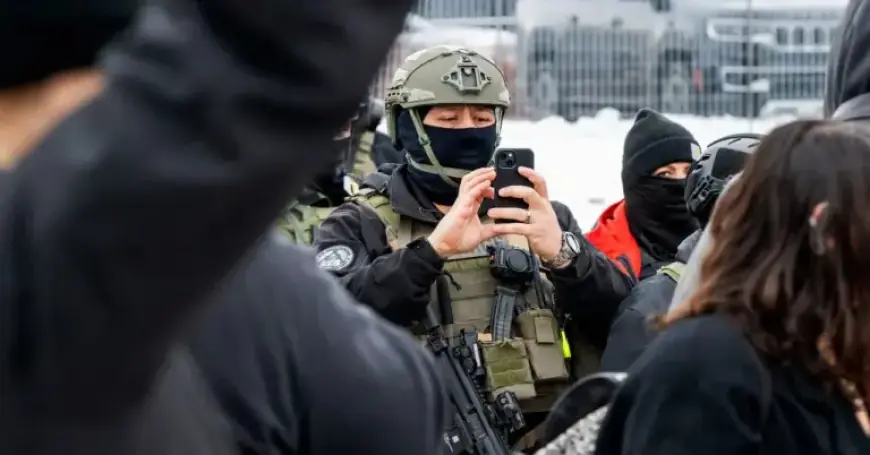
The use of a face-recognition app, Mobile Fortify, by U.S. immigration agents has raised significant concerns regarding its efficacy and implications on privacy. Launched by the Department of Homeland Security (DHS) in spring 2025, the app was designed to “determine or verify” identities of individuals during federal operations. However, internal records reveal that this technology may not provide reliable identification, as many experts and officials have pointed out.
Background of Mobile Fortify
Mobile Fortify was linked to an executive order signed by former President Donald Trump on his first day in office. This order aimed to enhance enforcement against undocumented immigrants through various measures, including expedited removals and increased state funding. Despite DHS promoting Mobile Fortify as a tool for identifying individuals via facial recognition, its actual capabilities fall short.
Limitations of Facial Recognition Technology
- Face recognition is prone to inaccuracies.
- It is primarily intended for generating leads, rather than providing definitive identification.
- Experts emphasize the technology’s propensity for mistakes.
Nathan Wessler from the ACLU has stressed that such technology is not designed for positive identification. The app’s limited functionality has come under scrutiny, particularly after DHS approved its use without comprehensive privacy reviews. This decision coincided with the removal of departmental restrictions on facial recognition technologies, facilitated by a senior DHS privacy official previously associated with the Heritage Foundation.
Deployment and Usage Practices
Mobile Fortify has been employed not only to target specific individuals but also to scan the faces of U.S. citizens and others present during enforcement actions. Reports indicate that federal agents have used the app in several encounters, often without consent.
Concerns Over Privacy and Targeting
- Federal agents allegedly informed citizens their faces would be added to a database without consent.
- Encounters have been escalated based on perceived ethnicity, accent, or skin color.
- Mobile Fortify has reportedly been used over 100,000 times since its launch.
Such practices depict a troubling trend toward increased surveillance and biometric data collection, often with minimal public oversight. The Privacy Office of DHS acknowledges the potential for nonconsensual face prints of individuals, including U.S. citizens or lawful residents.
Legal and Ethical Implications
In a recent federal lawsuit, the misuse of Mobile Fortify was highlighted with examples of agents misidentifying individuals. Testimony from an agent described how a woman in custody was subjected to repeated scanning, which resulted in conflicting identification outputs. The app’s lack of indication regarding match confidence injects further uncertainty into its reliability.
Real-World Impact of Errors
One incident revealed that the app produced different results for the same individual, underscoring the risks associated with its deployment. Agents reported acting based on subjective assessments rather than concrete evidence.
In conclusion, the concerns surrounding the use of Mobile Fortify by immigration agents are significant. Its deployment without adequate oversight raises questions about privacy and the potential for misuse of sensitive technology in law enforcement.