






















Billie Eilish in 2026: The Quiet Power Play Behind Her Next Era

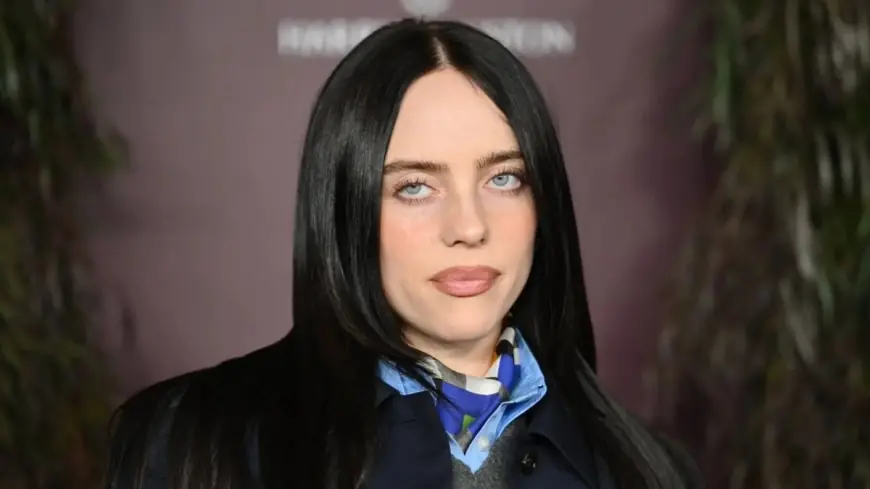
Billie Eilish is entering 2026 with a familiar paradox: she remains one of pop’s biggest names while still moving like an outsider, choosing restraint where the industry rewards constant noise. In recent days, fan speculation has surged around what her next phase looks like, from setlist shifts and studio hints to how she is positioning herself culturally after years of arena-level visibility. The story is not just about whether a new single drops soon. It is about how Billie Eilish continues to grow without surrendering the minimalism, emotional precision, and anti-hype instincts that made her stand out in the first place.
Who is Billie Eilish and why her influence holds
Billie Eilish is a singer and songwriter who broke through as a teenager and quickly became a defining voice of modern pop. Her work is known for intimate vocals, inventive production, and a willingness to keep discomfort and ambiguity intact rather than smoothing everything into radio-friendly certainty. That artistic posture has influenced a generation of artists who now treat whispery delivery, darker palettes, and diaristic writing as mainstream tools.
But influence can be a trap. When your signature becomes a template others copy, the pressure is to either escalate into spectacle or reinvent so dramatically that you risk losing what people came for. Billie’s most consistent move has been neither. She evolves in increments, keeping the core emotional temperature while changing the frame around it.
What’s driving the current Billie Eilish conversation
The current spike in attention reflects three overlapping forces.
First, the touring economy has changed. Artists at Billie’s tier face a constant push to stay visible, but overexposure can dilute mystique and exhaust audiences. Second, streaming incentives reward frequent releases, yet Billie’s brand is built on cohesive eras, not weekly drip feeds. Third, there is growing demand for artists to take positions on social issues, while any statement can be clipped, flattened, and turned into a proxy war online.
So the “Billie Eilish” storyline in 2026 is as much about pacing as it is about music. The question is not only what she will do, but how she will do it.
Behind the headline: incentives and stakeholders shaping her next steps
Pop careers at this scale involve multiple constituencies with competing goals.
Billie’s creative camp benefits from control, surprise, and long-term catalog value. Labels and partners benefit from predictable cycles that support promotion, licensing, and tour routing. Fans benefit from authenticity and craft, but also demand proximity and constant access. Platforms benefit from volume and engagement, not silence.
The tension is structural. A carefully built album-world is slow, while the attention economy is fast. Billie’s advantage is that she has already proven she can win on her own clock, and that leverage allows her to treat silence as part of the strategy rather than a gap to be filled.
What we still don’t know
There are several missing pieces that will determine how big the next Billie Eilish wave becomes.
We do not have confirmed details about the timing of her next major release cycle or whether she will prioritize standalone singles versus a tightly framed project. We also do not know how she plans to balance new material with catalog staples in future live performances, which matters because her audience now spans multiple eras of her sound. And we do not know how aggressively she will engage in public-facing promotion, an area where she often chooses selective visibility over saturation.
In short, the inputs that usually drive a predictable pop rollout are not guaranteed here.
Second-order effects: what Billie’s choices can change for the industry
When an artist with Billie’s reach refuses to play the standard promo game, it gives others permission to do the same. If she continues to favor cohesive bodies of work and controlled visibility, it strengthens a countertrend against constant content churn. That can influence label planning, tour marketing, and even how emerging artists negotiate for time to develop an aesthetic rather than chasing immediate virality.
It also has cultural effects. Billie’s success has helped normalize a pop star who is not built around glamour as a default setting and not dependent on extroverted performance to be compelling. If her next era expands that idea, it further widens what pop stardom can look like.
What happens next: realistic scenarios and triggers
Here are plausible paths for the next stretch, with clear triggers rather than wishcasting.
One scenario is a surprise release strategy, triggered by a desire to minimize leak-driven narratives and maximize first-week impact. Another is a slow-burn rollout with selective appearances, triggered by a goal of building an era through visuals and live moments rather than interviews. A third is a collaboration-forward phase, triggered by creative curiosity and a way to stay present without carrying an entire cycle alone. A fourth is a tour recalibration, triggered by the physical demands of major production and the push toward sustainability in scheduling. A fifth is a renewed focus on soundtrack-style work, triggered by the fit between her mood-driven writing and cinematic storytelling.
Why it matters
Billie Eilish remains a bellwether because her decisions tend to preview what pop will reward next: intimacy over bombast, coherence over quantity, and control over constant availability. In 2026, the headline may eventually be a song title or a tour announcement. The deeper story is how she continues to shape the rules of modern stardom by refusing to follow them.