

























Peter Attia and the Epstein Files: What the New Disclosures Show, Why It’s Blowing Up Now, and What Comes Next

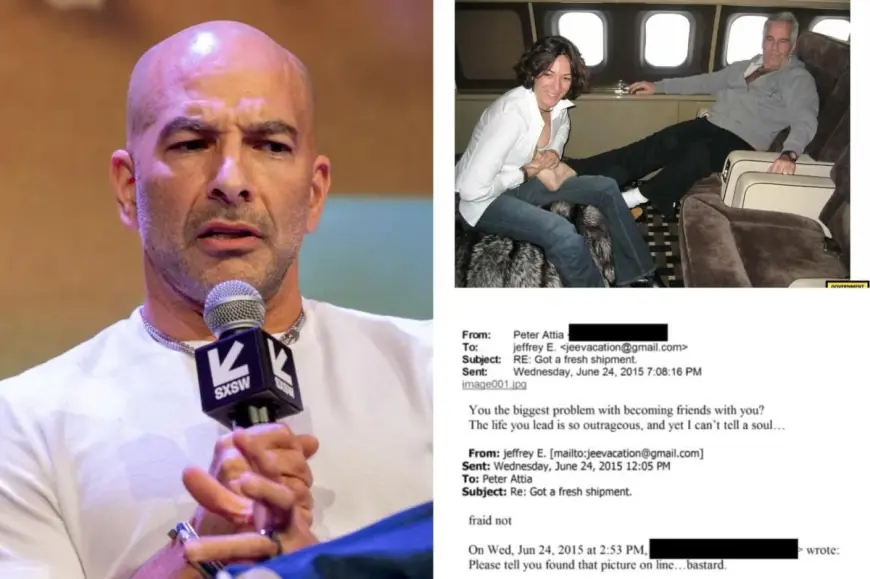
Dr. Peter Attia, the physician and longevity influencer behind a massive podcast-and-book audience, is facing an abrupt reputational crisis after newly released Jeffrey Epstein-related records surfaced in early February 2026. The documents and communications circulating from the latest federal disclosures portray a sustained, friendly relationship with Epstein years after Epstein’s 2008 criminal conviction, including repeated attempts to coordinate meetings and exchanges that mixed health talk with personal familiarity.
Attia has denied any criminal conduct and has issued an apology describing his past communications as embarrassing and indefensible. The public backlash, however, is now centered less on whether Attia committed a crime and more on professional judgment: why a prominent doctor stayed close to Epstein well into the late 2010s, and what that proximity may have enabled for Epstein’s reputation.
Who is Peter Attia
Peter Attia is a medical doctor known for popularizing “longevity” as a consumer category, translating research on metabolic health, exercise physiology, cardiovascular risk, and aging into high-engagement media. He built a large following through long-form interviews, premium subscription content, and a best-selling book that positioned prevention and risk management as a lifestyle discipline.
That visibility matters here because the public tends to treat health influencers as quasi-institutional authorities. When someone in that role is linked to a notorious figure, the scrutiny is immediate and unusually intense.
What the Epstein files appear to show about Peter Attia
The current controversy is driven by records that include repeated references to Attia and a pattern of communications with Epstein over multiple years. The material being discussed publicly includes email exchanges in which Attia and Epstein appear friendly, with conversations that at times touch on medical topics and at other times read as socially familiar.
The key point: being named in a document set is not proof of wrongdoing. Still, the optics are damaging because the timeline is difficult to square with the widely known public facts about Epstein after 2008. The public is asking a simpler question than a courtroom would: why maintain warmth and access at all.
Attia’s response has emphasized regret, claiming he did not witness crimes and did not participate in illegal activity. The debate has shifted to whether that defense answers the deeper ethical critique.
The media angle: why a TV-news role made this story bigger
This story expanded beyond niche health circles because Attia recently began appearing as a paid contributor for a major U.S. television news division, placing him in an “expert” seat at the same moment the Epstein disclosures gained traction. That overlap turned what might have been an influencer scandal into a credibility test for the newsroom: should an expert who cultivated ties with Epstein be platformed as a public-facing authority?
The pressure is now coming from multiple directions at once: newsroom staff concerned about standards, viewers concerned about trust, and critics arguing the relationship undermines any “public health” posture. Even if Attia remains on-air, the controversy creates a persistent distraction every time he speaks in an expert capacity.
Behind the headline: incentives and stakeholders
Attia’s incentive is straightforward: preserve trust in his medical judgment and protect the business ecosystem around his brand, including partnerships, advisory roles, and paid media deals. The incentives for institutions around him are just as clear: minimize reputational risk and avoid looking indifferent to victims’ trauma.
The stakeholder map is wide:
-
Survivors and advocates who fear that elite social insulation keeps repeating
-
Employers and partners deciding whether to cut ties or ride out the backlash
-
The broader medical community, where professional ethics and patient trust are foundational
-
Audiences who use influencer medicine to make real health decisions
The second-order effect is already visible: renewed arguments about “celebrity medicine,” where authority can be earned through audience scale rather than clinical structures, and where reputational checks arrive late, after the platform is built.
What we still don’t know
Several facts will determine whether this remains a short-lived scandal or becomes a long-term career rupture:
-
The full scope of the relationship, including whether meetings occurred as planned and what the context was
-
Whether any communications suggest introductions, facilitation, or third-party involvement beyond casual contact
-
Whether additional records in upcoming disclosure tranches add meaningful detail or simply repeat prior references
-
Whether professional bodies or licensing authorities receive complaints that trigger formal review
It’s also important to separate verified material from internet amplification. Epstein-related document dumps reliably generate false lists, forged screenshots, and wildly confident claims that collapse on inspection. The more the story spreads, the more misinformation attaches to it.
What happens next: scenarios to watch in the coming days and weeks
-
Corporate and advisory off-ramps accelerate if partners decide the reputational cost is ongoing, especially if new documents add specificity.
-
The television-news relationship shifts quietly, such as reduced bookings or re-scoped roles, if leadership determines the controversy harms credibility.
-
A fuller public accounting emerges if Attia releases a detailed timeline of contact, meetings, and intent, including what he knew and when.
-
The story fades if upcoming disclosures add no new substance, leaving the controversy largely as a judgment and ethics debate rather than a developing evidentiary story.
-
A longer institutional reckoning follows if policymakers use this moment to push tighter disclosure standards and survivor-protection rules for large-scale releases.
Why it matters: the Attia-Epstein controversy is not just about one doctor’s past decisions. It’s a live case study in how influence, credibility, and elite adjacency collide, and how quickly “expert authority” can erode when the public decides the judgment behind the brand no longer adds up.