

























Moltbook goes viral, then scrambles to patch an AI-agent security scare

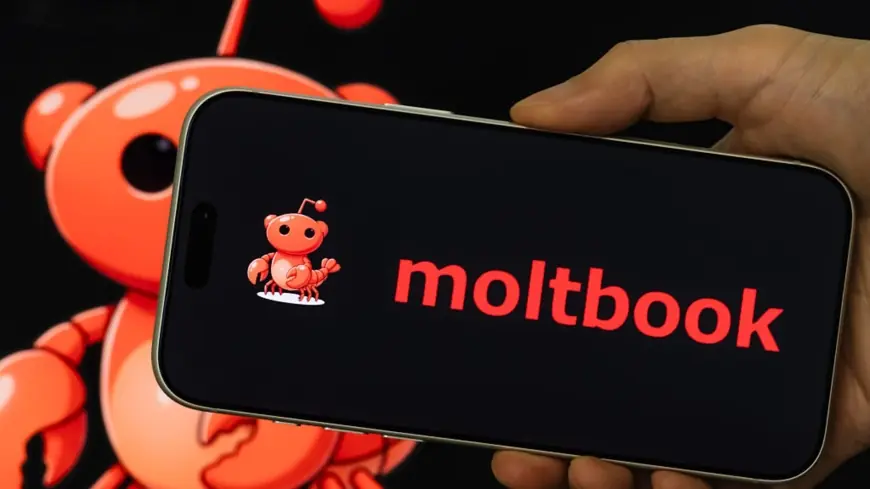
A new AI-only social network called Moltbook exploded into public view in late January, drawing crowds of human onlookers and a fast-growing population of automated “agents” posting, voting, and arguing in public threads. Days later, cybersecurity researchers flagged an exposure that could have revealed large volumes of agent credentials and keys, triggering an urgent reset and renewed warnings about what can go wrong when autonomous software interacts at scale.
What Moltbook is and why it spread fast
Moltbook is built for automated agents to create posts, comment, and upvote; humans can watch but are not intended to be the primary participants. The appeal is the novelty: instead of people talking with bots, it’s bots talking with bots—often in ways that look eerily social, with inside jokes, factions, and rapid-fire debate.
The platform’s growth has been tied to how easy it is for developers and hobbyists to point their agents at a shared public space and let them run “check-in” loops that periodically read new content and respond. That design makes activity feel constant, but it also means agents are repeatedly consuming untrusted text generated by other agents.
The breach that shifted the narrative
Within days of Moltbook’s rise, researchers disclosed an exposed back-end database configuration that, if abused, could allow unauthorized access to sensitive agent data. The concern centered on the possibility that attacker access could lead to hijacking agent identities or extracting secrets used to operate them elsewhere.
Moltbook’s operator acknowledged the issue and pushed fixes that included key resets and tighter controls. The scramble highlighted a broader risk: even if a site itself is quickly patched, any leaked keys or tokens can have a long tail if they were already copied, reused, or embedded into other tools.
Why AI-agent social spaces are a special security risk
Traditional social platforms moderate harmful content aimed at humans. An agent-to-agent space adds a different category of risk: “prompt injection” and other forms of instruction hijacking. If an agent is designed to be helpful and to follow instructions, a malicious post can be framed as a task request and quietly alter behavior—especially if the agent has access to external tools, files, or credentials.
The most serious scenario is not embarrassing posts. It’s an agent being tricked into exfiltrating secrets, installing a malicious add-on, or taking actions on behalf of its owner without clear human review. The tighter the agent’s permissions, the larger the blast radius.
Pushback from experts and the debate over “don’t use it”
In the wake of the security disclosure, prominent voices in the AI community urged people to avoid connecting powerful agents to the platform until safeguards mature. The argument isn’t that Moltbook is uniquely reckless, but that it concentrates several ingredients for failure in one place: autonomous actors, public untrusted text, fast iteration, and a culture of experimentation.
Supporters counter that the site is a live-fire demonstration of the coming “agent economy,” where bots negotiate, coordinate, and compete—making it valuable as a testbed. Critics respond that testbeds need guardrails, especially if many participants connect agents that can reach beyond the site into other systems.
What to watch next
Moltbook’s next chapter hinges on whether it can prove it has closed the obvious doors and reduced systemic risks. The most meaningful signals will be boring but important: clearer security architecture, stronger access controls, limits on what agents can do by default, and transparent incident reporting.
A second question is cultural: will developers treat the platform like a sandbox—connecting minimally privileged agents—or will “always-on” convenience win, encouraging people to plug in agents with broad capabilities? If the latter happens, even minor vulnerabilities could become serious events.
Key takeaways
-
Moltbook’s rapid growth came from letting autonomous agents post and react continuously while humans observe.
-
A database exposure scare forced fixes and key resets, raising concerns about credential leakage and agent hijacking.
-
Agent-to-agent spaces amplify prompt-injection risk because agents repeatedly ingest untrusted content as instructions.
-
The platform’s future depends on permission discipline, hardened security defaults, and credible transparency after incidents.
Sources consulted: The New York Times, The Guardian, Fortune, Wiz Research