

























Justice Department Faces Embarrassment Again

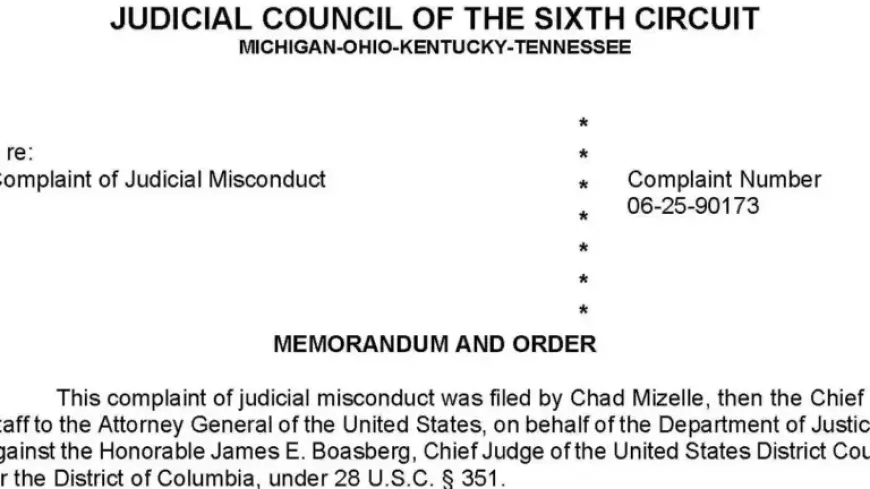
The Department of Justice (DOJ) has once again faced embarrassment following its unsuccessful judicial misconduct complaint against Chief Judge James E. Boasberg of the D.C. federal district court. This complaint, which was unprecedented in nature, has significant implications for the DOJ’s credibility and its relationship with the judiciary.
Outcome of the DOJ’s Complaint
The complaint against Boasberg was dismissed by Sixth Circuit Chief Judge Jeffrey Sutton. His ruling was expressed in a succinct seven-page memorandum, which highlighted several critical shortcomings in the DOJ’s allegations.
Key Points from the Ruling
- The DOJ failed to present adequate evidence supporting its claims.
- There was no substantiated document to validate the alleged misconduct.
- Sutton emphasized that Boasberg’s comments were part of a private discussion and therefore did not constitute a violation of judicial conduct.
- Judicial misconduct complaints must be backed by substantial evidence, which the DOJ lacked in this case.
Judge Sutton’s memo criticized the DOJ not only for its lack of evidence but also for its public handling of the complaint, which he deemed unprofessional and politically motivated. This dismissal is a stark reflection of the DOJ’s public image and raises questions about its motives.
Implications for the Justice Department
The ruling indicates a broader issue within the DOJ, where its credibility has been increasingly called into question. The agency’s decision to file such a complaint was seen as an attempt to fuel partisan political attacks, which ultimately backfired. The incident underscores a worrying trend of politicization within judicial proceedings.
This outcome should serve as a cautionary tale for those pursuing similar allegations against judicial figures. Congressional Republicans have been attempting to push for impeachment based on Boasberg’s actions—an effort now perceived as more politically charged than grounded in legitimate misconduct concerns.
Historical Context
This complaint is part of a larger narrative surrounding the independence and integrity of the judiciary. Interestingly, February 2 marks a historical anniversary for the Supreme Court, as it convened for the first time in 1790 in New York City. Like the DOJ’s recent complaint, the initial session of the Supreme Court faced its challenges, having little to address in terms of cases.
As the DOJ continues to navigate its relationship with the judicial system, this recent embarrassment serves as a reminder of the importance of maintaining the integrity of legal proceedings free from political maneuvering. The ruling by Chief Judge Sutton will likely resonate through the corridors of the DOJ and the courts for years to come.