
























Lola Young at the Grammys 2026: “Messy” Wins Best Pop Solo Performance After a Comeback-Fueled Awards Night

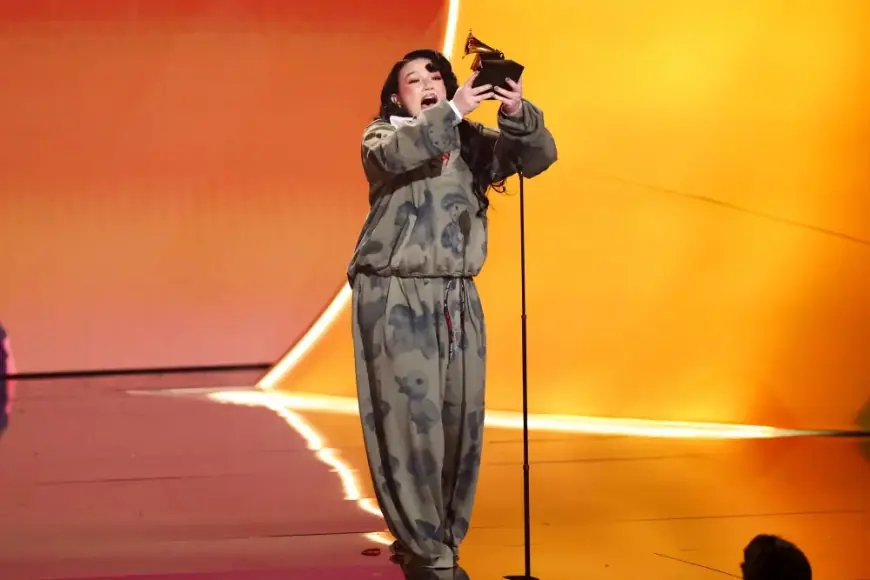
Lola Young left the Grammys 2026 with a career-defining milestone, winning Best Pop Solo Performance for “Messy” on Sunday night, February 1, 2026, ET. The victory capped a breakout cycle that turned the song from a slow-build favorite into a mainstream pop moment, and it landed with extra emotional weight after Young’s months-long step back from the stage following a health scare last fall.
The win also re-centered a larger Grammys storyline: in an era where viral attention can be instant but fleeting, a single song that sustains momentum across months, formats, and audiences still has the power to translate into industry validation.
Lola Young Grammys 2026: what happened onstage and why it stood out
Young’s night combined two high-pressure moments: a televised performance of “Messy” and the category win itself. The performance leaned into intimacy rather than spectacle, emphasizing voice and emotion over production. The acceptance speech that followed was visibly unguarded, with a spontaneous burst of excitement that led to a brief on-air profanity, promptly bleeped in the broadcast.
That kind of unscripted moment tends to split the room: some see it as messy in the literal sense, others read it as authenticity. Either way, it amplified the headline and made the win feel human rather than polished.
“Messy”: the song that carried a breakout year into a Grammy win
“Messy” arrived in 2024 and later became the signature track of Young’s second album, This Wasn’t Meant for You Anyway. The song’s appeal is its emotional contradiction: it is confrontational and vulnerable at the same time, built around the push-pull of wanting to be loved while refusing to be edited into someone else’s idea of acceptable.
Musically, it sits in a sweet spot that is hard to manufacture: pop structure with grit and texture, the kind of record that can live as a headphones confession, a late-night drive anthem, or a live centerpiece. That versatility matters for awards because it signals endurance, not just a momentary spike.
Best Pop Solo Performance: how the category framed the race
Best Pop Solo Performance is often a referendum on two things at once: vocal identity and cultural imprint. This year’s shortlist paired huge household-name contenders with newer voices whose songs traveled fast. Young’s “Messy” ultimately beat a field that included Justin Bieber’s “Daisies,” Sabrina Carpenter’s “Manchild,” Lady Gaga’s “Disease,” and Chappell Roan’s “The Subway.”
The result is notable not just because a newer act won, but because it rewarded a record that leaned raw rather than glossy. That is a signal about what pop voters are willing to crown right now: emotional specificity can outmuscle polish when the song feels unavoidable.
Behind the headline: the incentives and pressure points driving the “Messy” moment
Context matters here. Young’s win comes after a September 2025 incident in which the singer collapsed during a festival set in New York, then paused performances to focus on recovery and well-being. That gap reshaped the narrative around “Messy” from simply a breakout hit to a comeback marker, with fans and industry watchers treating the return as a test of resilience as much as artistry.
The incentives are clear for everyone involved. For the Grammys, a win like this reinforces relevance by elevating a current, fast-moving pop conversation. For labels and managers, it turns leverage into concrete opportunity: bigger bookings, higher placement priority, and more negotiating power on everything from collaborations to tour routing. For Young, it creates a new constraint as well: the next release will be judged against an “award-winning” bar, and that changes expectations overnight.
Stakeholders also include the broader pop ecosystem. A win for “Messy” nudges other artists toward riskier emotional writing and more unfiltered vocal takes, because it suggests that the market and the academy will reward edge when it connects.
What we still don’t know
The biggest unanswered question is sustainability. A trophy does not guarantee a stable touring schedule, consistent health, or the ability to follow a defining song with another that hits as hard. There is also the practical question of scale: can Young expand production and venues without losing the intimacy that made “Messy” feel personal in the first place?
What happens next: realistic scenarios to watch after the Grammys
-
A quick follow-up single designed for radio and playlists
Trigger: the team capitalizes on post-Grammys attention within weeks. -
A slower, craft-first rollout that protects the artistic identity
Trigger: prioritizing longevity over speed after a demanding year. -
Tour expansion with tighter pacing and more rest built in
Trigger: learning from the 2025 scare and avoiding burnout. -
High-profile collaborations that broaden reach but test the sound
Trigger: inbound requests from bigger pop names accelerate. -
A pivot to deeper album storytelling rather than chasing another “Messy”
Trigger: the desire to avoid being boxed into one emotional lane.
For fans searching “Lola Young Grammys,” “Messy,” or “Best Pop Solo Performance,” the takeaway is simple: this was not just a win for a song. It was a win for a voice and a point of view, delivered at a moment when pop is increasingly rewarding artists who sound like real people under real pressure.