Silver price today slides toward $79 as volatility stays elevated

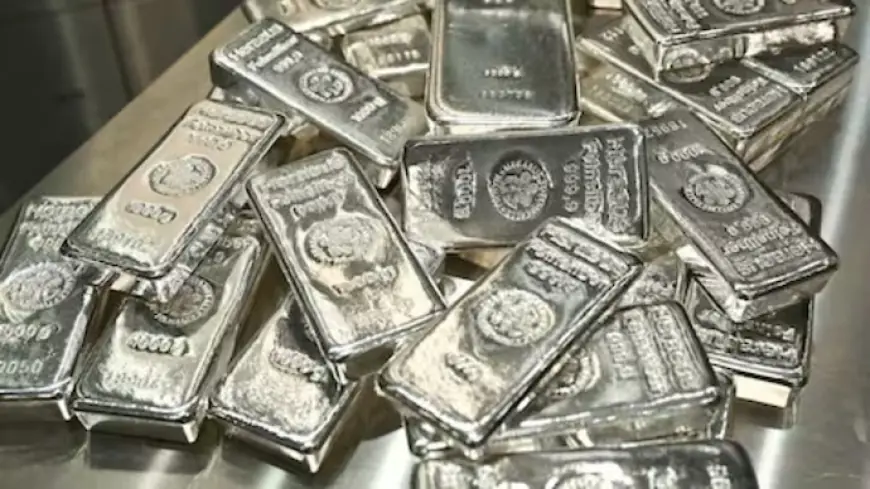
Silver price today is lower in midday trading, hovering around $79 per troy ounce as of about 1:35 p.m. ET, after another choppy session that has seen wide intraday swings. The pullback follows an exceptionally volatile stretch for precious metals, with silver still sitting far above year-ago levels even after recent sharp down days.
The key question for traders now is whether silver stabilizes near the high-$70s/low-$80s area, or whether momentum and macro pressure push it toward another fast move in either direction.
Silver price today: where it stands
As of early afternoon ET, silver is trading roughly in the upper-$70s per ounce, with front-month futures near the same level. Intraday movement has been unusually wide, reflecting a market that’s been swinging on shifting interest-rate expectations, currency moves, and position unwinds after a big run.
| Metric (USD) | Level (approx.) | Time stamp |
|---|---|---|
| Spot silver (per oz) | $78.5–$79.5 | ~1:35 p.m. ET |
| Front-month silver futures (per oz) | ~$79.0 | ~1:35 p.m. ET |
| Day’s range (spot) | ~$71 to ~$88 | Session high/low |
| 52-week range (spot) | ~$28 to ~$122 | Trailing year |
All figures are approximate and can vary by venue and update time.
What’s driving the move
Today’s slide fits a familiar pattern in precious metals: silver tends to struggle when the U.S. dollar firms and real yields rise, because the metal offers no yield of its own. When the dollar strengthens, it can also make dollar-priced commodities more expensive for non-U.S. buyers, adding another headwind.
Silver’s recent behavior also looks like a classic “crowded trade unwind.” After a strong rally phase, sharp downdrafts often appear when leveraged positions are reduced quickly—especially around major macro headlines. That can create air pockets where price moves faster than fundamentals would suggest.
At the same time, silver’s dual identity adds complexity:
-
Safe-haven and inflation hedge characteristics can support prices during uncertainty.
-
Industrial demand (including electronics, power infrastructure, and solar supply chains) can provide longer-term support, but it doesn’t usually prevent sudden short-term volatility.
How silver compares with gold right now
Silver often exaggerates gold’s moves—up and down—because its market is smaller and typically more volatile. When investors are leaning into precious metals, silver can outperform; when the trade gets de-risked, silver can drop harder.
That matters because many portfolios treat silver as the “high beta” cousin of gold. In risk-off bursts, gold may hold value better, while silver can behave more like a hybrid commodity, pressured by both macro tightening and cyclical growth concerns.
What to watch next this week
In the near term, silver is likely to stay sensitive to a few observable triggers:
-
Dollar direction: A sustained move in the dollar tends to show up quickly in XAG/USD pricing.
-
Rate expectations: Any repricing of where policy rates may settle can change the appeal of non-yielding assets.
-
Volatility signals in metals: Options-implied volatility often rises sharply during these swings, which can reinforce momentum trading.
-
Liquidity and positioning: Fast drops can force additional selling, while sharp rebounds can be driven by short covering.
If silver holds above the mid-$70s area for several sessions, that can calm the market and reduce forced selling. If it breaks down decisively, the next leg often depends on whether gold is steady (which can cushion silver) or falling too (which can amplify downside).
A practical note for buyers and investors
For people asking “silver price today” because they’re considering coins, bars, or ETFs, the main takeaway is that the price you pay or receive can differ from the headline spot price. Retail products often include a premium over spot, and bid/ask spreads can widen during volatile stretches.
If you’re tracking the market closely, focus on:
-
Spot vs. futures: They’re usually close, but short-term dislocations happen.
-
Update time: “Current” can mean different timestamps depending on the feed.
-
Range, not just last price: Today’s intraday range is a better snapshot of risk than a single print.
Sources consulted: CME Group; LBMA; Bloomberg; Kitco