























New Volatile Sunspot Triggers Massive Solar Flare Barrage Toward Earth

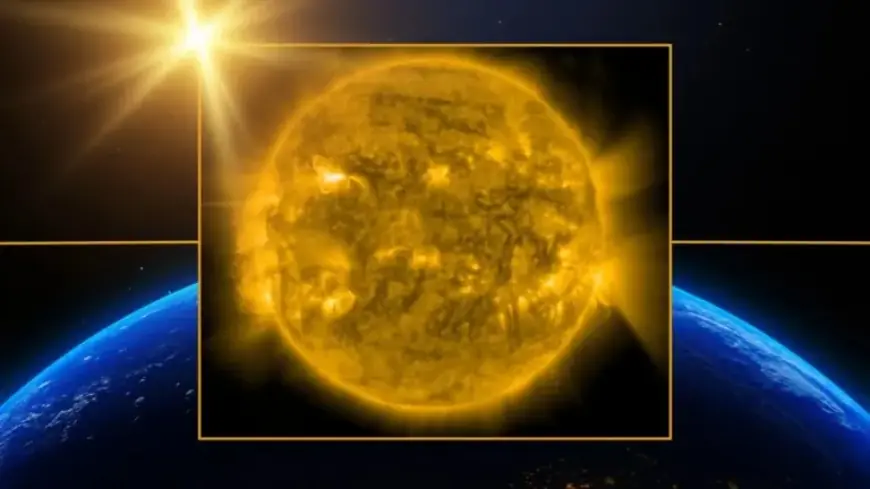
The sun has unleashed an impressive series of solar flares over the past 24 hours. This activity has included at least 18 M-class flares and three X-class flares, among which one was measured at an X8.3 level, marking it as the most significant solar flare of 2026 thus far.
Activity Triggered by Sunspot Region 4366
The recent surge in solar activity originates from sunspot region 4366. This area has developed rapidly within a few days. The flaring activity initiated late on February 1 and continued into February 2, with M-class and X-class flares occurring in rapid succession.
Described as a “solar flare factory” by Spaceweather.com, sunspot region 4366 exhibits magnetic complexity, which suggests that additional eruptions are likely in the near future.
Details of the X8.3 Solar Flare
- Peak Time: The X8.3 flare peaked at 6:57 p.m. EST on February 1.
- Effects on Earth: The eruption produced a blast of extreme ultraviolet and X-ray radiation, ionizing Earth’s upper atmosphere.
- Radio Blackouts: The flare triggered R3-level radio blackouts, primarily affecting parts of the South Pacific, including eastern Australia and New Zealand.
Potential Impacts on Geomagnetic Activity
Scientists are closely monitoring the situation for possible coronal mass ejections (CMEs) that may follow the X8.3 eruption. Initial analyses suggest that the majority of the associated solar material will likely pass to the north and east of Earth. However, a minor impact may occur around February 5.
Should these impacts happen, they could raise geomagnetic activity levels, increasing the likelihood of auroras at higher latitudes. Nevertheless, experts caution that it is premature to determine how favorable the conditions will be, as they depend on the CME’s speed, direction, and magnetic orientation.
Looking Ahead: More Solar Activity Expected
As sunspot AR4366 remains active and rotates into a position facing Earth, the chances of future eruptions that might send CMEs more directly toward our planet are heightened. NOAA forecasters anticipate continued thrilling developments in space weather linked to this region in the upcoming days.
Understanding X-Class Solar Flares
X-class flares represent some of the most powerful solar explosions, generating intense bursts of electromagnetic radiation. They are ranked from A, B, C, M, to X based on their strength, with each category indicating a tenfold increase in energy. The number accompanying the X indicates the flare’s intensity, with the recent X8.3 flare falling in the upper range of this classification.
Stay updated with the latest breaking news about space phenomena, rocket launches, and skywatching events at Filmogaz.com.