Groundhog Day 2026 Results: Punxsutawney Phil Saw His Shadow, Predicting 6 More Weeks of Winter

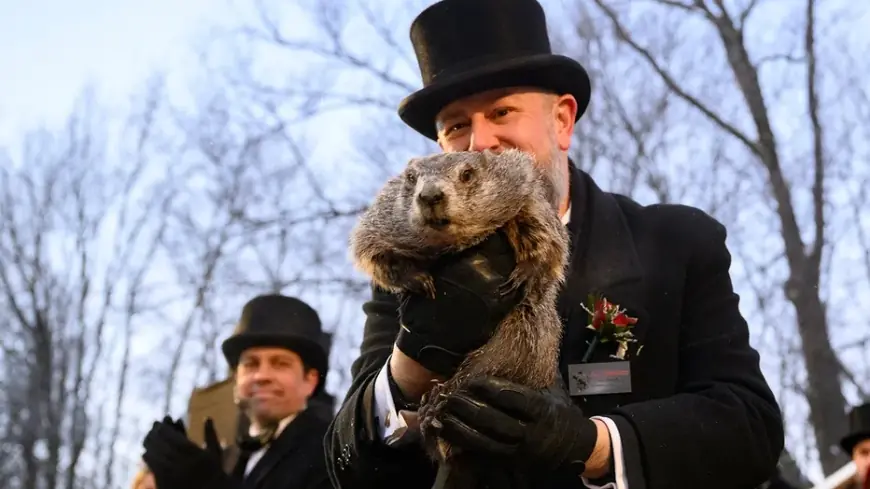
Groundhog Day is today, February 2, and the Groundhog Day 2026 results are in for the biggest ceremony of them all: Punxsutawney Phil saw his shadow shortly after sunrise in Pennsylvania, signaling the classic forecast of six more weeks of winter. The moment played out during the annual early-morning ritual at Gobbler’s Knob, where the announcement is delivered as a playful “translation” of Phil’s prediction to the crowd.
If you’re searching did the groundhog see his shadow today 2026, did Phil see his shadow 2026, or what did the groundhog predict 2026, the short answer is the same: Phil “called” for more winter.
Did Punxsutawney Phil see his shadow in 2026?
Yes. Punxsutawney Phil saw his shadow on Groundhog Day 2026.
Under the traditional rules, that means six more weeks of winter. If he had not seen his shadow, the folklore says it would signal an early spring.
What did the groundhog say? In practice, Phil doesn’t deliver a spoken forecast. The handlers announce the result on his behalf, presenting it as Phil’s message interpreted for humans. The outcome is binary: shadow equals more winter, no shadow equals early spring.
Groundhog Day 2026 predictions: What other famous groundhogs said
Groundhog Day has become a network of local ceremonies, and the predictions don’t always match. Here are several high-profile 2026 calls people track every year:
-
Staten Island Chuck: saw his shadow, predicting six more weeks of winter
-
General Beauregard Lee in Georgia: saw his shadow, signaling a longer winter
-
Buckeye Chuck in Ohio: did not see his shadow, predicting an early spring
That split is part of the tradition’s staying power. Different places get different “answers,” giving communities their own headline while still orbiting Phil’s national spotlight.
How does Groundhog Day work, and what does a shadow mean?
Groundhog Day is held on February 2, roughly midway between the winter solstice and the spring equinox. The folk logic is simple:
-
If the groundhog sees its shadow and retreats, winter sticks around for six more weeks
-
If the groundhog does not see its shadow and stays out, an early spring is on the way
Historically, the custom is tied to European seasonal rituals that were adapted into a Pennsylvania tradition by immigrant communities. Over time it became a civic festival—part weather joke, part winter morale booster, part media spectacle.
What time does the groundhog come out?
Because the ceremony is built around sunrise, it happens early.
In Punxsutawney, the public-facing “moment” of Phil’s prediction typically lands just after 7:00 a.m. ET, following hours of pre-dawn festivities. Staten Island Chuck’s reveal is commonly staged around 8:00 a.m. ET. Exact timing can shift year to year based on event logistics and weather, but the key is that it’s a sunrise ritual rather than a primetime event.
How accurate is Punxsutawney Phil, and how often is the groundhog right?
People love to ask how accurate is Punxsutawney Phil because the tradition presents itself like forecasting, even though it’s deliberately tongue-in-cheek. When analysts compare Phil’s calls to observed weather outcomes, the results are typically modest—often described as roughly one-third to two-fifths “right,” depending on how you define early spring and which temperature measures you use.
That caveat is the whole point: Groundhog Day isn’t a meteorology tool. It’s a seasonal story people return to because it makes winter feel legible—one clear prediction, a shared laugh, and a marker that spring is at least thinkable.
Behind the headline: why Groundhog Day still dominates a February morning
Context matters. Early February can feel like the longest stretch of winter: holiday season is over, daylight is still short, and many regions are dealing with persistent cold or recent storms. Groundhog Day offers a fixed date, a simple narrative, and a spectacle that’s easy to clip and share.
The incentives line up neatly:
-
Organizers get a dependable tourism and community event
-
Broadcasters get reliable live-morning programming
-
Viewers get a low-stakes ritual that feels communal
-
Local “rival” groundhogs get their own moment, especially when they contradict Phil
What we still don’t know every year is how the public will interpret the result. Sometimes it becomes a joke about winter dragging on. Other years, it becomes a rallying cry for spring, especially if other famous groundhogs predict an early break.
What happens next: 5 realistic scenarios to watch after the 2026 result
-
Short-term winter memes and “six more weeks” chatter dominate today, then fade quickly.
-
Regional forecasts take over the conversation as people compare the folklore to actual local weather.
-
Buckeye Chuck’s early-spring call becomes the counter-narrative for anyone tired of winter.
-
Travel and event planning posts spike as people use the tradition as a seasonal “permission slip” to look ahead.
-
The annual accuracy debate returns, with fans defending the ritual as entertainment, not science.
For Groundhog Day 2026, the headline is straightforward: Phil saw his shadow, the tradition says that means six more weeks of winter, and the rest of the country’s groundhogs supplied the usual mix of agreement and dissent that keeps the ritual fun.