























Full Moon February 2026: The Snow Moon Peaks on Feb. 1, Still Looks Full on Feb. 2, and Triggers a New Wave of “Moon Tonight” Searches

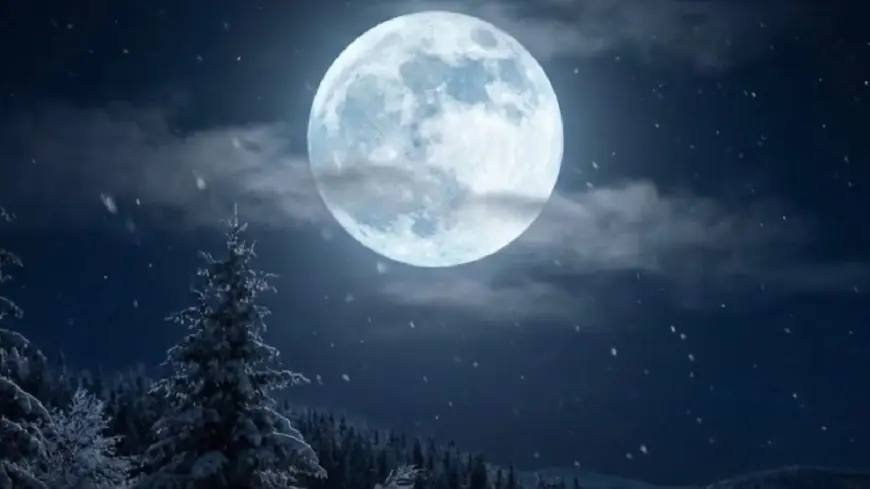
The Full Moon in February 2026, popularly known as the Snow Moon, reached peak fullness on Sunday, February 1, 2026 at 5:09 PM ET. If you stepped outside after dark on Sunday night, you likely saw a classic bright winter full moon. And if you are looking up on Monday, February 2, 2026, it can still look very close to full, even though the moon is technically already past the peak.
That split between the calendar moment and what your eyes see is the main reason “is tonight a full moon” and “when is the full moon” can both feel like they have different answers.
When Was the Full Moon in February 2026?
The February 2026 full moon moment happened on:
-
Sunday, February 1, 2026 at 5:09 PM ET
Because that peak occurred in late afternoon in the Eastern time zone, the moon looked fully illuminated for the prime viewing window that night. On Monday night, it remains extremely bright and appears nearly full to casual observers.
Is It a Full Moon Tonight on Feb. 2, 2026?
On Monday, February 2, 2026, the moon is just past full, in a waning gibbous phase. In practice, it can still look “full moon tonight” for three reasons:
First, the moon does not suddenly change shape after the peak. The shift is gradual over hours and days.
Second, the human eye is not great at detecting a tiny loss of illumination along the moon’s edge unless you compare photos side by side.
Third, atmospheric effects near the horizon, haze, thin clouds, and light pollution can flatten subtle shading and make the disk look more uniformly bright.
If you want the simplest rule: if the moon rises around sunset and stays bright most of the night, you are in the full-moon window, even if the exact peak was earlier.
Why It’s Called the Snow Moon
Snow Moon is the traditional popular nickname for the February full moon in North America, tied to the historical reality that February often brings deep snow and harsh winter conditions. The name has stuck because it is memorable, seasonal, and easy to share, which is why it reliably resurfaces every year across calendars, weather chatter, and skywatching communities.
This is also why the February full moon tends to be more culturally visible than some other months. It arrives when people notice longer nights, clearer cold air, and the dramatic contrast of moonlight on winter landscapes.
What to Expect When You Look Up
A February full moon tends to feel unusually bright for everyday observers because it is often watched earlier in the evening, when people are still awake, commuting, or winding down. That timing boosts the sense that something special is happening, even though full moons are monthly events.
Tips for better viewing:
-
Look east around dusk for moonrise, then track it as it climbs higher.
-
If the moon looks “giant,” you are probably seeing a low-on-the-horizon illusion. It is a perception effect, not a sudden size change.
-
Use a phone camera zoom sparingly. Over-zoomed images often blur details and make the moon look like a white blob. Slight zoom plus steady hands or a stable surface works better.
What Planet Is Next to the Moon Tonight?
This question spikes during full moons because the moon is bright enough to frame nearby points of light, and it sits in a part of the sky that can include bright stars or a planet depending on the night and your location.
The key reality: a bright object near the moon is often a star, not a planet. A quick home test is helpful:
-
If it twinkles strongly, it is more likely a star.
-
If it shines steadily and looks unusually bright, it may be a planet, though low altitude haze can make anything shimmer.
Because “next to” depends on the exact hour and where you are standing, the most reliable approach is to check a sky map app for your location at the moment you are looking. The same sky can look different by midnight than it does at dusk.
Behind the Headline: Why the Snow Moon Goes Viral Every Year
Context matters. The Snow Moon is not rare, but it is perfectly designed for attention. It is easy to label, visually dramatic, and arrives during a season when people are hungry for something communal and simple. It also lands in a calendar window where fewer major outdoor events compete for focus, so a bright moon becomes a headline.
Incentives are straightforward:
-
Social sharing rewards big, photogenic moments that feel seasonal.
-
Local groups and parks can build easy programming around a predictable sky event.
-
People searching “moon tonight” are often trying to settle an argument in real time, which fuels repeat queries.
Stakeholders include casual skywatchers, photographers, teachers, local astronomy clubs, and anyone whose work depends on clear communication around public interest events.
What We Still Don’t Know
Even with a predictable event like a full moon, there are gaps that drive confusion:
-
Whether clouds or haze will allow a clear view in your specific neighborhood on a given night
-
Whether a bright nearby point is a planet or a star at your exact viewing time
-
How your local horizon, buildings, and light pollution will change what “full” looks like
What Happens Next: 5 Realistic Scenarios to Watch After the February 2026 Full Moon
-
The moon still looks full for another night or two
Trigger: You view it in bright twilight or through thin haze that masks subtle shading. -
A wave of “is it a full moon” posts continues through midweek
Trigger: Photos taken on different nights look nearly identical on phones. -
The “planet next to the moon” question spikes again when the moon passes near a bright object
Trigger: The moon’s nightly shift places it close to a prominent star or planet in the evening sky. -
Attention jumps in early March
Trigger: The next full moon arrives on Tuesday, March 3, 2026 at 6:38 AM ET, creating another two-night “looks full” window. -
People argue over the date because of time zones
Trigger: The full moon moment can fall on one calendar date in one region and a different date elsewhere, even though it is the same event.
For February 2026, the practical takeaway is simple: the Snow Moon peaked on Feb. 1 at 5:09 PM ET, and it can still look full on Feb. 2 at night. If you missed the exact moment, you did not miss the experience.