





















The Wrecking Crew 2026 Puts Dave Bautista and Jason Momoa in a Loud, Streaming-First Buddy Action Bet

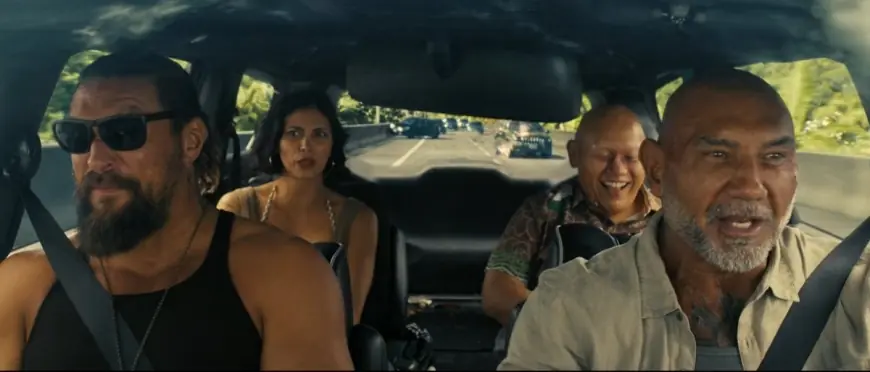
The Wrecking Crew, the new 2026 action-comedy pairing Dave Bautista and Jason Momoa, landed for audiences on Wednesday, January 28, 2026, ET, after a brief pre-release rollout that prioritized online buzz over a traditional, weeks-long theatrical campaign. The film’s arrival instantly pushed searches for “wrecking crew cast,” “jason momoa new movie,” and “the wrecking crew movie” as viewers tried to answer two quick questions: what exactly is this project, and is the Bautista–Momoa chemistry real or just marketing?
The early read is that the movie is built to be watched like an old-school studio crowd-pleaser, but delivered through a streaming-first strategy that favors immediate scale, fast conversation, and high repeatability over box office bragging rights.
The Wrecking Crew movie: what happened and what the story is actually selling
On screen, the hook is simple and intentionally combustible: Momoa and Bautista play estranged half-brothers pulled back together after their father’s death in Hawaii. The setup mixes family grievance with a conspiracy framework, then pours on the buddy-cop rhythm of bickering, teamwork-by-force, and escalating set pieces.
That “brothers who fight like enemies, then fight together” template is familiar for a reason: it travels well globally, it’s easy to cut into trailer moments, and it gives both stars a clear lane. Momoa leans into chaotic charm; Bautista leans into disciplined intensity. The movie is less interested in subtlety than in momentum.
The Wrecking Crew cast: why the supporting lineup matters
Beyond the two leads, The Wrecking Crew cast signals an attempt to widen the movie’s appeal beyond pure action fans. Morena Baccarin plays Valentina, tied to Momoa’s character’s messy personal life. Claes Bang, Temuera Morrison, Jacob Batalon, Frankie Adams, Miyavi, and Stephen Root fill out a roster designed to cover multiple tones at once: straight-faced menace, local texture, comedic relief, and “that actor you recognize” familiarity.
The broader cast also serves a practical purpose in streaming-first releases: it creates more entry points for different audience segments, which matters when success is measured by total starts, completion rates, and rewatch behavior rather than ticket sales in a single weekend.
Why Dave Bautista and Jason Momoa teamed up now: incentives behind the headline
This pairing is not subtle. Both stars have spent recent years juggling franchise expectations with credibility plays and offbeat projects. A two-hander action-comedy offers a cleaner value proposition: recognizable faces, a clear genre promise, and a runtime that moves.
For Momoa, the incentive is to keep his brand anchored in big, physical entertainment while showcasing comedic timing that broadens casting options. For Bautista, the incentive is slightly different: he has worked hard to be seen as more than a muscle-first performer, and a role that blends toughness with emotional restraint reinforces that evolution.
For the filmmakers, the incentive is speed and certainty. A streaming-first release reduces the risk of a slow theatrical rollout and compresses the marketing window into a single moment where conversation peaks.
What we still don’t know about The Wrecking Crew 2026 performance
Even with heavy opening-week attention, several key unknowns will determine whether The Wrecking Crew becomes a durable hit or a fast, disposable watch:
-
How strong are completion rates versus casual sampling?
-
Does the movie drive repeat viewing, or is it a one-and-done?
-
Which regions over-index for it, and which barely notice it?
-
Will the platform treat it like a one-off or the start of a recurring franchise?
These questions matter because streaming-first success can be loud without being lasting. A movie can trend for a weekend and still fail to justify a sequel if it does not convert into sustained engagement.
Second-order effects: what a hit could change for the cast and the business
If The Wrecking Crew overperforms, it strengthens a trend that studios already like: star-driven, mid-to-high-budget action films that skip long theatrical exposure and go straight to subscription scale. That can reshape negotiations for talent, too. Stars will push for producer credits, backend structures tied to engagement metrics, and greater creative control over sequels.
It also impacts theaters indirectly. Every high-profile action title that bypasses cinemas normalizes the idea that communal viewing is optional, especially for movies that are not part of a legacy franchise.
What happens next: realistic scenarios and the triggers to watch
-
A quick sequel announcement
Trigger: strong first-week completion and sustained week-two engagement. -
A spin-off approach instead of a direct sequel
Trigger: one supporting character pops culturally and tests well in viewer data. -
A franchise stall despite loud chatter
Trigger: high starts but low completion, signaling curiosity without satisfaction. -
A pivot into a different release strategy for the follow-up
Trigger: enough demand to justify a limited theatrical event run next time. -
A broader career bounce for the leads
Trigger: the film becomes a reference point in casting conversations for future action-comedy leads.
The Wrecking Crew 2026 is, in many ways, a referendum on a modern bet: that two internationally recognizable stars, a simple emotional engine, and relentless pacing can outperform the noise of a crowded streaming landscape. If it holds attention beyond the initial surge, the Bautista–Momoa team-up will look less like a novelty and more like a template.