






















Isaiah Hartenstein’s Return Gives the Oklahoma City Thunder a New Lever Ahead of a Denver Test and the Feb. 5 Trade Deadline

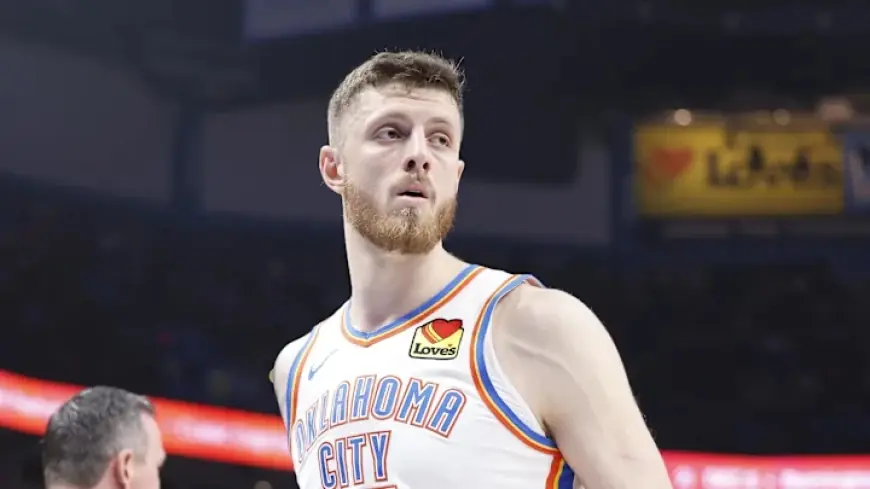
Isaiah Hartenstein is back in the Oklahoma City Thunder rotation, and his timing matters. After missing roughly a month with a lower-leg injury, the veteran center returned on a minutes restriction in late January, then worked back into game shape as Oklahoma City enters a high-pressure stretch against contenders and the league’s trade deadline on Thursday, Feb. 5, 2026, at 3:00 p.m. ET.
For a Thunder team built around pace, length, and a constant stream of rim pressure, Hartenstein’s availability changes the menu: more traditional size, more rebounding security, more screening options for Shai Gilgeous-Alexander, and a sturdier answer when opponents try to punish smaller lineups.
What happened with Isaiah Hartenstein and the Thunder
Hartenstein had been sidelined since late December with a calf and lower-leg issue that kept him out for 16 games. Oklahoma City survived the absence with lineup flexibility, leaning more heavily on Chet Holmgren at center and using smaller combinations to keep the floor spaced and the tempo high.
When Hartenstein returned, the Thunder didn’t immediately slot him into an “everything is normal” role. He came off the bench in at least one of his first games back, played limited minutes, and focused on impact possessions: protecting the glass, setting hard screens, and stabilizing the paint when the game got chaotic.
That kind of reintegration is typical for big men returning from lower-leg injuries, but it becomes more important on a team with championship-level ambitions, where the margin between “healthy enough” and “fully trusted” can define playoff rotations.
Why Hartenstein matters in Oklahoma City’s system
Oklahoma City’s identity is built around two forces that can pull in opposite directions: speed and size. The Thunder want to run, switch, and attack gaps, but they also need to win the possession battle against teams that crash the glass or punish the rim.
Hartenstein is a direct answer to the “possession” problem. When he’s available, Oklahoma City can:
-
Reduce second-chance points by finishing defensive possessions with rebounds
-
Set more physically imposing screens that free drivers and shooters
-
Absorb minutes at center so Holmgren doesn’t have to carry every heavy matchup
-
Play bigger without abandoning mobility, because Hartenstein can survive in modern coverages better than many traditional centers
This is especially relevant in the West, where elite opponents often force you to prove you can win in multiple styles: a track meet one night, a half-court grind the next.
Behind the headline: trade buzz, contract leverage, and the deadline clock
The trade conversation around Hartenstein is less about dissatisfaction and more about leverage. Oklahoma City is positioned as a buyer: deep draft capital, a strong record, and a roster that can justify chasing a final “fit” piece.
Hartenstein’s contract structure adds intrigue. He’s on a big-money deal that includes a team option for the 2026–27 season at roughly $29 million. That makes him both useful and movable. Useful because he fills a real playoff need. Movable because his salary can help match in a major trade if the Thunder decide to swing bigger than a typical deadline tweak.
The incentives are clear:
-
The front office wants optionality: keep a productive big, or use the contract slot as a mechanism in a larger move.
-
The coaching staff wants certainty: build rotations that will hold up in April and May.
-
The locker room wants stability: constant rumors can change how players interpret every lineup decision.
What we still don’t know
Several questions will define the next week:
-
How quickly does Hartenstein ramp up to starter-level minutes, if at all?
-
Is the bench role temporary conditioning management, or a strategic choice?
-
How will Oklahoma City handle closing lineups against teams with dominant centers?
-
Will the trade deadline push the Thunder to add another big, or trust the current mix?
Injuries to other rotation players have also complicated lineup continuity, and that can shape how aggressively the team shops for depth.
What happens next: scenarios and triggers to watch
-
He reclaims a heavier role by mid-February
Trigger: no setbacks, minutes restriction lifted, clear defensive impact in matchup games. -
Oklahoma City doubles down on flexibility and keeps him in a split role
Trigger: small lineups outperform in key stretches, and the staff prefers a matchup-based approach. -
The Thunder add another frontcourt piece at the deadline
Trigger: rebounding or rim protection becomes a recurring weakness against elite opponents. -
A surprise blockbuster makes Hartenstein a salary-matching centerpiece
Trigger: a star becomes available and Oklahoma City decides the window is now. -
The team holds steady, prioritizing health over deadline drama
Trigger: internal evaluations say the current roster already has enough answers for a deep run.
Why it matters is simple: in the postseason, you don’t just need talent, you need coverage. Hartenstein’s return gives the Thunder another way to win games they might otherwise lose on the glass, at the rim, or in the trench possessions that decide tight series.