
























Gold Price Today sinks after historic selloff as dollar and yields rebound

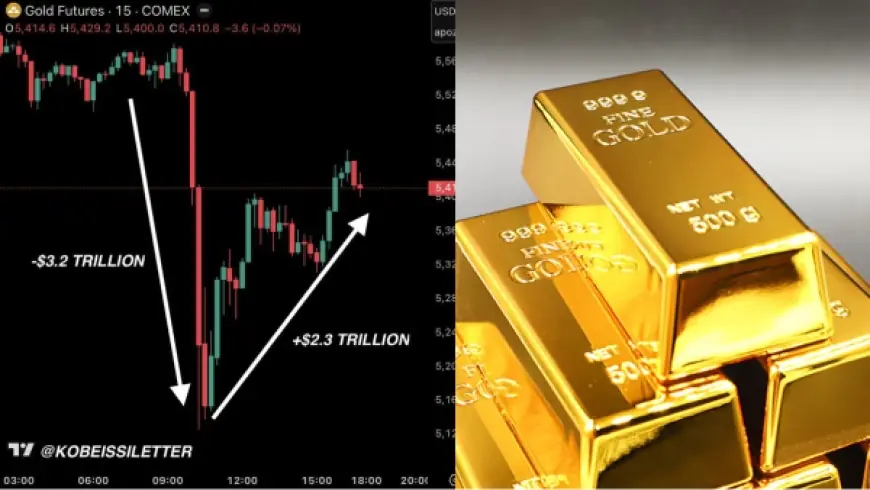
Gold Price Today is sharply lower going into the weekend after a violent reversal erased a chunk of January’s record-setting rally. In late Friday trading, spot gold slid to the mid-$4,800s per ounce, down close to 10% on the day, as investors dumped crowded “safe-haven” positions and repriced the U.S. rate outlook amid a stronger dollar and rising Treasury yields.
The move matters because it’s less a normal pullback and more a reset of expectations after gold briefly traded at all-time highs this week. The market is now shifting from “momentum bid” to “where is the floor,” with volatility expected to stay elevated into early February.
Gold Price Today: where it closed Friday
Spot and futures prices both reflected a full-risk unwind by the end of U.S. hours Friday.
| Market snapshot | Level (late Fri., Jan. 30, 2026, ET) | Daily move |
|---|---|---|
| Spot gold (XAU/USD) | ~$4,854/oz (4:43 p.m.) | -9.66% |
| U.S. gold futures (Feb.) | $4,745/oz (settlement) | -11.4% |
| Spot silver | ~$83.99/oz | -27.7% |
| U.S. Dollar Index | Up ~0.7% | firmer |
| U.S. 10-year Treasury yield | ~4.245% | higher |
Why gold fell so hard
Several forces hit the market at once, and the combination mattered more than any single headline.
First, positioning got too hot. January’s run became a momentum trade—fast inflows, trend-following buying, and leveraged exposure across futures and options. When the market finally turned, selling accelerated as stop-losses triggered and profits were locked in.
Second, the dollar snapped higher. A stronger U.S. dollar typically pressures dollar-priced commodities by making them more expensive for buyers using other currencies. Friday’s dollar rebound became a direct headwind.
Third, yields pushed up, raising gold’s “carry” disadvantage. Gold doesn’t pay interest, so higher real-world yields increase the opportunity cost of holding it. Even small moves in rates can have an outsized impact when prices are extended.
Fourth, policy uncertainty added fuel. Markets reacted to fresh leadership signals tied to the Federal Reserve chair succession, which changed the tone of rate expectations and amplified the “risk-off in metals” move.
How deep this move is in context
Even after Friday’s drop, gold is still up strongly over the past year and remained up for the month in many measures—an important reminder that the selloff is happening from historically elevated levels.
This is also the kind of day that tends to change market behavior for a while:
-
Options premiums typically stay high after a shock like this, keeping hedging expensive.
-
Traders become more selective about chasing rallies until the market proves it can hold support.
-
Short-term “dead cat bounces” become more common, especially when sentiment flips quickly.
Silver and platinum showed how crowded the trade was
Silver’s decline was steeper than gold’s, a sign that leverage and speculative positioning were heavy. Silver can trade like a hybrid of precious metal and industrial metal, which often magnifies moves when risk appetite shifts.
Platinum and palladium also fell sharply, reinforcing that the liquidation wasn’t limited to one corner of the market—it was broad across precious metals, consistent with portfolio de-risking and forced selling.
What to watch next week
The market’s next phase is likely to be driven by three practical signals:
-
Dollar direction: If the dollar continues to firm, it remains a headwind for metals.
-
Rates and Fed pricing: Watch Treasury yields and how futures markets price the path of cuts (or delays).
-
Stabilization near support: Traders will focus on whether gold can hold key round levels (the $5,000 area now acting as a psychological pivot) and whether liquidity returns without another wave of forced selling.
If the dollar cools and yields stabilize, gold could find a footing quickly—especially with geopolitical risk still in the background. If yields keep rising, the market may demand a deeper reset before buyers step back in size.
Sources consulted: Investing.com; Reuters; Barron’s; Fidelity Fixed Income (Reuters feed); Trading Economics.