

























Russian Cargo Ship Anchors Above Trans-Atlantic Cables in Bristol Channel

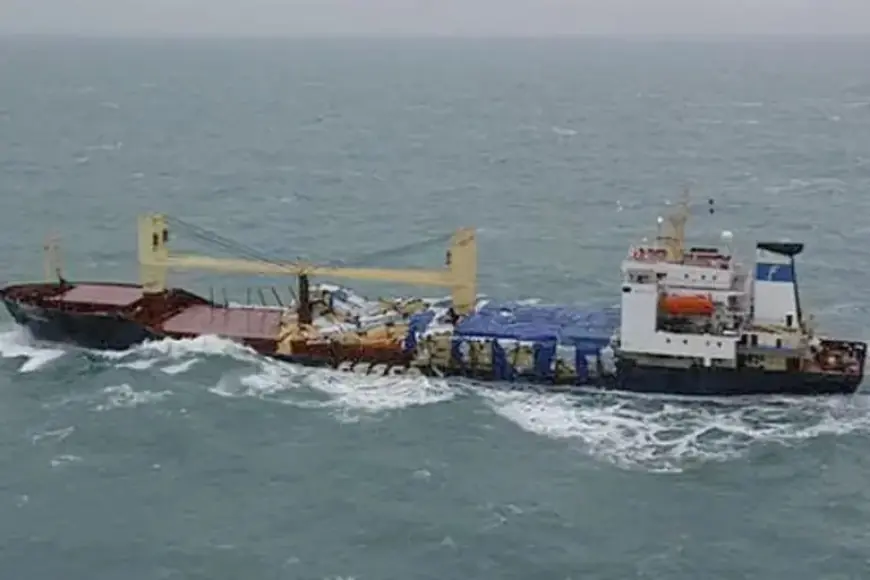
A Russian cargo ship, Sinegorsk, recently dropped anchor in the Bristol Channel. This incident raised alarms due to its proximity to vital undersea data cables. These cables are crucial for telecommunications, connecting the UK to countries like the US, Canada, Spain, and Portugal.
Details of the Incident
The Sinegorsk, registered under the Russian flag, entered the Bristol Channel on a Tuesday night. It anchored roughly two miles off Minehead, Somerset, around 11 PM. The ship remained stationary until 2 PM the following day.
Monitoring and Response
On Wednesday morning, a coastguard aircraft and a Royal Navy Wildcat helicopter monitored the vessel as it lingered in sensitive waters. This area is home to several significant cables, including:
- TGN Atlantic cable system connecting Britain to New Jersey
- TGN Western Europe cable system linking the UK to Spain and Portugal
- EXA Express, which connects the UK to Nova Scotia, Canada
After its time near Minehead, the Sinegorsk moved south and was last detected near the Isles of Scilly.
Concerns Over Russian Naval Activity
The Sinegorsk’s actions are part of a broader concern regarding Russian naval activities in British waters, especially since the onset of aggressive actions in Ukraine. Although it’s confirmed that Sinegorsk is not a part of the so-called “shadow fleet,” its presence underscores a troubling trend of increasing Russian incursions.
Understanding the Shadow Fleet
By definition, the shadow fleet consists of older vessels often disguised under false flags. These ships are employed to smuggle sanctioned commodities, notably oil. The British Ministry of Defence has sanctioned over 500 Russian-linked oil tankers and 16 liquefied natural gas (LNG) tankers, effectively removing around 200 vessels from operation.
Government’s Stance
A spokesperson for the Ministry of Defence emphasized the importance of addressing the shadow fleet’s threats. They acknowledged attempts to map undersea infrastructure belonging to the UK and its allies. The Royal Navy has intensified its surveillance efforts to protect critical underwater communications.
Official Warnings
Sir Gwyn Jenkins, the First Sea Lord, highlighted a significant 30 percent increase in Russian incursions in British waters over the past two years. He expressed particular concern about activities beneath the surface, suggesting vulnerabilities in maritime security.
In a recent statement, a Department for Transport spokesperson confirmed that the Sinegorsk received directives to vacate UK waters due to safety repair needs and complied accordingly. British authorities continue to enforce strong measures against Russian-flagged ships, with a commitment to safeguarding national interests in maritime domains.