
























Curling Canada hits a pivotal stretch as Scotties playoffs take shape and Olympic teams enter final prep

Curling Canada is juggling two spotlights at once: the national women’s championship is tightening into a high-stakes playoff race in Mississauga, while Canada’s Olympic curling teams move into the final days of preparations for Milano Cortina. The overlap is reshaping lineups, storylines, and even who gets to wear the Team Canada designation at nationals.
The result is a rare week where nearly every level of the sport is in motion at the same time, from elite pool play at the Scotties Tournament of Hearts to grassroots participation programs aimed at growing the next generation of curlers.
Scotties in Mississauga: two teams secure spots, one berth still up for grabs
With the Scotties Tournament of Hearts running January 23 through February 1, 2026, at the Paramount Fine Foods Centre, the playoff picture has come into sharper focus in Pool A. Manitoba’s Team Kaitlyn Lawes (7–0) and Canada’s Team Kerri Einarson (6–1) have already locked in two of the three available playoff positions from the pool.
That leaves a single remaining berth in Pool A that, as of late week action, came down to a head-to-head showdown between Nova Scotia’s Team Taylour Stevens and Ontario’s Team Hailey Armstrong. Their meeting was set for Thursday afternoon, January 29, at 2:00 p.m. ET, carrying direct “win-and-advance” consequences for one side and elimination for the other.
Further specifics were not immediately available about how any late lineup changes, illness protocols, or travel issues could affect the final round-robin draws.
Olympic countdown changes the national narrative, even before the first stone is thrown in Italy
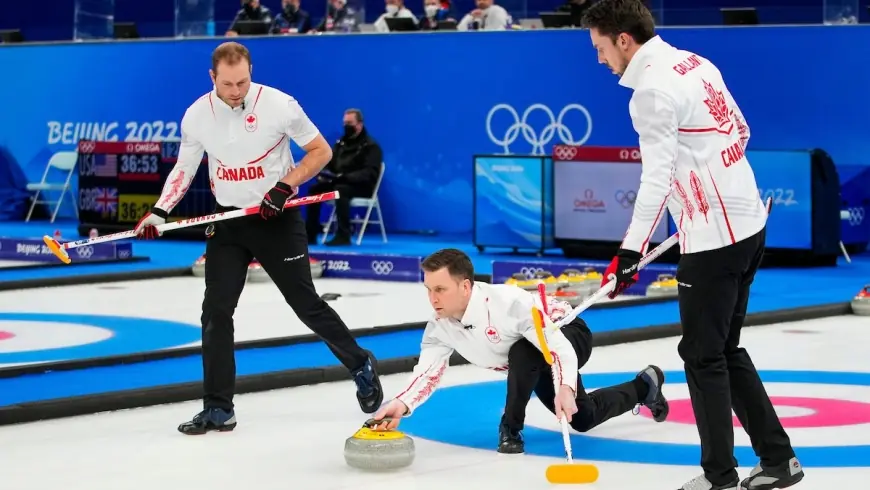
The Olympics begin to cast a shadow over every Canadian curling conversation once the calendar flips to late January, and this season is no exception. Canada is set to be represented in Olympic curling by three teams: Team Rachel Homan in the women’s event, Team Brad Jacobs in the men’s event, and the mixed doubles pair of Jocelyn Peterman and Brett Gallant.
The timing matters. Homan’s Olympic preparation is one of the reasons she is not chasing another national title at the Scotties this year, which in turn elevated Einarson into the Team Canada slot at the championship. That “Team Canada” designation at nationals is more than a label: it affects seeding, scheduling, and the mental pressure that comes with being treated as the standard everyone else wants to knock off.
Canada’s mixed doubles team is scheduled for a media availability on Wednesday, February 4, 2026. Listed locally as midday in Central Europe, that translates to early morning in the United States, an example of how quickly athletes’ routines get flipped once they arrive on Olympic time.
Some specifics have not been publicly clarified, including the full on-site practice schedule for all three Canadian curling teams in the final days before Olympic competition begins.
How the Curling Canada pathway works from provincial titles to national berths
Curling Canada’s national championships run on a hybrid model designed to balance regional representation with competitive strength. For the Scotties and the Brier, the format is set at 18 teams: one Team Canada entry, 14 member association champions, and three pre-qualified teams. Those pre-qualified spots are awarded based on the Canadian Team Ranking System from the prior season, with teams required to retain most of their lineup to keep the berth.
That structure is meant to solve a familiar problem in Canadian curling: a single provincial run can crown a worthy champion, but it does not always produce the deepest field at nationals. Ranking-based berths help ensure that top-performing teams still show up on the biggest domestic stage, while provincial and territorial champions preserve the sport’s nationwide footprint.
At the Olympic level, qualification is a different machine entirely, typically driven by multi-year performance and points earned through major international events. That longer runway is why Olympic teams often plan their seasons around peaking windows, travel demands, and minimizing injury risk, even if it means skipping a national event.
Girls Rock expands nationally as Curling Canada leans into participation and retention
While the elite game is chasing titles and Olympic medals, Curling Canada is also trying to widen the base of the sport. A recent push has been the continued expansion of Girls Rock, a female-led “try curling” program for girls ages 9 to 16. Through a partnership with Kruger Products, 25 curling clubs across the country received $500 each to host Girls Rock events, aiming to make first-contact experiences less intimidating and more welcoming.
The program has evolved from a host-city add-on to a broader national initiative, with events now offered widely through provincial and territorial pathways. Organizers have signaled interest in extending funding to more clubs in the next cycle, but key terms have not been disclosed publicly about the size or timing of any expansion.
Who feels the impact, and what comes next
Athletes and coaches feel it first: playoff math at the Scotties can change careers in a single draw, while Olympic preparation demands near-total focus and careful workload management. Member associations and local clubs feel it differently, through participation surges tied to televised moments and through practical support like small grants that help run introductory programs.
Fans also sit at the center of this moment. National championships offer the annual reminder of how deep the Canadian field remains, while the Olympics bring in casual viewers who may be watching curling closely for the first time in four years.
The next verifiable milestones come quickly: the decisive Pool A matchup at the Scotties on January 29 at 2:00 p.m. ET, the Scotties playoffs leading into the February 1 final, and then Olympic curling competition beginning February 4, when Canada’s mixed doubles campaign helps open the sport’s Olympic schedule.