Chicago Med Heads Into a High-Stakes March Crossover as Season 11 Pushes Deeper Into Loss, Loyalty, and Leadership

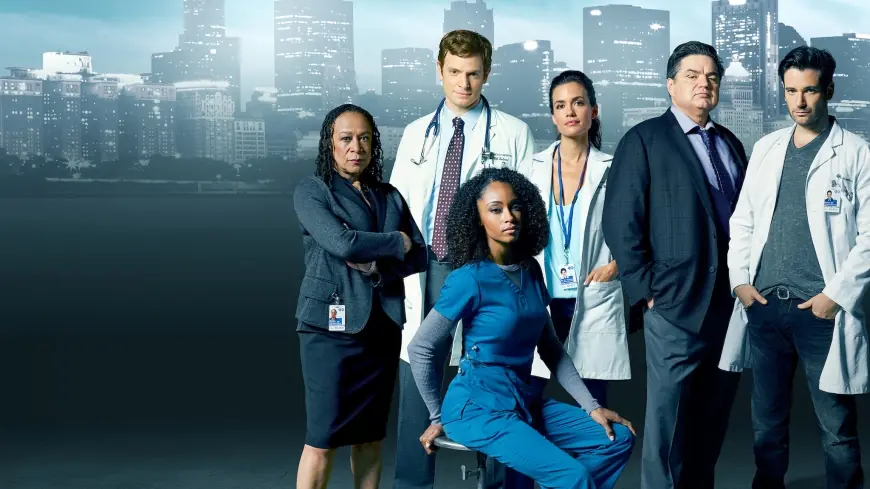
Chicago Med is moving through a pivotal stretch of Season 11, pairing week-to-week emergency cases with longer emotional arcs that are now converging toward a major franchise crossover in early March. The series aired a new episode on Wednesday, January 28, 2026 (ET), and it is building momentum toward a three-hour event that will link Chicago Med with Chicago Fire and Chicago P.D. on Wednesday, March 4, 2026 (ET).
The result is a familiar midseason pattern for the franchise: personal pressure in the hospital, public danger outside it, and a calendar that forces storylines to collide rather than politely queue up.
January 28 episode puts grief and old grudges back on the table
The January 28 episode, titled “Our So-Called Lives,” leaned into character history as much as medicine. Dr. Daniel Charles finds old resentment bubbling up when friends from medical school visit, reopening questions about the choices that shaped his career and the compromises that came with them. In parallel, Dr. Hannah Asher faces obstacles in treating a patient, keeping her storyline tied to the show’s recurring theme that skill alone does not always beat the system.
Dr. Mitch Ripley’s thread is the most plainly emotional: he looks for a way to honor his best friend, Sully, on the one-year anniversary of his death. That kind of anniversary episode can be risky, but it also signals that the show is using the hospital as a place where grief lingers, not just a backdrop where trauma resets at the end of an hour.
Some specifics have not been publicly clarified about how long certain relationship tensions introduced earlier in the season will remain central as the crossover nears.
The March 4 crossover changes the rhythm and raises the threat level
The next major beat is the Wednesday, March 4, 2026 (ET) crossover event connecting Chicago Med, Chicago Fire, and Chicago P.D. The premise begins with a passenger jet going silent mid-air, prompting an emergency response at an airfield. What starts as a rescue call is set up to expand into a wider mystery with consequences beyond the initial scene.
The scheduling is also part of the story. That night is designed as a single, three-hour narrative block, with the order shifting so the evening starts with Chicago Fire at 8 p.m. ET, followed by Chicago Med at 9 p.m. ET, and Chicago P.D. at 10 p.m. ET. Even for fans who normally watch only one of the shows, the crossover format nudges viewers to follow the whole chain if they want the complete picture.
Further specifics were not immediately available about which characters will be most central across all three hours beyond the core premise.
How a medical drama crossover is built, and why it can feel bigger than a season finale
A crossover like this typically works because it blends three engines into one: emergency response, hospital medicine, and investigation. The process usually starts with a shared inciting incident that naturally requires all three teams. Writers then map where each show’s strengths carry the plot: firefighters handle immediate danger and triage, hospital staff address mass-casualty care and ethical pressure points, and detectives push the mystery forward when the event no longer looks accidental.
Logistically, crossovers are also a production puzzle. They require coordinated schedules, shared locations, and clear handoffs so each hour feels like part of the same night rather than three separate episodes stitched together. When it works, the crossover gives the franchise a sense of scale—one event that stresses every part of the system at once.
Cast shifts and continuity questions remain part of the Season 11 conversation
Season 11 has already asked viewers to adjust. Longtime nurse Maggie Lockwood has been absent after the character’s exit was tied to personal reasons for the actor stepping back. The reason for the change has not been stated publicly, and there has been no definitive public commitment about whether that absence is temporary or permanent.
At the same time, the season has continued leaning on its remaining core leadership in the hospital, keeping the show grounded even as new faces and rotating storylines shift the texture of the emergency department.
Who feels the impact of a big event episode, on-screen and off
For viewers, a crossover can be a payoff and a stress test. Fans who follow Chicago Med closely get a larger canvas for the characters they care about, but casual viewers can feel pressured to “keep up” across multiple shows to avoid missing key beats. For cast and crew, crossovers typically mean tighter production windows, longer days, and more complex staging, especially when an event involves aviation-scale stakes and multi-location action.
There’s also an impact on local production ecosystems. Large event episodes can intensify demand for crews, vendors, and locations, while also compressing timelines in ways that ripple through scheduling for future episodes.
The next verifiable milestone is the special crossover episode event on Wednesday, March 4, 2026 (ET), a three-hour broadcast that will function as both a franchise tentpole and a midseason turning point for Chicago Med’s hospital storylines.